
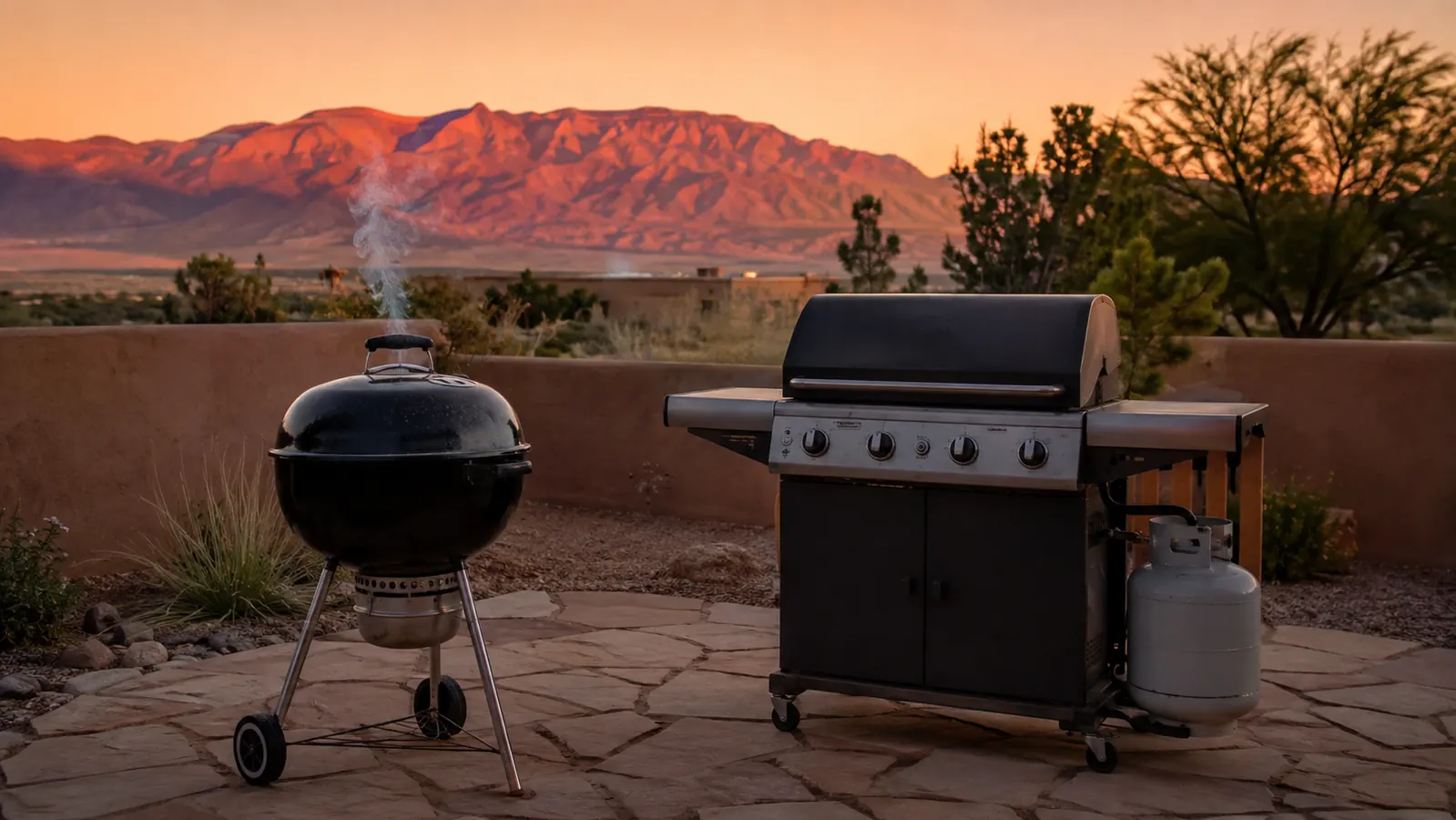
I've had a Weber kettle sitting on my patio in Albuquerque for going on twelve summers, and for about four of those years I also owned a propane grill parked twenty feet away on the same slab. That side-by-side setup, not a showroom floor, is where I actually learned what you give up switching from one to the other. Short answer: if you want real smoke flavor and a grill that outlasts your kids growing up and out of the house, and you don't mind ten extra minutes before you're cooking, the Weber Original Kettle 22-Inch is the better buy. If your weeknights are tight and you're cooking four nights a week instead of one, a mid-range propane grill like a Char-Broil Performance Series 4-Burner will get food on the table faster with less mess to deal with after.
Here at 5,000 feet the air is thinner and drier than what most grill reviews are written for, and that shifts both sides of this comparison more than people expect. Charcoal in the Weber kettle catches faster and burns hotter here than it would at sea level, so my chimney starter has coals glowing orange in about nine minutes instead of the fourteen I watched on my brother's kettle in Houston. Propane doesn't care about elevation the same way, its output barely dips, so the gas grill's speed advantage narrows some once you're this high up. I'll walk through where each grill actually wins below, using real numbers from my own cooks over the past several summers, rather than spec sheet claims neither company bothered to test at altitude.
| Spec | Weber Original Kettle 22in | Char-Broil Performance 4-Burner Gas Grill |
|---|---|---|
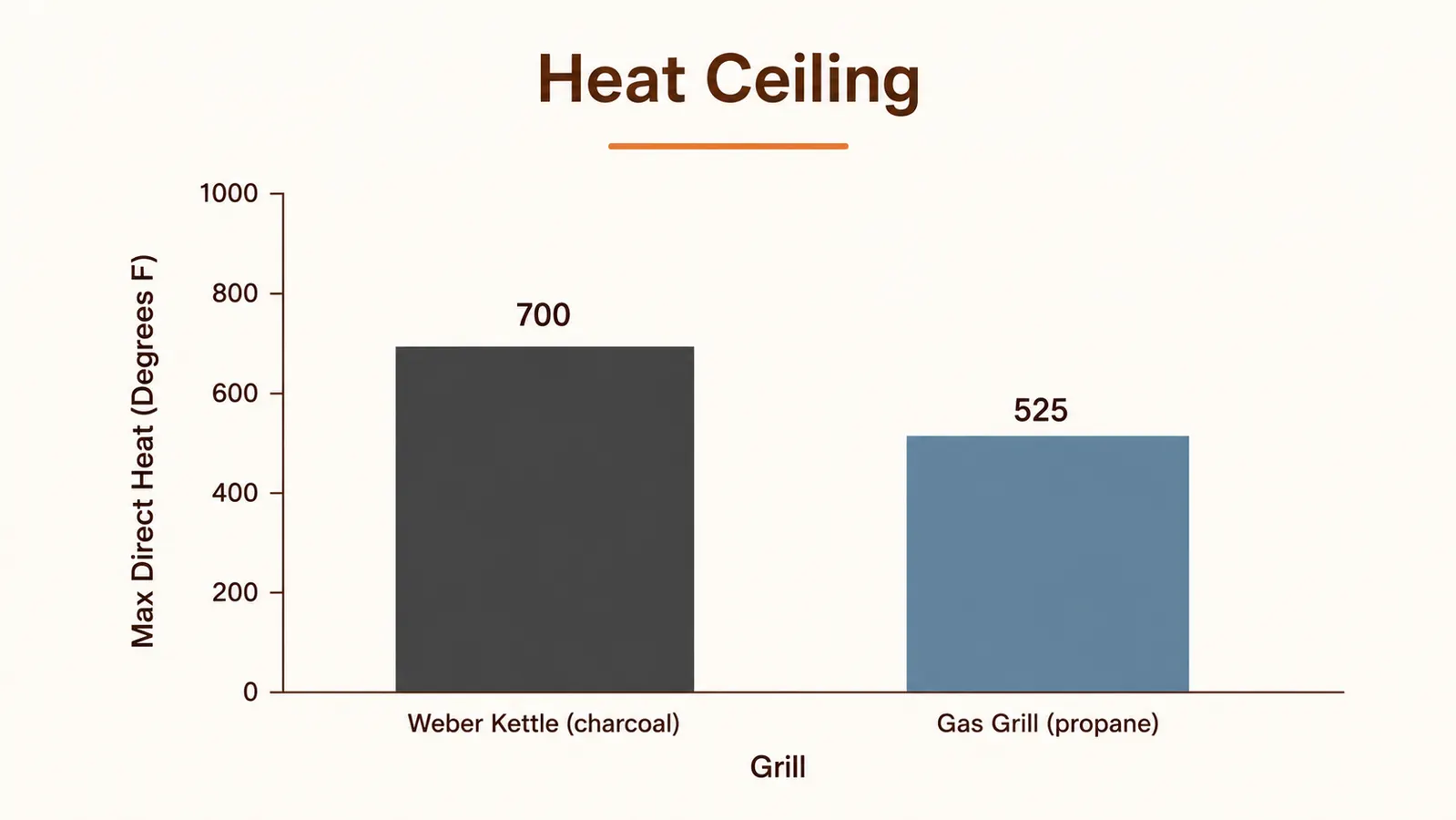
| Heat ceiling | 700F+ direct heat with vents open and a full chimney | About 525F on the main burners at full blast |
| Time to cook-ready | 20-25 minutes, chimney light to spread coals | 8-10 minutes, push-button ignition plus preheat |
| Fuel cost per cook | About $1.75, roughly 2 lbs of lump charcoal | About $0.90, propane use figured off a $20 tank refill |
| Smoke flavor | Real wood and charcoal smoke, visible ring and bark | Mild, needs an add-on smoker box for any smoke at all |
| Temperature control | Manual vents, swings of 20-25F if you're not watching them | Dial knobs hold within about 10F with little attention |
| Cleanup | Ash catcher emptied every 3-4 cooks, about 10 minutes | Grease tray wipe-down, about 3 minutes |
| Footprint | 22.5in bowl, about 40 lbs, portable enough for one person | 58in wide cart, about 130 lbs, effectively fixed in place |
| Expected lifespan | 15-20 years on the porcelain bowl, mine is on year twelve | Burner tubes commonly rust out around year 5-7 |
Where the Weber Kettle Wins
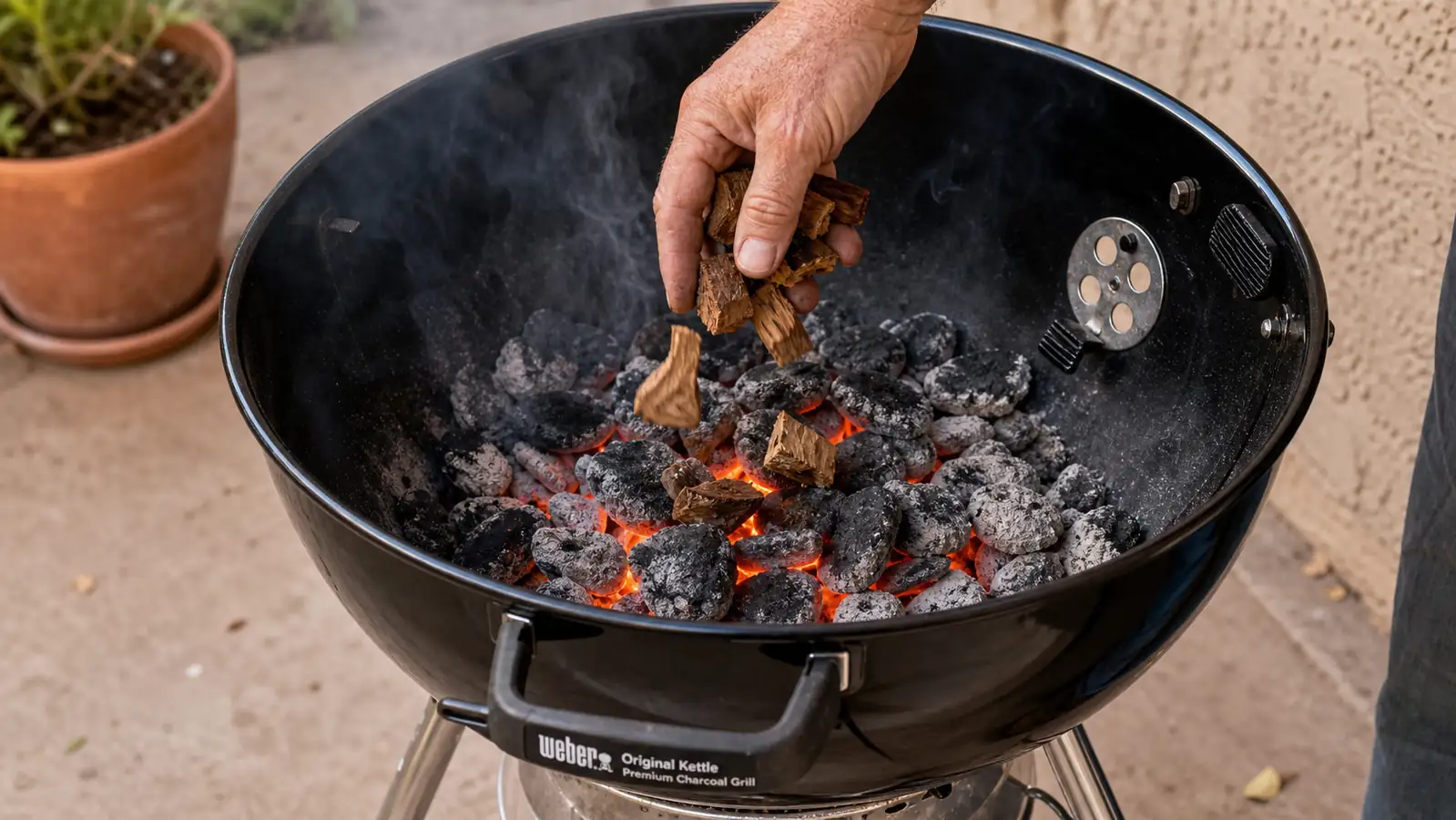
The kettle wins on flavor, full stop, and I'll die on this hill. When I run mesquite chunks mixed into a chimney of lump charcoal for carne asada, I get a smoke ring you can see from across the yard and a bark that no propane burner will ever produce, because propane never puts real combustion smoke against the meat. My years running a Char-Broil taught me it can sear fine and hold a set temperature, but it can't replicate what wood and charcoal do to a ribeye. Vents open, coals banked to one side, I can get direct heat over 700F for a hard sear, then slide the steak to the cool side to finish, all inside an eight-minute window. The Weber kettle's dome lid holds heat evenly too, which matters more at this altitude, where wind pulls heat off an open grate faster than most people expect.
Cost over time is the other place the Weber pulls ahead. My kettle is coming up on its twelfth summer. I've replaced the charcoal grate once, in year eight, for about the price of a fast food lunch, and the porcelain-enameled bowl still holds paint with no rust bubbling through, even after Albuquerque's swings from 15F January mornings to 100F July afternoons. A propane grill's burner tubes are the weak point. My old Char-Broil started rusting through by year five, and I replaced burners twice before I gave up and sold it at a yard sale for forty bucks. Weber backs the kettle with a ten-year warranty on the bowl and lid, and I honestly think mine has another decade left in it with basic care and a cover between cooks.
Footprint matters if you've got a small patio or you move around a lot. The Weber kettle is 22.5 inches across and light enough, around 40 pounds, that I can roll it to the side of the house for winter storage or load it in a truck bed for a tailgate at Isotopes Park without a second person helping. A four-burner gas cart is basically a fixed piece of furniture. Mine used to live against the fence permanently, because moving a 130-pound cart with a propane tank hanging off the side wasn't something I wanted to do alone. If your outdoor space needs to flex through the seasons, or through a move, the kettle flexes with it in a way the gas cart never will.
Cleaning the kettle is its own chore, and I won't pretend otherwise. I pull the ash catcher every three or four cooks, dump it into a metal bucket by the fence, and let it sit two days before it goes in the trash, because warm ash and a plastic bin do not mix, I learned that the hard way with a scorched Rubbermaid lid back in year two. It's ten minutes of real work, but you have to remember to do it, unlike a gas grill's grease tray, which you can ignore for weeks before it starts smelling like old bacon.
Where the Char-Broil Gas Grill Wins
The gas grill wins on weeknight speed, and I'm not going to pretend otherwise. When I owned the Char-Broil, Tuesday night chicken thighs went from cold grill to plated in about twenty-five minutes total, ignition to done. The Weber kettle adds a real cost here: filling the chimney, lighting newspaper underneath, waiting for coals to ash over, dumping and spreading them. At this elevation that's roughly nine to eleven minutes of waiting before I even close the lid to preheat, compared to maybe ninety seconds for a gas grill's push-button start. If you're cooking four or five nights a week after work, that gap adds up to real time you don't get back, and I understand why plenty of families choose gas for exactly that reason alone.
Temperature control is more forgiving on the gas side too. A propane grill's knobs give you a number you can trust, more or less, and holding 350F for a batch of burgers doesn't require the vent adjustments a kettle demands, especially in wind, which Albuquerque has plenty of come spring. My nephew, who's cooked on a kettle exactly twice and burned both attempts, picked up my old Char-Broil habits in a single cookout. For a household that wants predictable results without learning fire management, that consistency is worth something real, not just a marketing point. New charcoal cooks tend to either choke the fire with too little air or run it too hot, and both mistakes take a few ruined dinners to unlearn before they stop happening.
Four burners also mean four independent heat zones running at once, so you can sear on one side and hold food warm on the other without shuffling coals mid-cook. That's genuinely useful cooking for a crowd with mixed doneness preferences, say half your guests want well-done and half want medium-rare. A single kettle makes you manage that with grate position and lid vents, which works but takes practice to get right. If convenience for a big, mixed group matters more to you than smoke flavor, that's a fair trade to make, and I wouldn't argue with anyone who makes it, family gatherings especially.
The gas grill's real weak spot showed up in my fourth year owning the Char-Broil, when the tank ran dry with a rack of ribs half cooked and guests already in the yard. There's no backup beyond a spare tank you remembered to keep full, or a scramble to the gas station two miles away while everyone stands around a cold grill. A kettle never does that to you. Worst case with charcoal, you're running short and you toss on a few more briquettes from the bag, which costs two minutes, not a car trip. Keep a second propane tank filled at all times, or you will get caught eventually.
Tired of a Gas Grill That Tastes Like Nothing?
The Weber Original Kettle, 22-Inch, is the grill I've run for twelve years at altitude. If flavor is the whole reason you're grilling in the first place, this is where you start.
Amazon Check Today's Price on Amazon →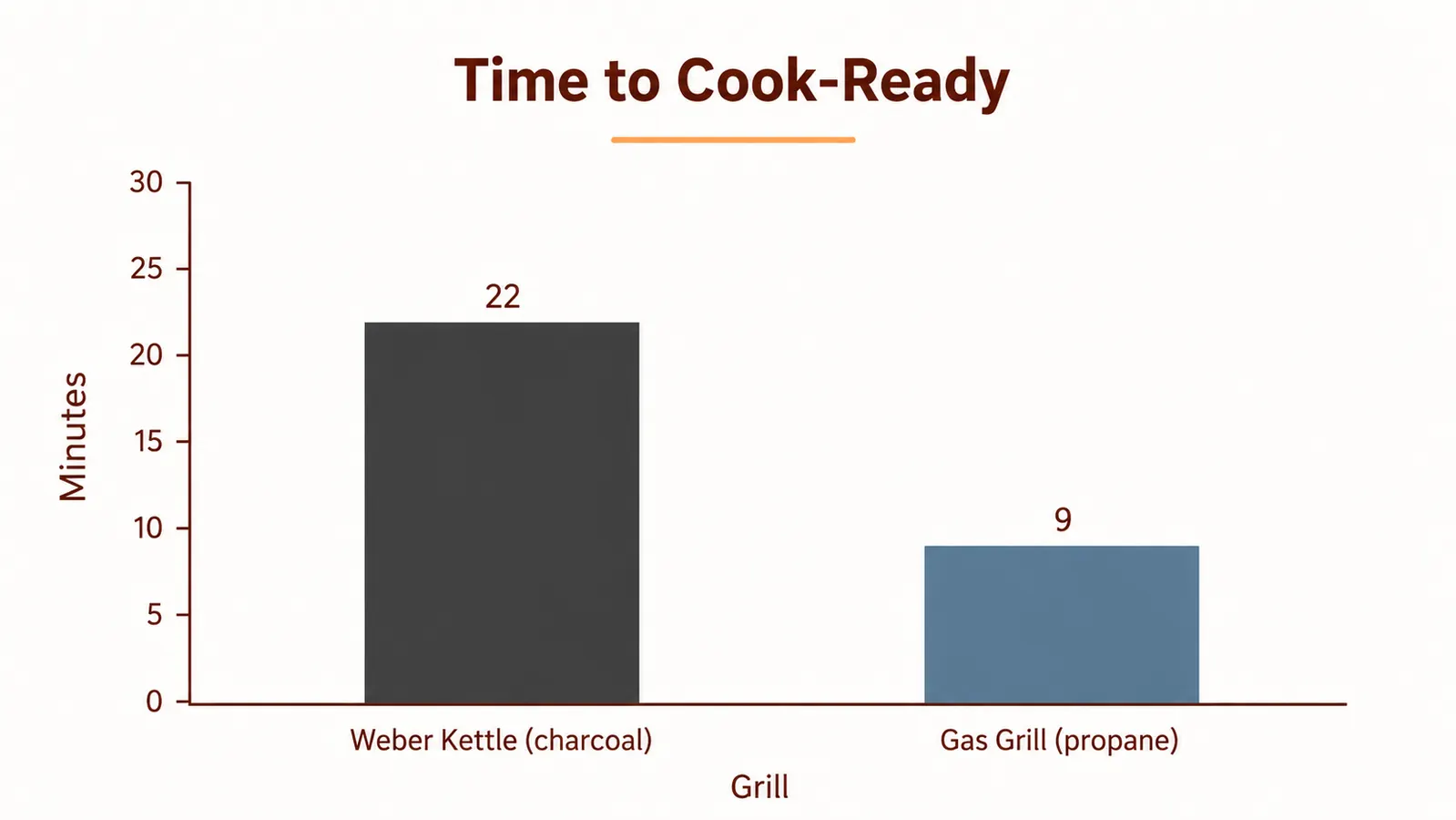
The Elevation Factor
Everything above changes some at 5,000 feet, and it's worth saying plainly because most grill reviews are written near sea level. Charcoal burns roughly 15 to 20 percent faster up here, since there's less oxygen resistance and the air runs drier, which is why my chimney lights in nine minutes instead of the fourteen you'll read about online. Propane's output drops slightly at altitude too, maybe 3 to 5 percent, but it's a small enough dip that most cooks never notice it. Water still boils around 202F instead of 212F, which matters more for braises than straight grilling, but it's part of why I trust my own numbers from my own patio over a spec sheet written for someone grilling in Ohio.
What that means practically is my Weber kettle runs a little hotter and burns through charcoal a little faster than the same grill would in Houston or Atlanta, so I use slightly less charcoal per cook than the bag suggests, and I watch the vents more closely in the first twenty minutes. If you're grilling anywhere above 4,000 feet, budget a few extra dollars of charcoal into that fuel-cost row in the table above, and expect your first few cooks to run hotter than you're used to until you dial in your own vent habits. The gas grill's numbers barely move up here, which is honestly one of its quieter selling points for anyone new to high-desert cooking.
The kettle wins on flavor, full stop. Propane never puts real combustion smoke against the meat, and I've never found a burner that changes that.
What a Year of Real Use Costs You
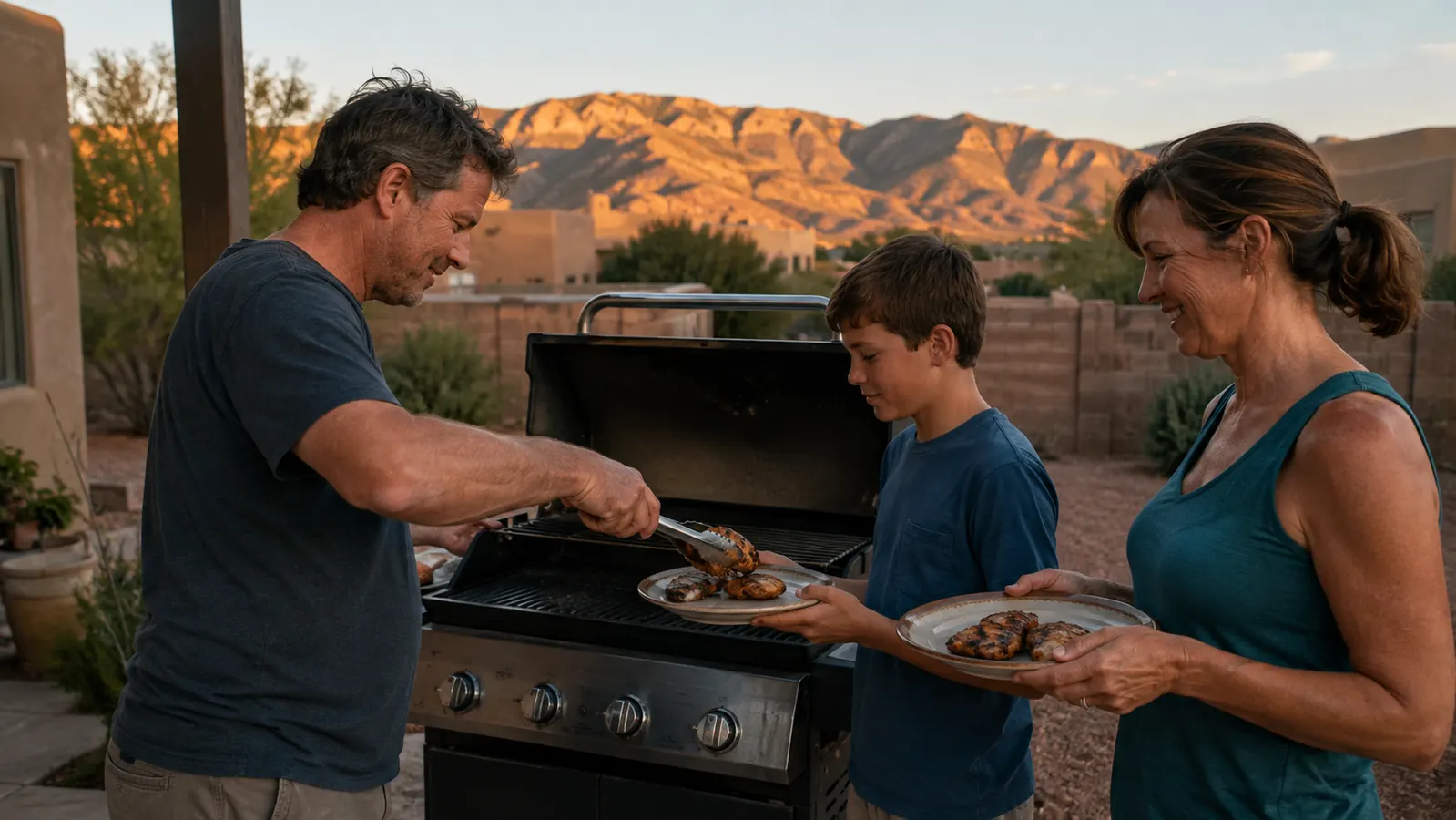
Run the fuel numbers out over a year and the gap gets interesting. I average about three cooks a week on the kettle, and going by receipts I've kept since 2022, that's roughly $270 a year in lump charcoal and mesquite chunks. When I ran the Char-Broil four to five nights a week, closer to how most gas owners actually cook, propane worked out to about $210 a year off six or seven $20 tank refills. Gas comes out cheaper here, but only because it gets used more often. Cook the kettle every night instead of three times a week and the gap closes fast, since charcoal still runs about $1.75 a cook either way.
Wind changes things too. A stiff spring afternoon, and Albuquerque gets plenty of those in March and April, can knock ten to fifteen degrees off an open gas grate before the lid traps enough heat to matter, and I've had a burner gutter down to almost nothing until I turned the cart to block the gusts myself. The kettle's dome handles wind better once the lid's on, though you fight the vents more to keep coals even. Resale tells the same story as everything else here: a used Weber Kettle in decent shape still sells for about half its retail price locally, because the porcelain bowl doesn't rust. A five-year-old gas grill with rusting burner tubes is closer to a giveaway, which is what happened to mine.
Who Should Buy Which
If you cook two or three times a week, care about smoke flavor, and don't mind the extra prep time, get the Weber Original Kettle. It's the grill I'd buy again without hesitation, and at today's price it's hard to argue with on value alone next to a mid-range propane setup that costs more up front and doesn't last as long. If you're cooking most nights of the week, feeding a big household with mixed preferences, or you just don't want to manage a fire after a long day, a mid-range gas grill like the Char-Broil Performance Series earns its keep and I won't tell you otherwise.
I ran both for four years and eventually sold the gas grill, not because it was bad, but because I realized I was reaching for the kettle every single weekend anyway and paying to store a grill I wasn't using. Your actual cooking habits should decide this one, not what sounds more serious at the hardware store. If you're still not sure, count how many nights a week you actually grill and be honest about it before you spend money on either one. Most people overestimate how often they'll fire up a weeknight grill and underestimate how much a Saturday afternoon around a kettle is worth to them.
Ready for a Grill That Earns the Space It Takes Up?
Twelve years, one Weber Original Kettle, and it's still the grill I reach for most weekends. If smoke flavor and long-term durability matter more to you than push-button speed, this is the one to get.
Amazon Check Today's Price on Amazon →