
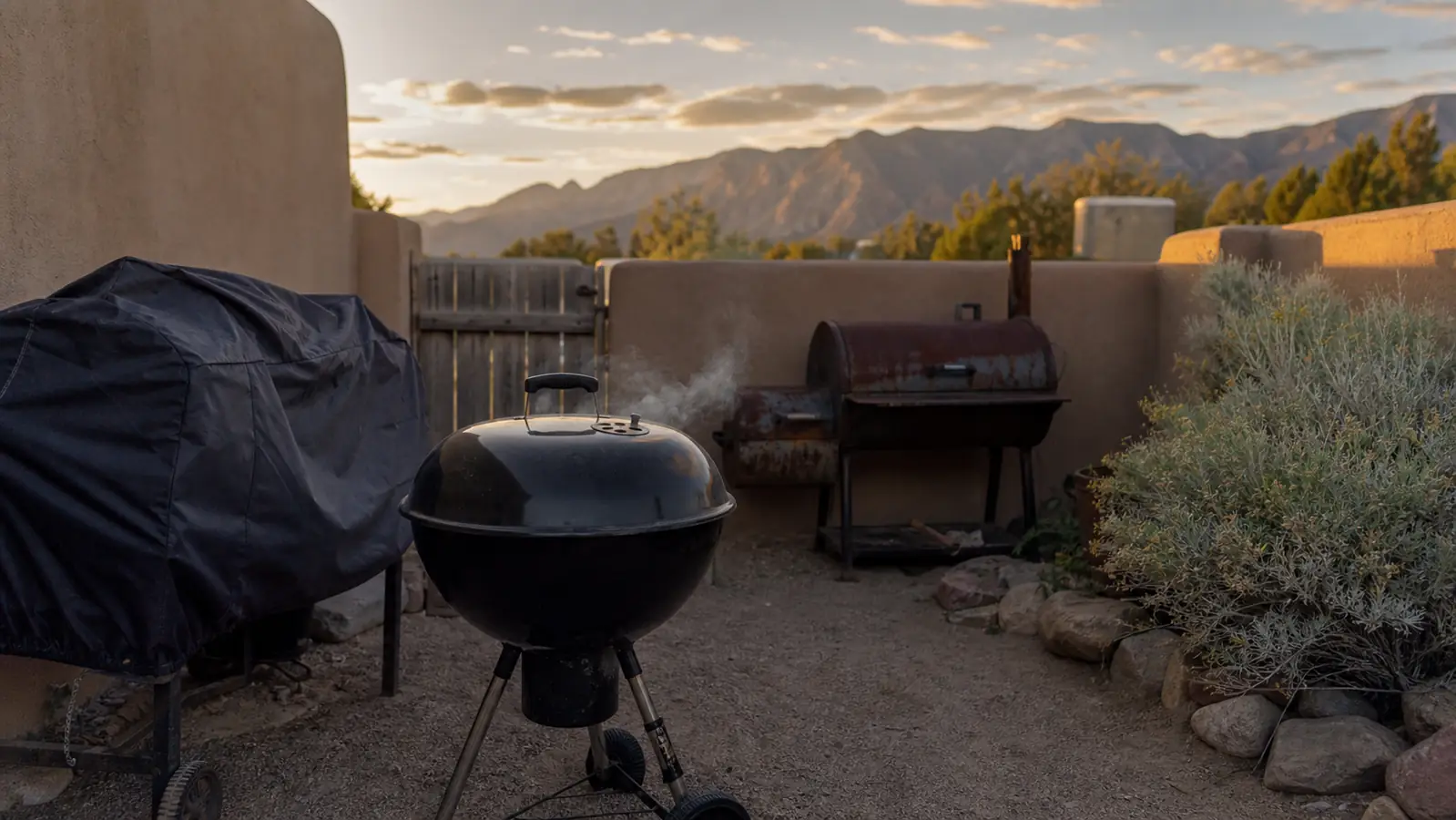
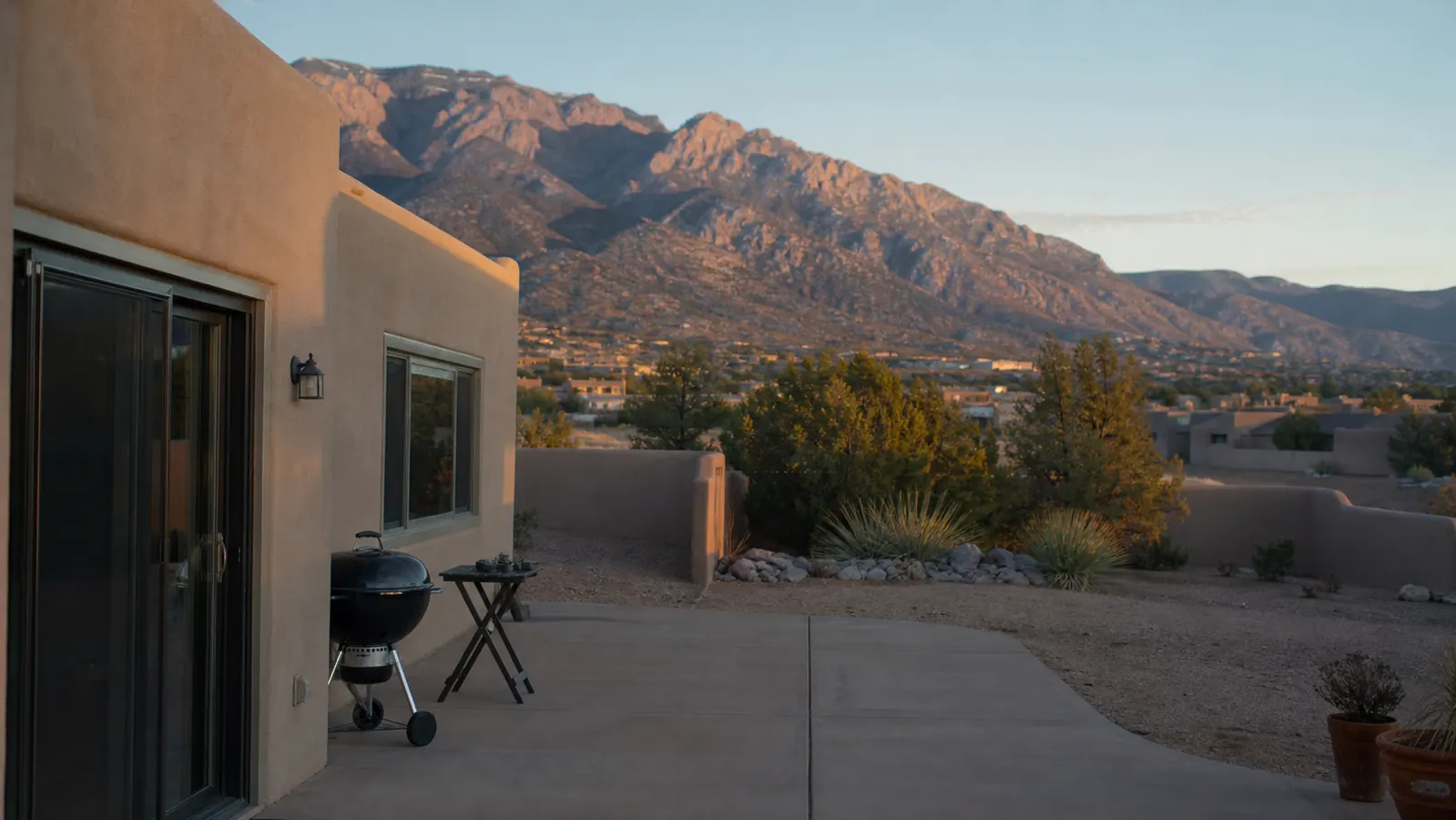
In April of 2015 my patio in Albuquerque had three cookers on it. A propane grill I'd had for two years, still under warranty. An offset smoker my father had welded together in his garage and handed down to me when he moved to Santa Fe. And a black 22-inch Weber kettle I'd bought on a whim after reading one too many forum threads about how a simple charcoal grill could out-cook both of the others combined. I didn't believe it yet. I just didn't have anywhere left to put a fourth cooker if the Weber turned out to be junk, so I figured I'd find out fast.
I picked the Weber Original Kettle Premium mostly because the guy at the hardware store on Menaul had one at home and wouldn't stop talking about it. Porcelain-enameled bowl, a lid that actually sealed, vents that moved smooth instead of grinding on rust. I fired it up for the first time on a Tuesday, nothing fancier than bone-in chicken thighs with a green chile rub, and it held a steady 325 degrees for forty minutes without me touching a single vent after the first adjustment. That doesn't sound like much. At the time it felt like magic.
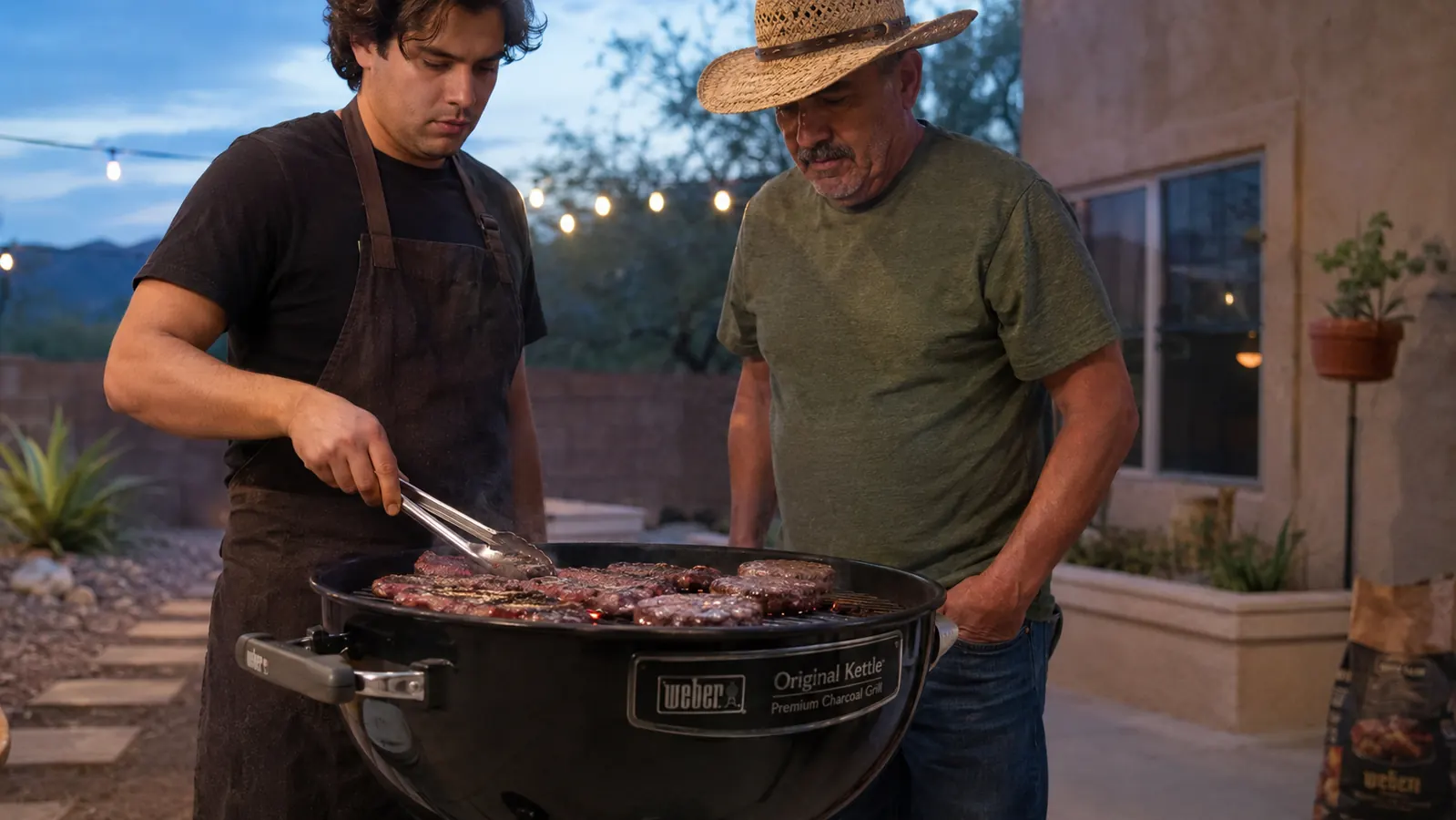
The real test came that September, over Labor Day weekend, when my wife Teresa's father Tomas drove up from Las Cruces for the holiday. Tomas is a gas grill man through and through, has been since the seventies, and he made no secret of what he thought about charcoal. Fussy, slow, a way to burn your dinner while you're busy fussing with a chimney starter. He'd said as much every time he visited and found me out back with a bag of briquettes instead of a propane tank.
I'd been running the Weber for four months by then and I was tired of defending it in the abstract, so I decided to prove it instead. I covered the gas grill and left the offset smoker cold, and I cooked that entire Labor Day spread, carne asada, green chile cheeseburgers, and a couple dozen ears of corn, on the kettle alone. Direct heat for the meat, corn pushed to the cooler side of the grate once the coals burned down. Tomas stood next to me most of the afternoon, arms crossed, watching the vents like he expected them to fail him.
They didn't. The carne asada came off with a real char on it, the kind you only get from live coals instead of a burner, and by the third burger Tomas had stopped talking about propane and started asking how I'd gotten the fire so even. I handed him the vent slider and let him work it for the last round of corn. He got it right on the first try. Watching a man who'd trusted gas for forty years lean over a bag of charcoal and grin about it is the kind of thing that sticks with you.
I sold the propane grill on Craigslist that October for less than I wanted, and I gave my father's old offset smoker to my brother-in-law, who actually had the patio space and patience for it. The Weber kettle stayed. It's the only cooker that's had a permanent spot on my patio since, and eleven summers later that hasn't changed.
A man who trusted propane for forty years leaned over a bag of charcoal that afternoon and grinned. That's the moment I stopped explaining the Weber to people and just started cooking on it.
Ready to Stop Explaining Charcoal to Your Skeptics
The Weber Original Kettle, 22-Inch, is the same grill that turned my father-in-law around in one afternoon. Simple vents, an even fire, and a bowl built to outlast whatever's currently crowding your patio.
Amazon Check Today's Price on Amazon →Clearing the patio down to one grill changed more than the layout. I used to spend the first twenty minutes of any cookout deciding which cooker matched the mood, gas for a quick weeknight, offset for a lazy Saturday. Once the kettle was the only option, that decision disappeared, and I just cooked. Turns out most of what I thought needed a smoker or a gas burner did just fine over charcoal and a little patience, and I got faster at reading a fire because I had no other tool to lean on when it misbehaved.
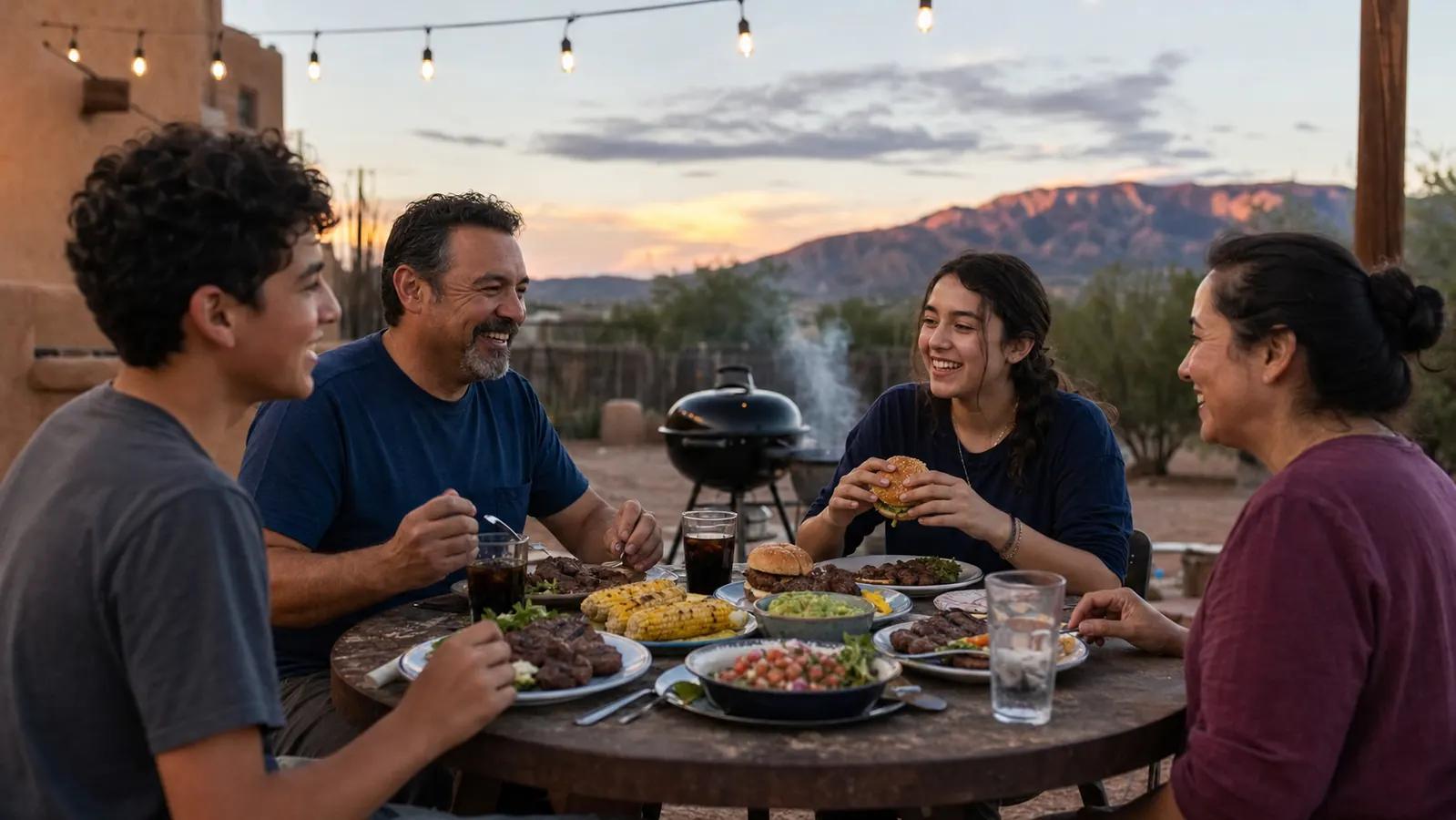
I won't pretend the kettle has been perfect. The ash catcher has needed replacing once, and the plastic clip on the cleaning handle cracked a couple years back after enough hot summers. It's a one-grill solution, so if I'm feeding twenty people I have to cook in shifts instead of spreading the load across two cookers, and that's a real tradeoff for anyone who hosts big parties often. For my family of four plus the occasional Tomas visit, one Weber has always been enough.
Tomas still drives up a few times a year, and he still asks to run the vents himself when there's corn on the grate. Last summer my older kid, sixteen now, asked to light the chimney alone for the first time, and I stood back and let him figure out the timing the same way I had to. That's the part nobody tells you about a good grill. It's not really about the grill. It's about who ends up standing around it with you, year after year, once you finally stop rotating cookers and just commit to the one that works.
What I'd Tell You If We Were Sitting at My Kitchen Table
If you're standing on a patio with two or three half-used cookers right now, trying to figure out which one to keep, I'd tell you what I told myself back in 2015. Pick the one that does the most jobs well instead of the one that does one job perfectly, and give it a real season before you decide. I didn't expect a simple charcoal kettle to outlast a gas grill and an inherited smoker, but eleven years later it's the only cooker that's earned a permanent spot on my patio, and it's the one my father-in-law asks for by name.
One Grill, Eleven Summers, Still the Only One That Stayed
If your patio is as crowded as mine used to be, the Weber Original Kettle, 22-Inch, is worth clearing space for. It's the grill that ended the rotation at my house.
Amazon Check Today's Price on Amazon →