
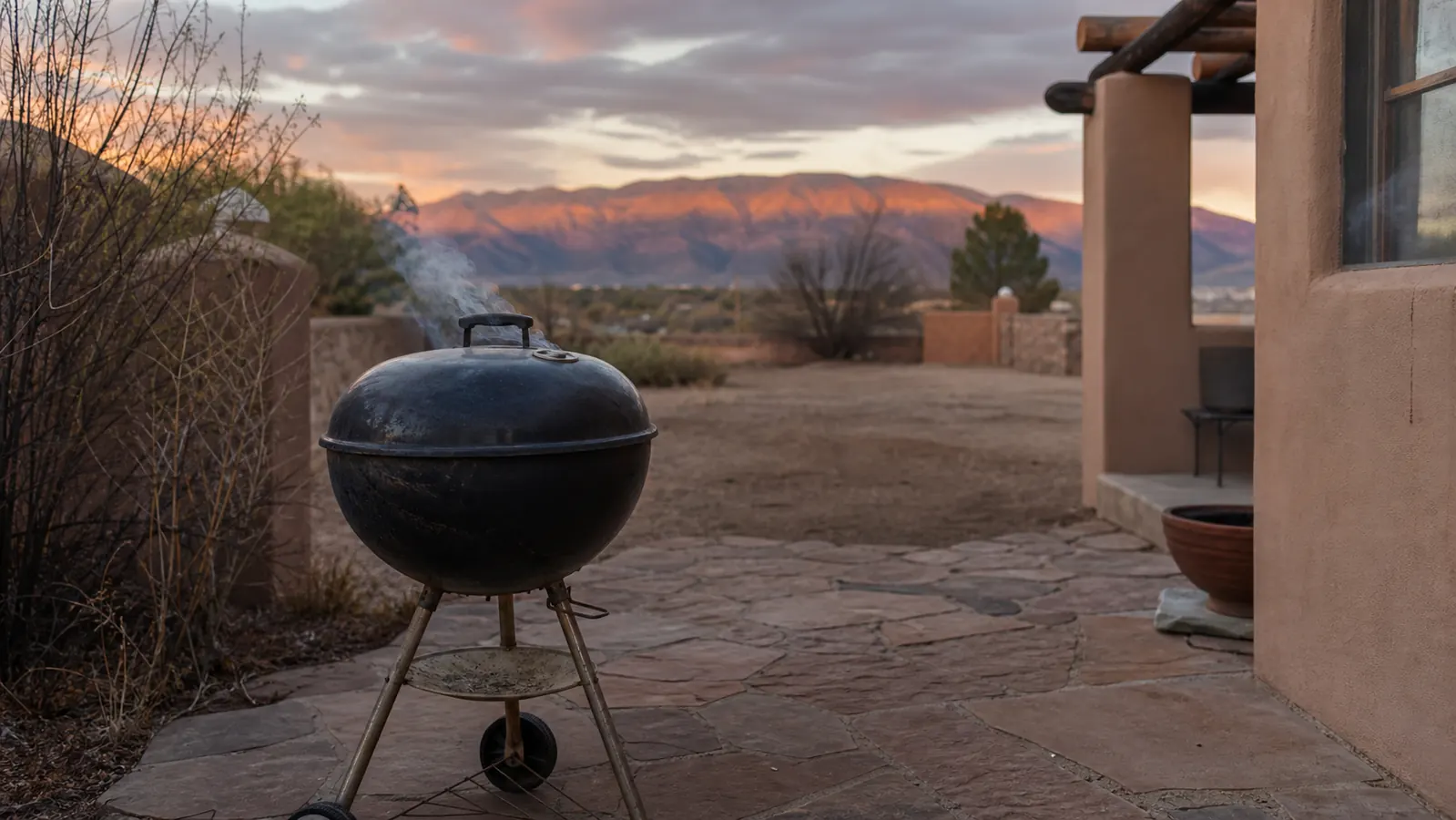
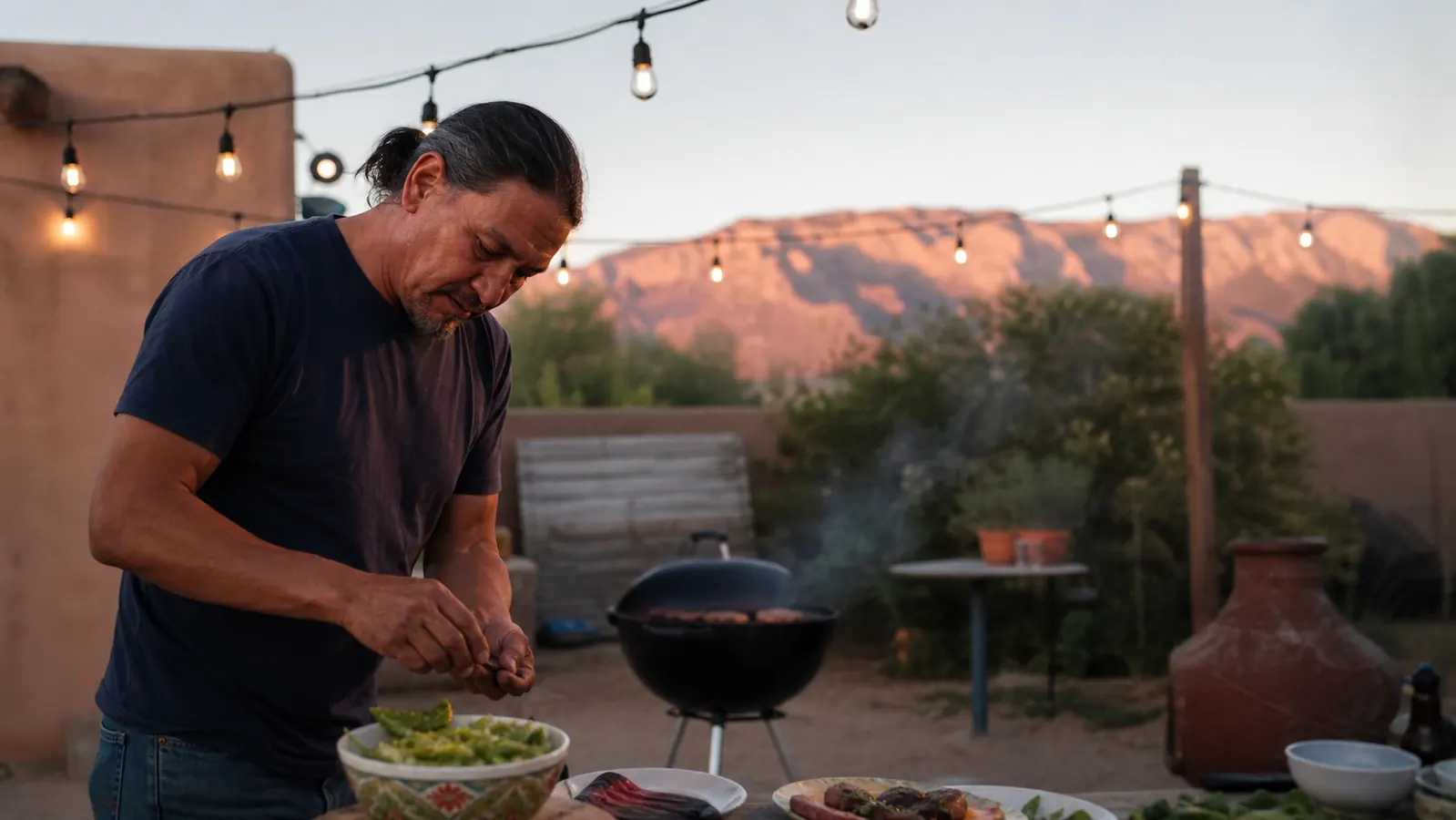
I bought my Weber kettle in the spring of 2014, the 22-inch Premium in black, and it has not left my patio since. Twelve grilling seasons at 5,000 feet in Albuquerque will tell you things about a grill that a two-week test never will. The porcelain-enameled bowl still holds its shape. The legs are original. The lid still seats tight enough that I can choke a fire down to almost nothing when I want low heat for a Sunday brisket. This is not a first-impressions review. It's what's left of a Weber kettle after roughly 400 cooks, three sets of grates, one replaced ash catcher, and more green chile cheeseburgers than I've bothered to count.
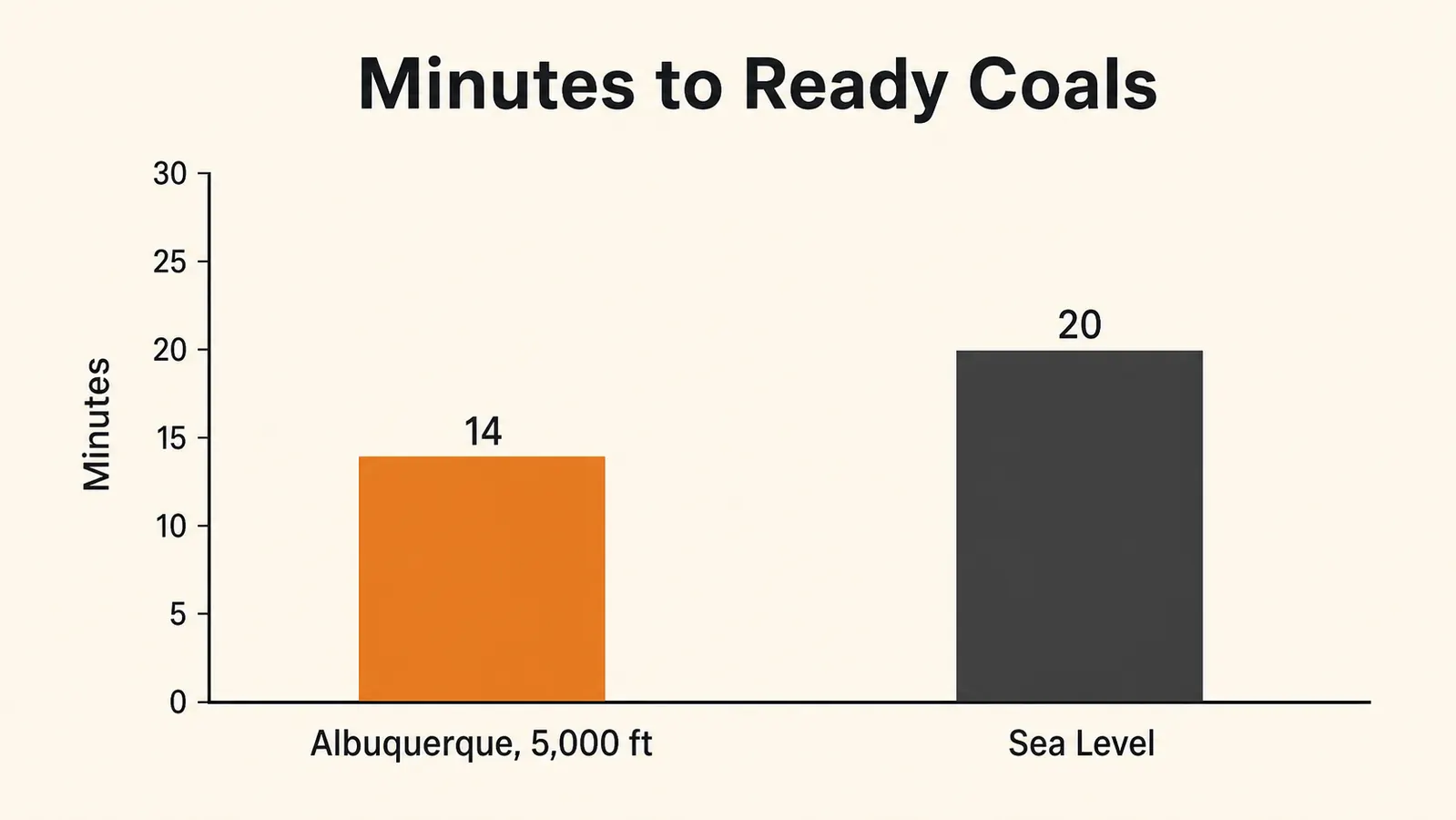
Here's the thing about grilling at altitude most reviews never mention, because most reviewers cook at sea level. Thin, dry air here means charcoal catches faster and burns hotter than it does back east. A chimney of briquettes that takes 20 minutes at sea level is ready in about 14 minutes up here, and water simmers around 202 degrees instead of 212. A grill's vent system has to do more work to keep you from torching your food, and that's exactly where a well-built kettle like the Weber either earns its keep or falls apart. Mine has earned it, season after season, though not without a few real complaints I'll get into below.
The Quick Verdict
After twelve seasons of real use in high-desert conditions, the Weber Original Kettle still lights fast, holds temperature better than either grill I've owned since, and shows mostly cosmetic wear. The plastic sweep handle on the cleaning system is the one part I'd flag as a weak point down the road.
Amazon Check Today's Price →Still Chasing Flare-Ups on a Grill That Won't Hold a Temperature?
The Weber Original Kettle, 22-Inch, is the same design I've run for twelve years at altitude. Simple, no electronics to fail, and built to outlast whatever cheaper kettle you're currently fighting with.
Amazon Check Today's Price on Amazon →How I've Used It, Cookout After Cookout
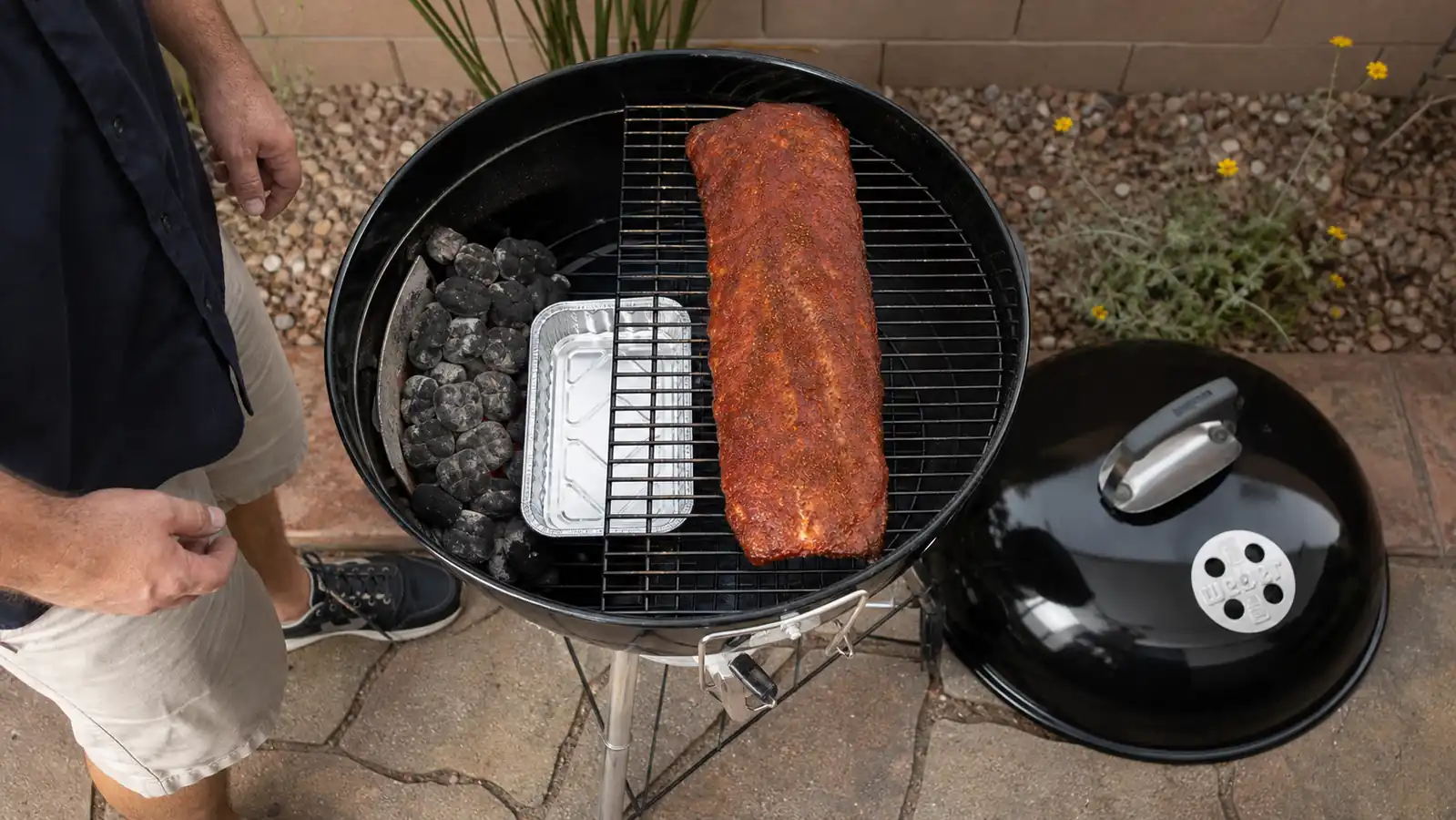
In an average month between April and October I fire this kettle up eight to ten times. Weeknight cooks are quick, a chimney of briquettes lit in about 15 minutes at this altitude, then seared carne asada or green chile cheeseburgers over direct heat in under 20 minutes total. Weekend cooks run longer. A 4-pound spatchcocked chicken over indirect heat, with a foil pan of water on the empty side of the coals, is usually done in about 75 minutes at 350 degrees measured at the grate. I'm running a kettle, not a set-it-and-forget-it smoker, so I'm working the vents by feel rather than trusting a dial, and that hands-on rhythm is a big part of why I still reach for the Weber over the gas grill sitting six feet away. On a slow weeknight I'll do nothing fancier than bone-in chicken thighs with a green chile rub, fifteen minutes a side over direct heat, and that's usually enough to make the whole cul-de-sac smell like dinner. It's the kind of grill that rewards showing up to it often instead of once a month for a big event.
The longer cooks are where the kettle earns the most respect from me. Over Memorial Day weekend in 2025 I ran a 6-pound brisket flat low and slow using the snake method, mesquite mixed with a little pecan for sweetness, holding right around 250 degrees for close to seven hours. It hit the stall around hour four, same as it always does, and I wrapped it in butcher paper and pushed through. At altitude that stall can drag a little longer than what you'd read about in a sea-level cookbook, because the air is thinner and evaporative cooling works differently. The kettle held its temperature within about 10 degrees the whole cook without me babysitting the vents every fifteen minutes.
Maintenance is part of the routine too, not an afterthought. I dump the ash catcher after every two or three cooks, wipe the grates down with a wire brush while they're still warm, and the grill lives under a cover between uses since Albuquerque throws dust storms at you with zero warning most springs. That cover habit alone has probably added years to how the porcelain finish looks today.
The Lid Vents and Why They Matter More at Altitude
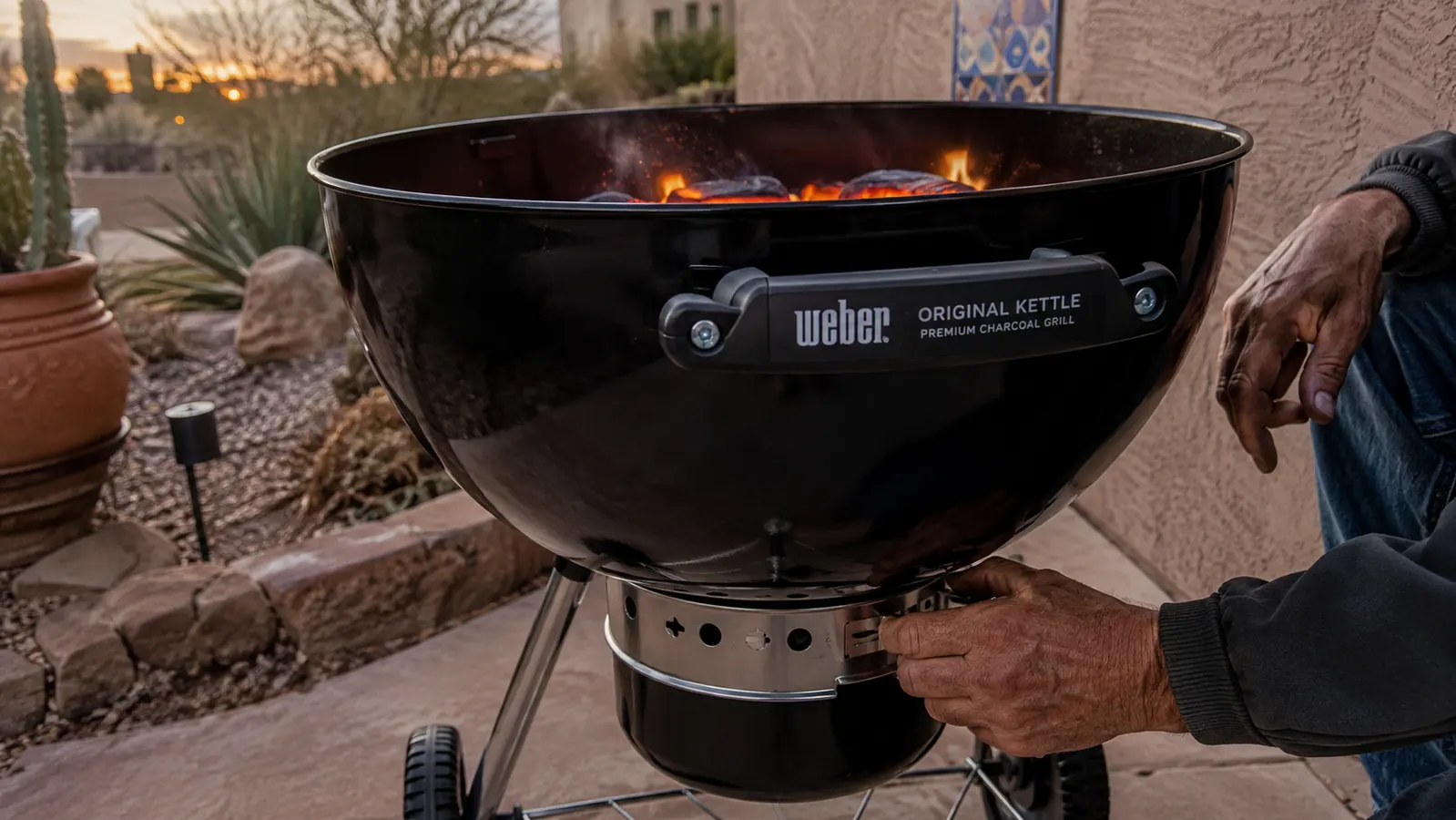
The Weber kettle's vent system is about as simple as it gets: a rotating damper on the bottom bowl and a sliding damper on the lid, both metal, both still moving smoothly on mine after twelve years. Open both wide and you get a hot, fast fire for searing. Close them most of the way and you can hold a low, steady temperature for hours. It sounds basic because it is, and that simplicity is exactly why it still works after over a decade of use. There's no electronic fan, no app, nothing that can fail on a firmware update.
At altitude, that airflow control matters more than the manual admits. Thinner air means less oxygen per breath of wind moving through the vents, so I've had to relearn my vent settings compared to what friends at sea level use. Holding 275 degrees for a rack of ribs here usually means both vents about a third open, where a buddy of mine in Houston runs his closer to a quarter open for the same temperature. It took me a full season of guessing to dial that in, and the Weber's vents responded predictably enough that I could actually learn the pattern instead of fighting inconsistent hardware. I keep a small notebook by the back door with vent settings scribbled next to dates and outside temperatures, because the wind here changes things too. A 15 mph gust off the mesa can push a steady 275-degree cook up past 320 in ten minutes if I'm not paying attention, something I never had to think about before I understood how exposed my patio really is.
The one real complaint here: the bottom vent slider can seize up with fine ash if you let it go too long between cleanings. Mine locked up solid in year six, and I had to pull it apart and scrub out packed ash with a wire brush before it would slide again. It's a five-minute fix, but it's not mentioned anywhere in the manual, and if you skip regular ash dumps you'll hit the same issue.
How the Kettle Holds Up After Twelve New Mexico Summers
The porcelain-enameled bowl is the part that impresses me most. Twelve summers of intense high-desert UV, the kind that cracks vinyl siding and fades car paint in a few years, and the black finish on my kettle has dulled slightly but hasn't chipped, flaked, or rusted through anywhere. I've seen cheaper painted grills from other brands blister and peel within two or three seasons in this sun. The enamel coating on the Weber is doing real work that a painted finish just can't match. I've hosed sand and grit off that bowl more times than I can count after our spring dust storms roll through, and short of a light film that wipes off with a damp rag, the finish underneath has stayed solid. That's twelve years without a single rust bubble working its way through the black coating, which is more than I can say for the patio furniture sitting six feet away.
Not everything aged this well. The original thermometer built into the lid started reading about 25 degrees low around year eight, which I only caught because I cross-checked it against a separate probe thermometer during a chicken cook that came out overdone despite the lid gauge claiming 325. I don't trust the built-in thermometer on any kettle grill anymore, Weber or otherwise, and I'd tell anyone buying this one to plan on a separate probe thermometer from day one rather than treating that lid gauge as gospel.
I also replaced the ash catcher once, around year nine, after a gust during a dust storm folded the thin metal pan and it never sat flush again. That part runs cheap and is easy to swap, but it's worth knowing that the ash catcher is the flimsiest single piece on the whole grill. The legs, wheels, and bowl have all outlasted it without complaint.
The One-Touch Cleaning System, Twelve Years Later
Weber built this kettle with a sweep arm inside the bowl that you rotate with an external handle to knock ash down through the charcoal grate and into the catcher below, without opening the lid or touching hot coals. On a grill I use eight to ten times a month, that system gets used constantly, and for most of its life it's worked exactly as advertised. A few turns of the handle after a cook, dump the catcher, done.
The weak point showed up in year nine: the plastic clip that connects the external handle to the internal sweep arm got brittle from years of heat cycling and cracked clean off mid-turn. I ordered a replacement part directly from Weber for a few dollars and had it swapped in ten minutes, but that plastic piece is clearly the least durable component on an otherwise all-metal grill, and I'd expect most long-term owners to face the same repair eventually.
What I Looked at Before I Bought It, and What I'd Look at Now
Back in 2014 I compared the Weber against a couple of cheaper generic kettles at the hardware store in town, the kind with thin painted steel bowls and plastic legs. They ran less up front, but a friend who bought one the same year had his rust through at the bottom seam by year three. I also looked at Weber's own smaller 18-inch and the larger 26-inch before landing on the 22-inch, which fits a whole spatchcocked chicken or a decent-sized brisket flat without crowding, and still stores against the house wall without eating the whole patio.
If I were buying today, I'd still land on this same 22-inch kettle. I've considered Weber's newer Master-Touch line a few times, which adds a hinged grate and a slightly deeper ash catcher, both genuinely useful upgrades, but the price gap over the current price of the Original Kettle hasn't felt worth it for what I actually cook. If you're starting from zero, the Original Kettle is still the one I'd point a new backyard cook toward first. I've also had neighbors ask whether a kamado-style ceramic grill would serve them better for the long haul, and my honest answer is that ceramic holds heat more efficiently, but it costs a lot more up front and cracks if you drop it wrong. For the price and the simplicity, the steel-and-porcelain kettle design has proven itself durable enough that I've never seriously regretted skipping ceramic.
What I Liked
- Porcelain-enameled bowl has held up through twelve summers of intense UV without chipping or rusting through
- Manual vent system is predictable and easy to learn, even after relearning it for altitude
- One-touch cleaning system cuts real time off post-cook cleanup
- Simple design means almost nothing electronic to fail after years of use
- Holds low, steady temperatures for long cooks like brisket without constant babysitting
Where It Falls Short
- Built-in lid thermometer drifted about 25 degrees low by year eight, plan on a separate probe
- Ash catcher is the flimsiest part of the grill and may need replacing
- Plastic clip on the cleaning system's sweep handle can crack after years of heat cycling
- Bottom vent slider can seize with packed ash if you skip regular cleanings
- No side table or storage built in, you'll want a cart or nearby prep surface
Twelve years in, the only thing on this grill that's failed outright is a two-dollar plastic clip. That's a track record most gas grills never get the chance to prove.
Who This Is For
This is for the cook who wants one grill that does live-fire searing and slow low-heat cooks equally well, and who doesn't mind working vents by hand instead of trusting a digital dial. It's also a smart pick for anyone in thin, dry air like mine in Albuquerque, or anywhere at real elevation, where a cheap grill's inconsistent airflow gets exposed fast. If you want a grill you can realistically still be using in a decade with only minor part swaps, this is built for that kind of ownership. It's also the right call for anyone who cooks for a small group on a regular basis rather than hosting one massive party a summer, since the 22-inch bowl handles weeknight portions just as comfortably as a Saturday cookout for six.
Who Should Skip It
If you want push-button convenience, a built-in thermometer you can actually trust out of the box, or a grill with attached side tables and storage, look elsewhere. This kettle asks you to learn its rhythm, and if you'd rather set a temperature dial and walk away, a pellet grill will suit you better than any kettle, Weber's or otherwise. It's also not the right pick if patio space is tight, since the 22-inch bowl and lid need real clearance to open and work around.
Twelve Years, One Grill, Still Going
That's the actual track record on my Weber Original Kettle, 22-Inch. If you're ready to stop replacing a cheap grill every couple of seasons, this is the one I'd point you toward.
Amazon Check Today's Price on Amazon →