
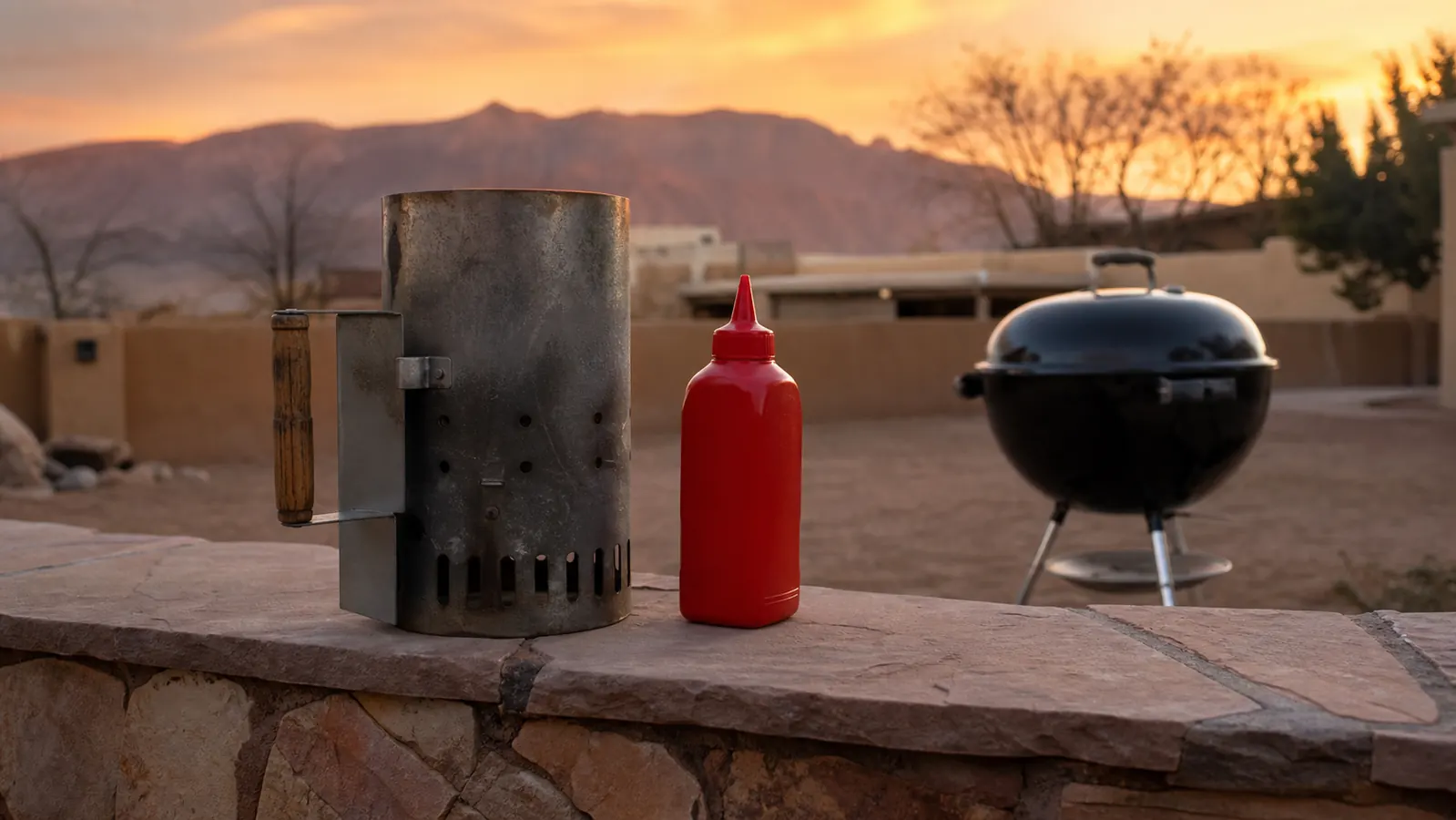
A neighbor asked me last month why I bother with a metal cylinder that runs about $25 when a $5 bottle of lighter fluid does, in his words, the exact same job. Fair question, and I've used both plenty over the years I've been grilling here in the high desert outside Albuquerque. Short answer: the Weber Rapidfire chimney starter gets my coals hotter and more evenly lit than lighter fluid ever did for me, and it does it without the harsh fuel smell that used to hang over my patio for the first ten minutes of every cook. But I'm not going to pretend lighter fluid loses on every front, because it genuinely doesn't, and telling you otherwise would just be selling you something instead of helping you decide.
Here's the short version before the numbers. If you grill more than once a week, if the smell of lighter fluid has ever bothered you, or if you've bitten into a burger that tasted faintly like a gas station, the Weber Rapidfire pays for itself within a handful of cooks and keeps paying you back for years after that. Mine has lit somewhere around 180 fires since I bought it in April 2024 and it hasn't slowed down once. If you grill three or four times a summer, don't want another tool taking up shelf space, and the smell has never once bothered you, lighter fluid is still a perfectly reasonable way to start a fire, and it's honestly the cheaper option on day one. Both of those things can be true at once, which is exactly why this comparison isn't as one-sided as most chimney starter reviews make it sound.
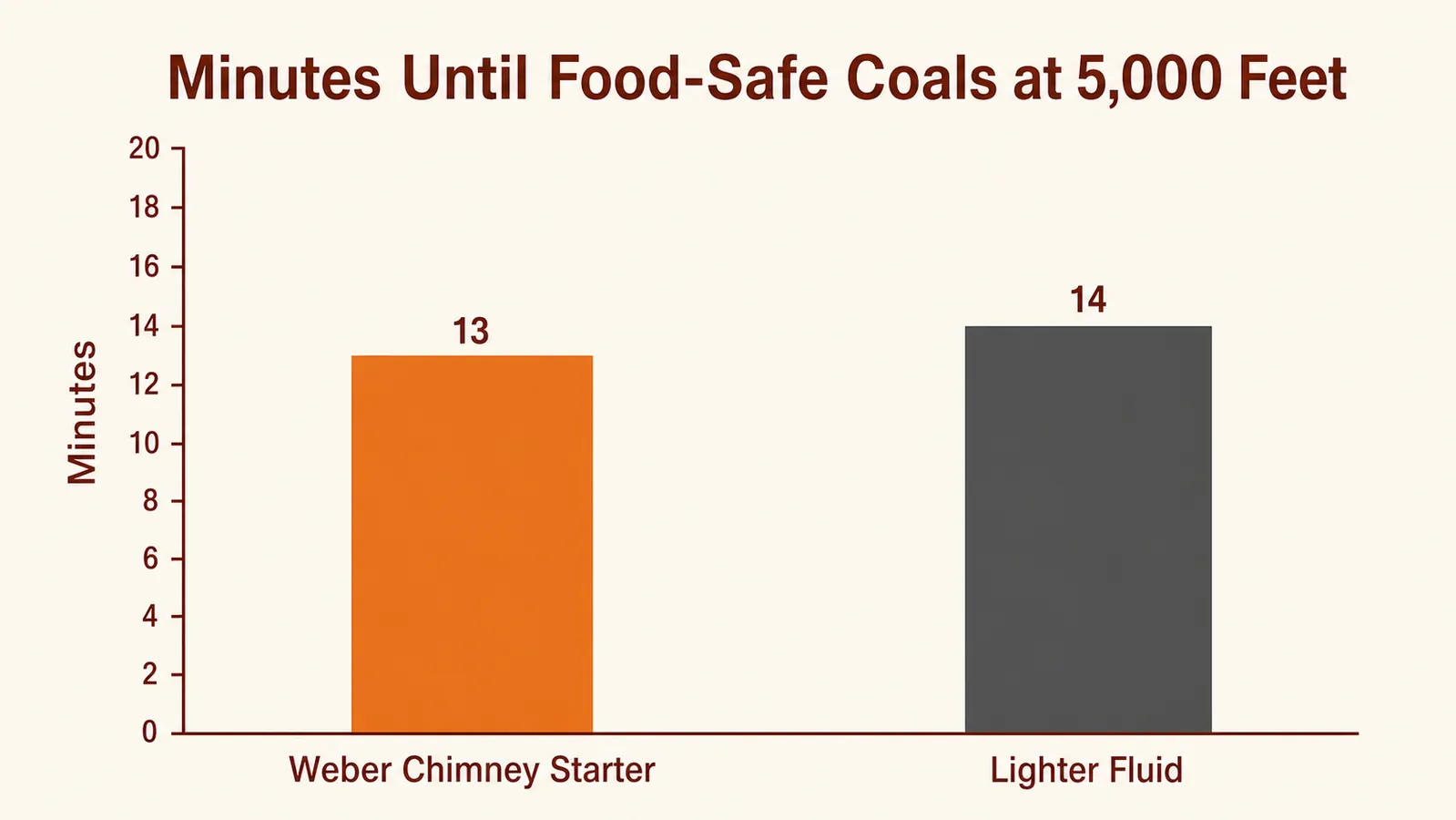
For this comparison I actually timed both methods back to back on the same evening, same brand of briquettes, same outdoor temperature around 68 degrees with a light breeze. The Weber's full load hit ash-over at 13 minutes on the stopwatch. The lighter fluid batch was showing open flame at 9 minutes, but I made myself wait a full 5 minutes past that before I'd have trusted it anywhere near food, based on how strong the fluid smell still was, landing it at 14 minutes total. That single side-by-side test is roughly what I've seen play out over years of using both, and it's the numbers behind the chart further down this page.
| Spec | Weber Rapidfire Chimney Starter | Charcoal Lighter Fluid |
|---|---|---|
| Time to Food-Safe Coals | 12 to 14 minutes for a full load at 5,000 feet, timed on my own patio across dozens of cooks | 8 to 10 minutes to soak and light, but plan on another 4 to 6 minutes waiting for the raw fluid smell to burn off before food touches the grate |
| Taste and Off-Flavors | None. Just wood smoke and charcoal, nothing added to the coals themselves | A noticeable petroleum edge if food goes on even a couple minutes early, especially on chicken skin or anything fatty enough to hold onto the smell |
| Upfront Cost | About $25 for the starter, a one-time purchase that outlasts several grilling seasons | $4 to $6 for a bottle, no separate tool required at all |
| Ongoing Cost | Free newspaper or a 25-cent paraffin starter cube per light, no recurring purchase | A 32-ounce bottle runs dry after roughly 10 to 12 lights, so $4 to $6 again every few weeks for anyone grilling weekly |
| Safety | Coals catch inside an enclosed metal cylinder, no open flare-up during lighting | Flare-ups happen if fluid touches coals that are already lit or still warm from a prior cook, a real burn risk I've seen firsthand at other people's cookouts |
| Reliability in Wind | A stiff gust off my patio can pull flame sideways out of the bottom vents during lightoff, a cheap wind guard fixes it | Fluid ignites regardless of wind, but a gust can just as easily push flame back toward the hand holding the lighter |
| Storage | A 12-inch tall metal cylinder that needs a hook or a spot on a shelf year-round | A bottle that lies flat in a cabinet or garage shelf and takes up almost no room |
| Learning Curve | A few lights to dial in newspaper amount and loading technique before ash-over gets consistent | About as close to zero as fire-starting gets. Squeeze, wait a minute, light |
Where the Weber Rapidfire Wins
Speed is the one people argue about most, and once you account for the whole process instead of just the lighting itself, the Weber Rapidfire actually comes out slightly ahead. A full load in mine hits ash-over in 12 to 14 minutes up here at 5,000 feet, and once those coals are ready they're ready, no waiting required. Lighter fluid looks faster on paper, fluid-soaked coals can technically be lit in 8 to 10 minutes, but that number is misleading if you're the kind of cook who won't put food on top of a raw fuel smell. Add the 4 to 6 minutes most people wait for that smell to burn off, and the two methods land almost dead even. The real difference isn't the stopwatch, it's that the Weber's 13 minutes is genuinely food-safe the whole time, while lighter fluid's 8 minutes is only technically lit, not actually ready.
Taste is where I stopped being neutral on this a long time ago. I grew up thinking every burger had a faint gas station edge to it, because that's what lighter fluid does when it hasn't fully burned off, and I genuinely didn't know any different until a friend handed me his Weber chimney at a cookout maybe fifteen years back. The coals it produces carry nothing but wood smoke and char. No petroleum smell curling off the grate, no aftertaste on the first bite of a chicken thigh, nothing. Fatty cuts and anything with skin hold onto that fluid smell worse than lean cuts do, which is exactly why the difference shows up most on the foods people care about getting right. Once you've grilled a season without that flavor hanging around, it's genuinely hard to go back to a bottle.
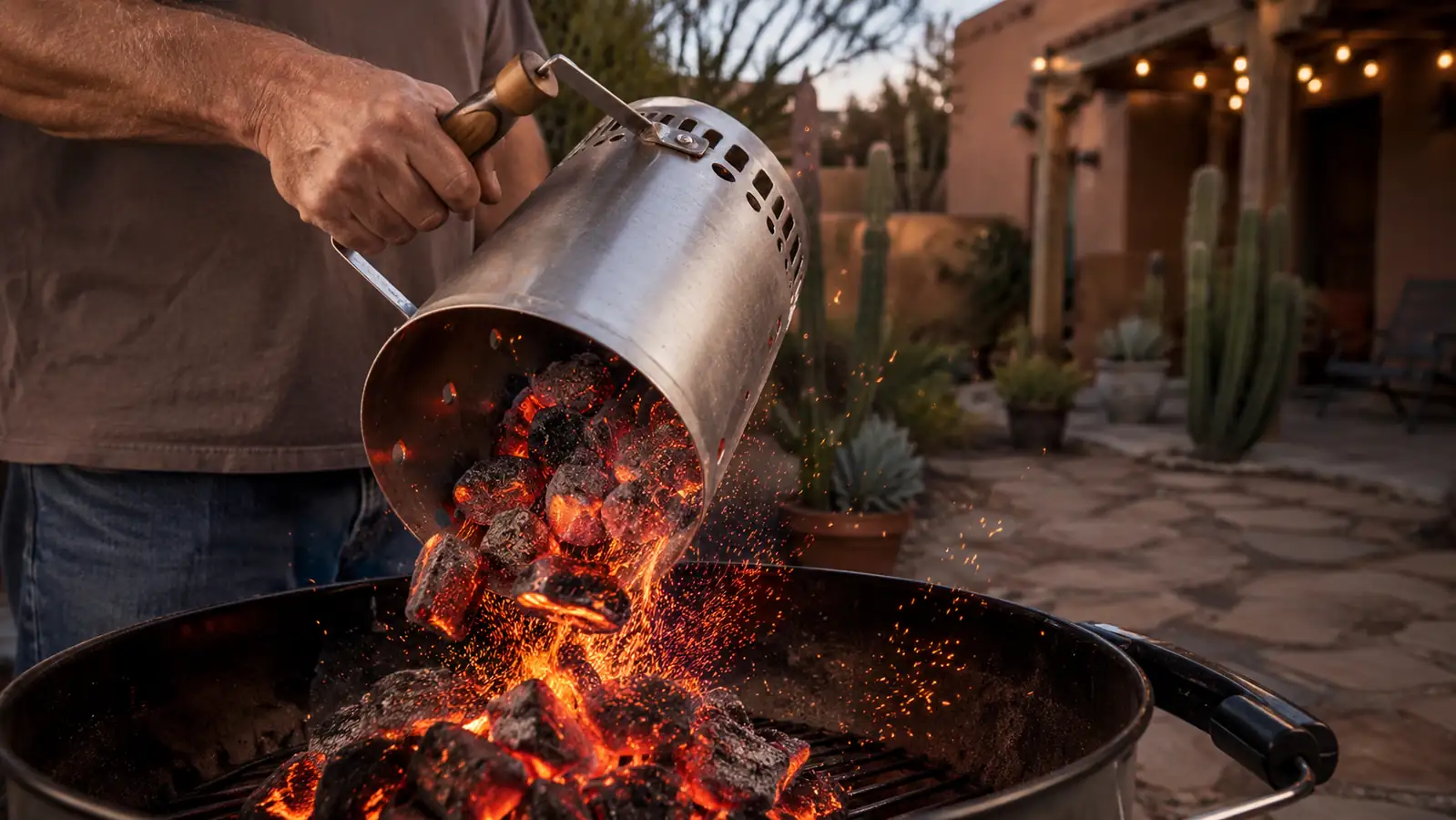
Safety and ongoing cost round out the Weber's real advantages. Coals catch inside an enclosed cylinder, so there's no open flare-up during lighting the way there is when fluid meets an already-warm bed of coals, which I've watched happen at a neighbor's cookout when he tried to top off a fire that hadn't fully died down. And because the Weber runs on free newspaper or a cheap paraffin cube instead of a bottle you have to keep buying, the cost gap closes fast. A bottle of fluid lasts maybe 10 to 12 lights before it's empty and you're back at the store, which is roughly one grilling month for anyone cooking weekly. The Weber's one-time $25 has already paid for itself several times over on mine, somewhere around 180 lights in and still going.
Consistency over time is the piece that's easy to undervalue until you've actually put a tool through a full season of near-daily use. Somewhere around 180 lights since April 2024, the Weber Rapidfire still ashes over in that same 12 to 14 minute window it did on day one, full loads and half loads alike. The galvanized steel body has scorched dark on the lower third from direct flame, but it hasn't rusted, and the wire rack that separates the newspaper chamber from the charcoal above hasn't warped or burned through a single weld. Lighter fluid doesn't wear out the way a tool can, obviously, there's nothing mechanical in a bottle to fail, but the flip side is that every single light with fluid means buying more of it, where the Weber's performance on light number 180 cost me nothing beyond two sheets of newspaper I already had lying around the house.
Where Lighter Fluid Wins
Upfront cost is the honest, obvious win for lighter fluid, and I'm not going to soften that. A bottle runs $4 to $6 today, no separate tool needed at all, while the Weber Rapidfire is closer to $25 as a one-time purchase. If you're grilling once or twice a summer, maybe for a Fourth of July cookout and not much else, that $20 gap is real money, and the Weber's long-term savings don't have time to kick in before the season's over. For anyone testing the waters with charcoal grilling for the first time and not sure they'll stick with it, a bottle of fluid is the lower-risk way to find out without committing to another piece of gear sitting in the garage.
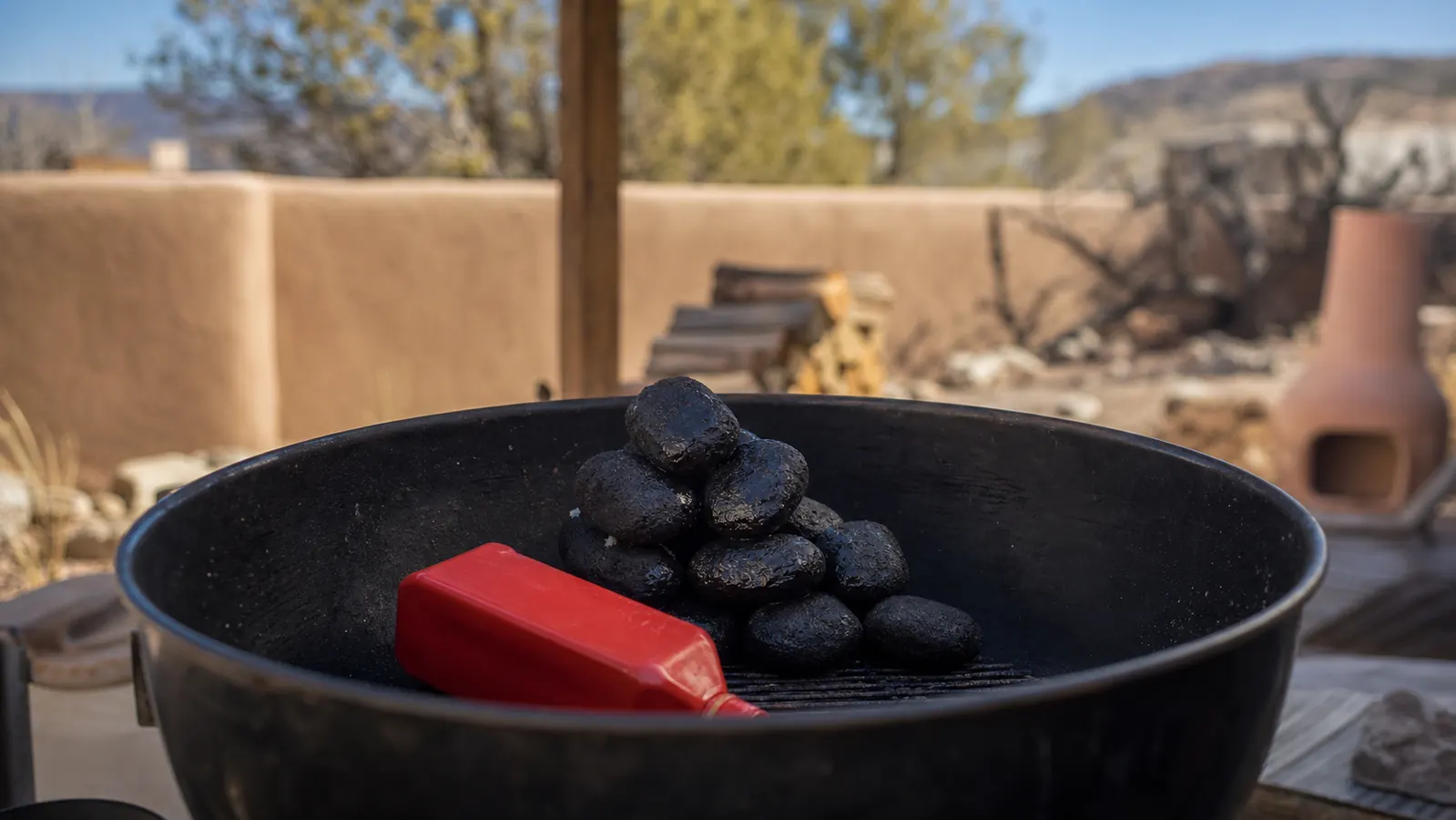
It also wins on simplicity and storage, and I don't think that gets said enough in reviews built around the fancier tool. A bottle lies flat on a shelf or in a cabinet and takes up almost no room, where a chimney starter needs a hook or a dedicated spot, mine hangs off a nail by the back door. There's genuinely nothing to learn with lighter fluid either. Squeeze, wait a minute for it to soak in, light, done. The Weber took me a handful of cooks to dial in, mostly figuring out how much newspaper to pack and how evenly to layer the briquettes so the whole load ashes over at the same rate instead of leaving half the stack stubborn and black. For someone who grills rarely and doesn't want to think about technique at all, that zero learning curve is worth something real.
There's also a real case for lighter fluid when someone else is doing the lighting. I've handed a bottle to a houseguest who'd never grilled before and watched him get a fire going on the first try with zero instruction, which isn't something I can say about the Weber. Loading it right, figuring out how much newspaper to use, learning to tap the cylinder so briquettes settle flat instead of piling unevenly on one side, that took me a handful of tries to get consistent. On a camping trip or at someone else's house where you don't have your usual gear on hand, a bottle of fluid and a lighter is about as foolproof as fire-starting gets, and that's worth something on the occasions when convenience matters more than the extra few minutes or the aftertaste.
Tired of the Fuel Smell Getting Into Your Food?
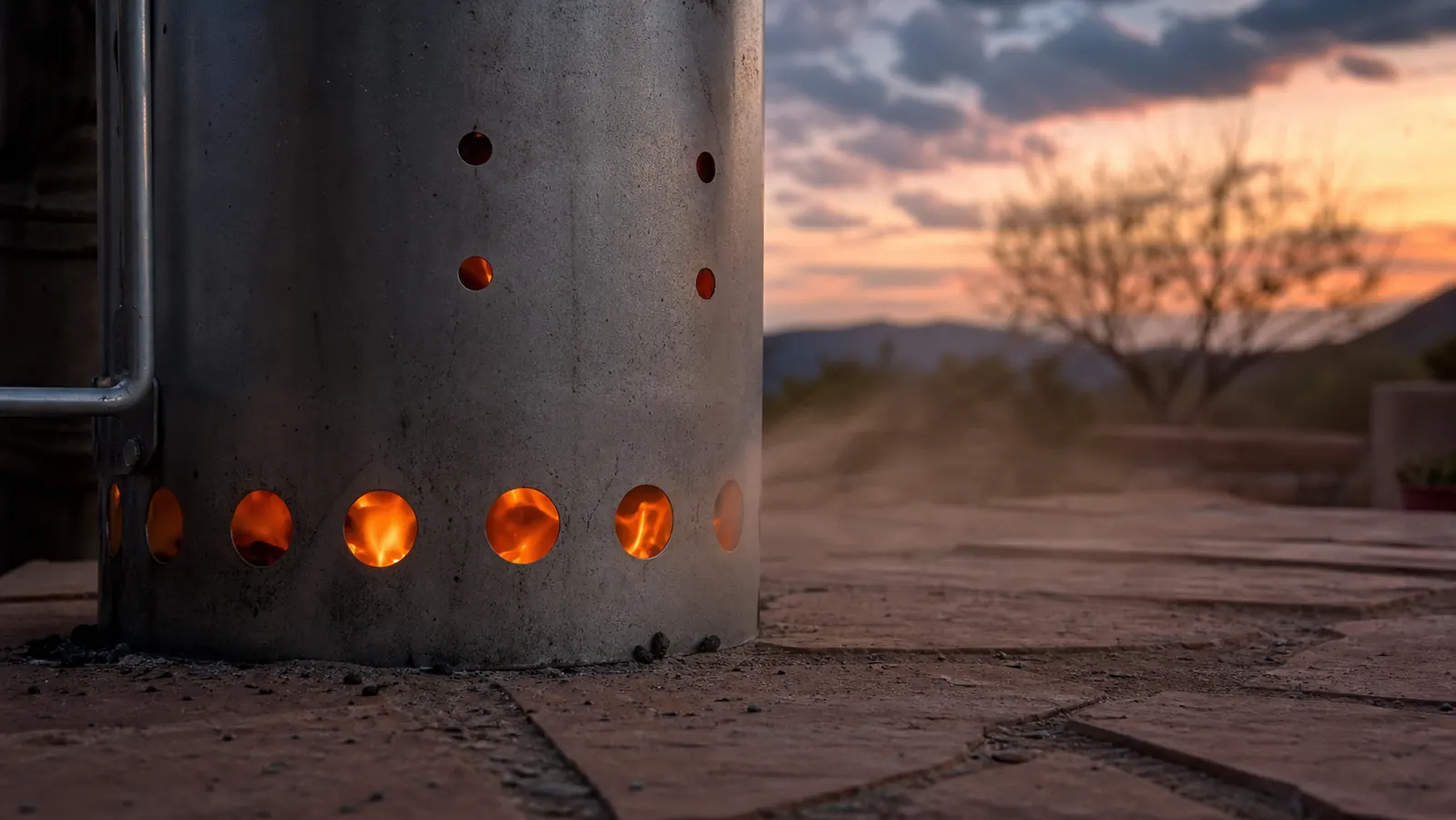
The Weber Rapidfire is the chimney starter I switched to after years of lighter fluid, and it's the one thing on my patio that's never once put a petroleum taste into a burger. Full loads ash over in 12 to 14 minutes up here at altitude, no flare-ups, no smell.
Amazon Check Today's Price on Amazon →Who Should Buy Which
If you grill more than once a week, cook for a crowd on any kind of regular basis, or you've ever noticed that faint gas station taste on a burger and wondered where it came from, buy the Weber Rapidfire. It's not just a nicer way to light charcoal, it changes what your food actually tastes like, and once you've had a season without that petroleum edge you'll wonder why you waited. It's also the better call for anyone running a kettle year-round the way I do, since a $25 tool that lasts for years and lights on free newspaper beats buying a new bottle of fluid every few weeks, especially once you're past the first month or two of ownership.
If you're grilling three or four times a summer, don't want another tool cluttering a shelf, and the smell has genuinely never bothered you or anyone you're feeding, lighter fluid is a completely reasonable choice and I'm not going to talk you out of it. It's cheaper on day one, it needs no dedicated storage, and there's nothing to learn before your first cook. Just be honest with yourself about how often you're actually firing up the grill. Somewhere around a dozen lights a summer, the math starts favoring the Weber anyway, since that's about when a single bottle of fluid runs dry and you're back at the store buying another one.
Altitude plays into this decision more than most comparisons account for. Up here at 5,000 feet, the Weber's tall, narrow shape works with the thinner air instead of against it, pulling a steady draft through the coals that gets a full load ashed over in that 12 to 14 minute window I keep coming back to. My brother-in-law down in San Diego runs the same chimney and reports closer to 18 to 20 minutes at sea level, so the speed advantage over lighter fluid is actually larger for anyone cooking at elevation than a national review would suggest. If you're grilling in thin, dry air like I am, that's one more reason the Weber's edge over a bottle of fluid runs bigger here than it might somewhere closer to sea level.
My honest take after years of using both: I keep a bottle of lighter fluid in the garage for the rare occasion I lend gear to a neighbor who's grilling for the first time and doesn't want to learn a new tool that same afternoon. Everything I cook myself goes through the Weber. Close to 180 lights in on mine and I still haven't found a reason to go back, and at this point I don't expect to.
180 Lights In, Still No Reason to Go Back to a Bottle
That's my honest track record with the Weber Rapidfire chimney starter against years of lighter fluid before it. If the smell and the flare-ups are still part of your routine, this is the swap I'd actually make.
Amazon Check Today's Price on Amazon →