
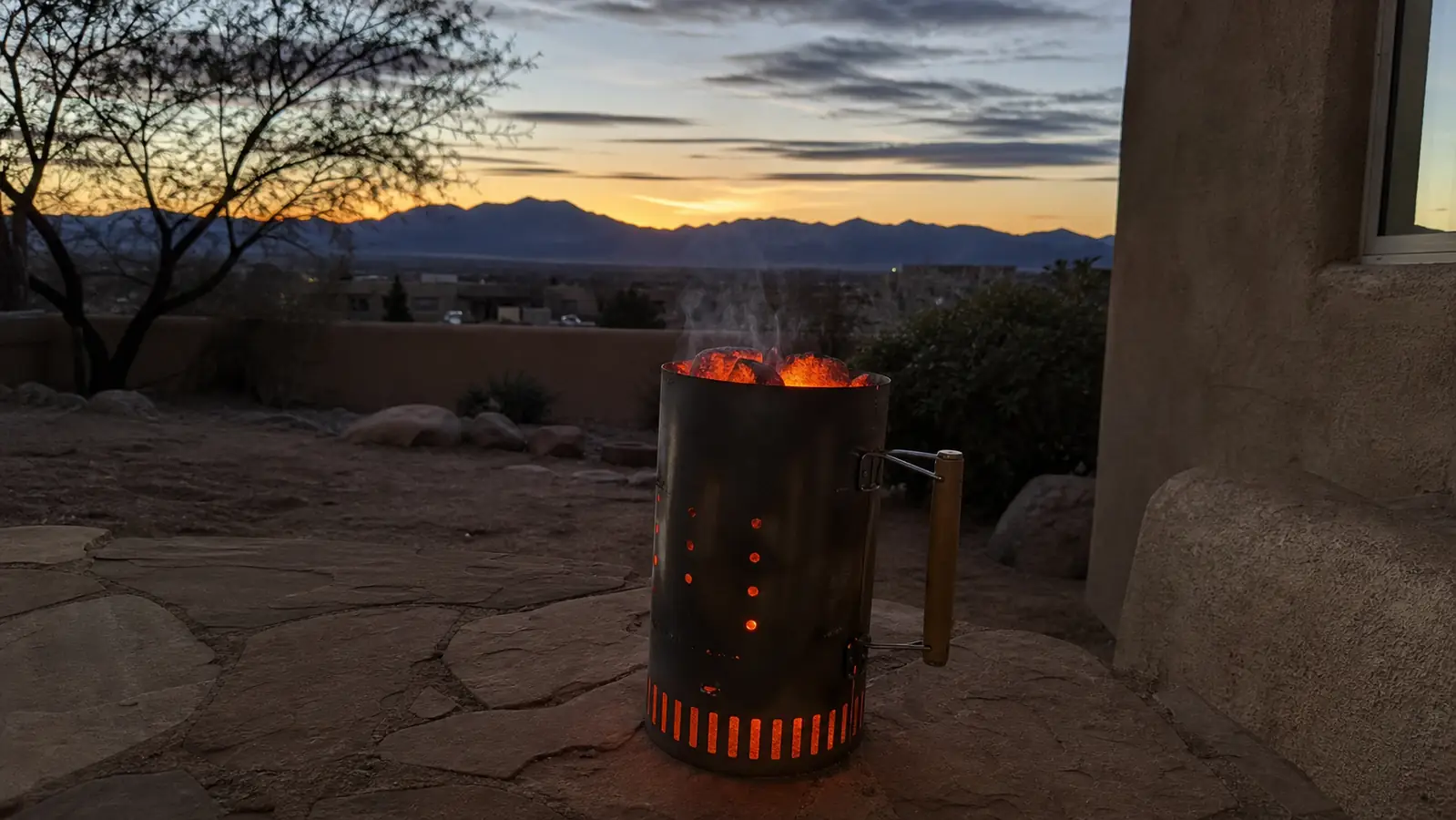
I bought my Weber Rapidfire chimney starter in April 2024, a few weeks before I fed about 35 people off one 22-inch kettle at my daughter's best friend's graduation party. That's a rough way to meet a piece of gear, three full loads of charcoal lit back to back with people standing around waiting for burgers. Two years and something close to 180 cooks later, that same Weber chimney is still the first thing I reach for whenever I fire up the grill, whether it's a Tuesday night with four chicken thighs or a Saturday brisket that needs a full load of lump plus a second smaller batch two hours in.
This isn't a first-week impressions post. It's what two years of near-daily use at 5,000 feet in Albuquerque does to a $25 cylinder of stamped steel with a wood handle riveted to the side. Short answer, not much, and that's the whole point of a tool built this simple. Long answer, including the one habit of mine that's actually caused wear, is below. For a $25 tool with basically one job, that track record has held up longer than any grill accessory I own except the kettle itself.
The Quick Verdict
Two years and roughly 180 lights in, the Weber Rapidfire still gets a full load of charcoal fully ashed over in 12 to 14 minutes at this altitude, and the only real wear is cosmetic scorching on the lower third of the cylinder. The wood handle is holding up better than I expected.
Amazon Check Today's Price →Still Fighting Lighter Fluid Flare-Ups Every Time You Grill?
The Weber Rapidfire chimney starter is the same one I've lit close to 200 times over two seasons. No fluid, no flare-up, coals ready to dump in under 15 minutes even up here at altitude.
Amazon Check Today's Price on Amazon →Two Years of Lighting Every Single Cook
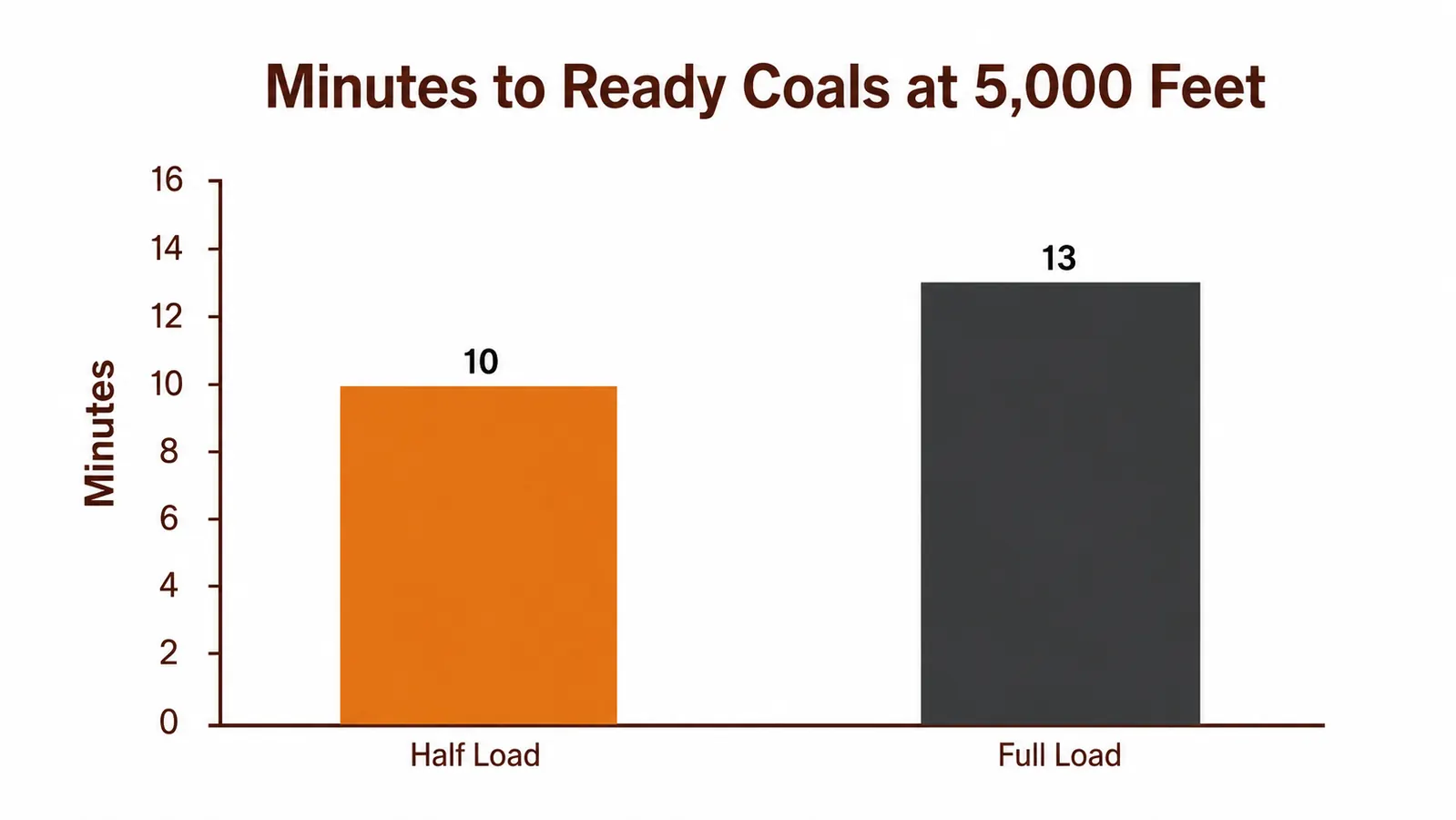
I use this Weber chimney literally every time I grill, which by my count is somewhere between 80 and 90 times a year. Weeknights it's a half load, maybe two dozen briquettes, stuffed under with two sheets of newspaper and lit at the bottom vents. Full ash-over on a half load usually takes about 10 minutes up here. Weekend cooks call for a full load, close to 100 briquettes by weight, and that takes 12 to 14 minutes to go from bottom coals glowing to the whole stack showing gray ash on top, which is the signal I use to dump it into the kettle.
For a big cook like a brisket or a full rack of ribs I'll sometimes run the Weber chimney twice, lighting a second smaller batch about two hours into a long cook to top off a dying fire without opening the lid on the main load and losing heat. That second light happens fast because the cylinder is already warm from the first round, usually under 9 minutes to full ash-over on a half load once the metal has residual heat in it.
The wire rack inside, the part that separates the newspaper chamber from the charcoal sitting above it, is the piece I worried about most going in. Two years of ash falling through it and getting scraped out with a stick hasn't warped it or burned through a single weld on mine. It's held its shape better than I expected from something that thin. That's the kind of durability I didn't expect from a part that costs Weber almost nothing to stamp out, and it's the reason I've never had to replace a single piece of this chimney.
Loading It Right, and the Mistake That Cost Me a Season
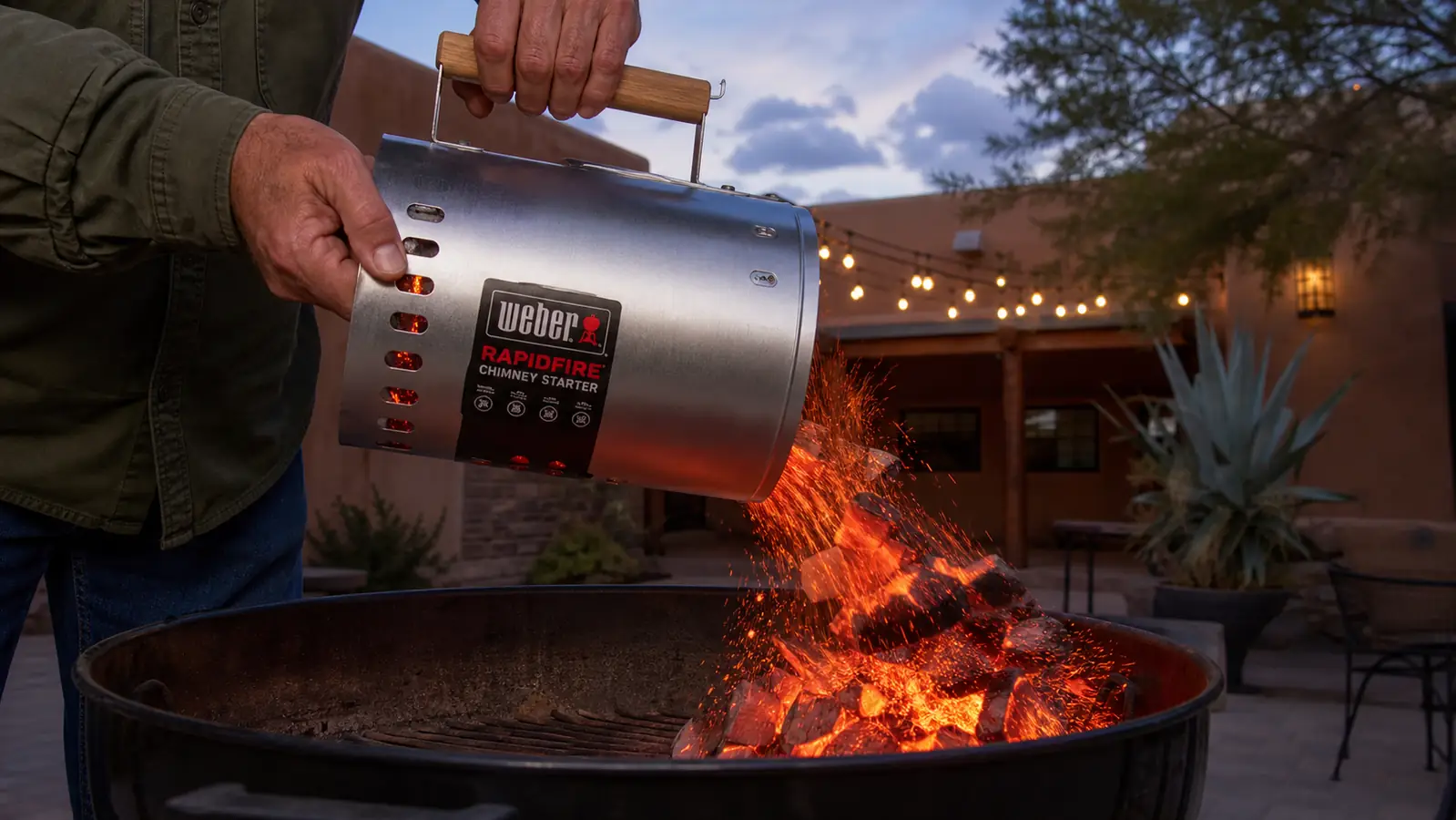
It took me longer than I'd like to admit to figure out that how you load the Weber chimney matters almost as much as the tool itself. My first summer with it, I dumped briquettes in loose and uneven, more on one side than the other, and I'd get patchy ash-over, half the stack ready and the other half still black and stubborn. A neighbor who's run a smoker for twenty years finally pointed out I was pouring from too far above the rim, which knocks the briquettes into an uneven pile instead of a level one. Once I started filling it in stages, a layer at a time, tapping the side of the cylinder between pours to settle things flat, my ash-over times got both faster and more consistent.
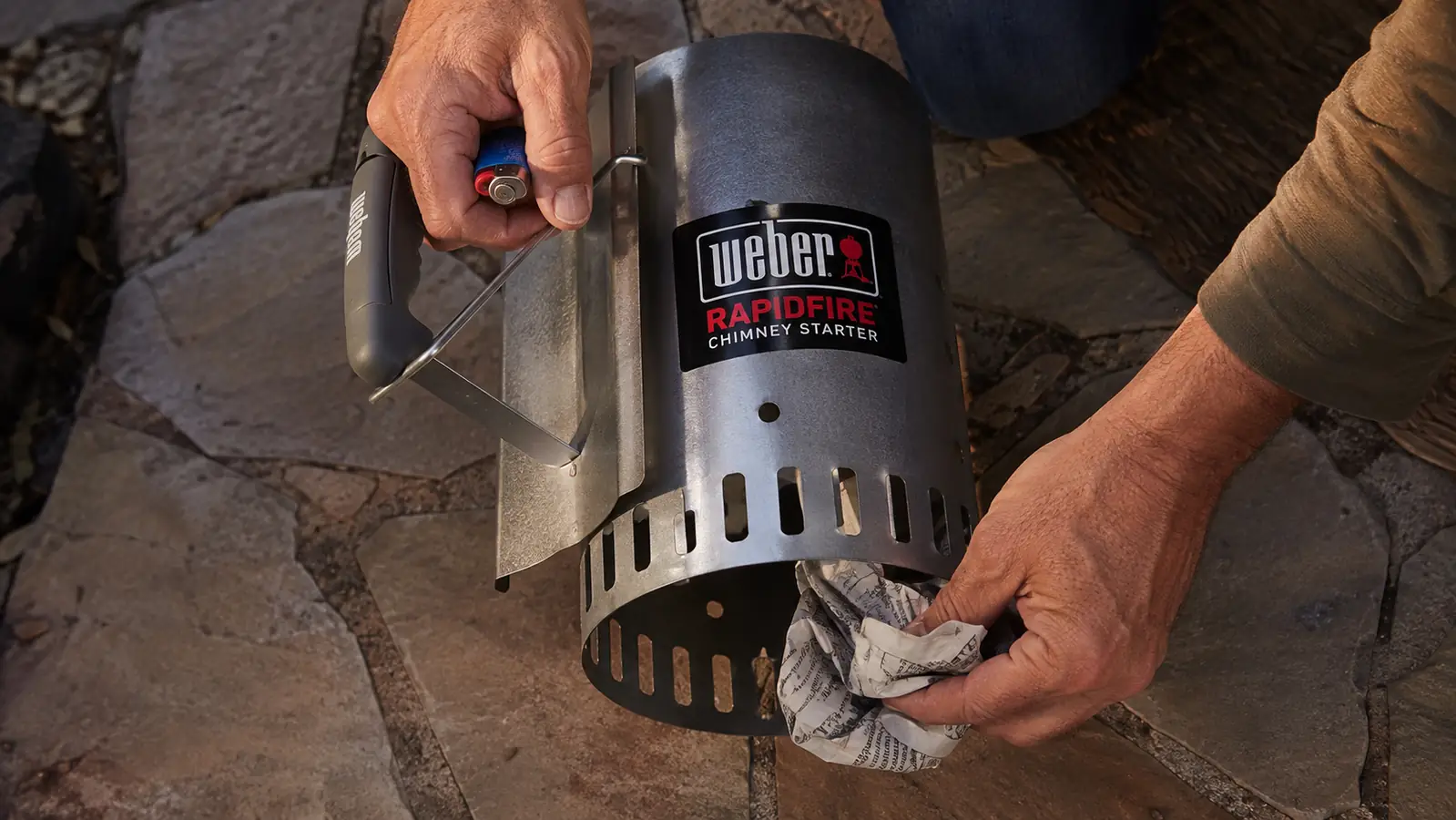
Newspaper amount matters too, more than the instructions that came with it let on. Two full sheets, loosely crumpled, not packed tight, is the sweet spot I've landed on after two years of guessing. Pack it too dense and it smolders instead of catching, which is exactly what happened at that graduation party back in April 2024 when I was rushing and stuffed the bottom chamber too full. That first load took almost 25 minutes to fully ash over, longer than any load has taken before or since, and I had thirty-five hungry guests standing around wondering why lunch was late. I switched to paraffin starter cubes for anything time-sensitive after that. One cube under a loosely packed layer of newspaper lights just as reliably, with a lot less room for me to mess it up.
What Changes About Lighting Charcoal at 5,000 Feet
Thin, dry air at altitude means a chimney starter lights faster here than it does at sea level, and the Weber's tall, narrow shape actually works with that instead of against it. The chimney effect that gives this tool its name, hot air rising through the stack and pulling flame up through the coals, depends on a steady draft, and thinner air moves through that column with less resistance. My brother-in-law in San Diego runs the same Weber Rapidfire and reports a full load taking closer to 18 to 20 minutes, against my 12 to 14 up here.
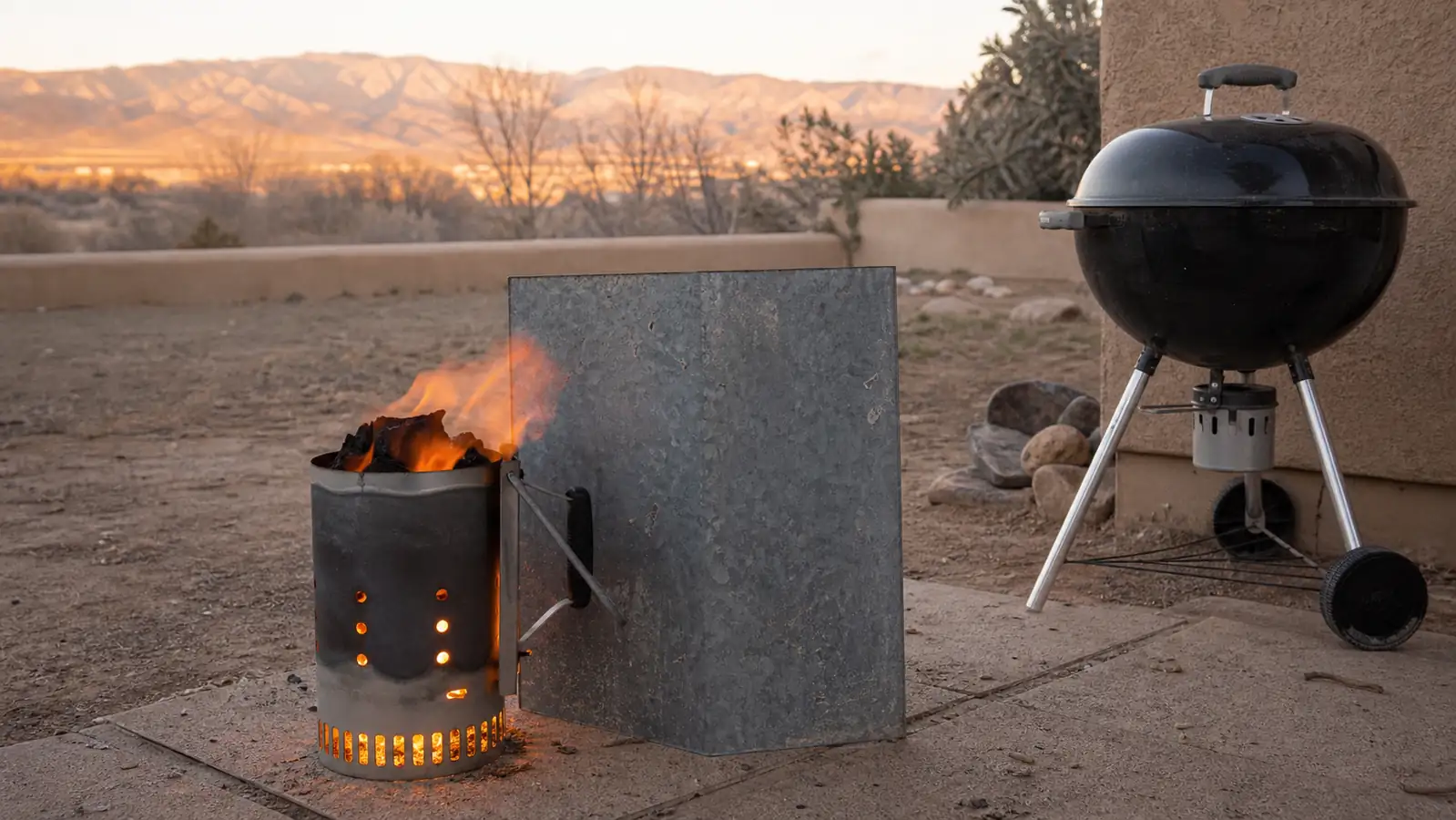
The tradeoff is wind. My patio sits exposed to whatever comes off the mesa behind the house, and a stiff gust can pull flame sideways out of the bottom vents while I'm still getting the newspaper lit. I've singed more than one shirt cuff standing too close during a windy lightoff. A cheap galvanized wind guard, a few dollars at the hardware store, fixed that problem for me in year one and I still set it up on breezy evenings.
The Handle, the Rivets, and Two Years of Grabbing It Hot
The wood handle on the Weber Rapidfire is the part I was most skeptical of when I bought it. Wood next to a column of burning charcoal sounded like a design that wouldn't last a season, let alone two. It's proven me wrong. The handle itself has darkened some from heat and smoke, mostly on the underside where it sits closest to the cylinder, but it hasn't cracked, split, or gotten loose at either of the two rivets holding it to the metal body.
I will say the handle gets warmer than I'd like on a long weekend cook where I'm carrying a full lit load of charcoal across the patio to dump it. It's never been too hot to hold bare-handed for the two or three seconds it takes to walk it to the kettle and tip it over, but I wouldn't want to hold it much longer than that, and I keep a grill glove by the back door for exactly this reason now.
Rust, Dents, and What Two New Mexico Summers Did to the Metal
The Weber chimney lives outside year-round under a patio cover, not tucked away in the garage between cooks, and after two full summers and one mild winter it's showing the scorching you'd expect on the lower third of the cylinder, a dark, almost bluish discoloration from repeated direct flame. What it isn't showing is rust. I wipe it down with a dry rag after dumping ash and that's the only maintenance it's gotten, and the galvanized steel has held up against our dry heat and the occasional dust storm without a single orange spot forming anywhere on it.
The one physical flaw is a small dent on the bottom rim, the result of me dropping it onto the flagstone sometime in year one after tipping it too fast with a full load still inside. It doesn't affect how it lights or how it sits in the kettle, it's just a cosmetic reminder to set the Weber down instead of tossing it when it's empty.
What I Compared It To Before I Bought It, and Since
Before I picked up the Weber Rapidfire I'd been lighting charcoal with lighter fluid for years, the way most people start out. I also tried an electric charcoal starter a neighbor loaned me for one cookout, a coil that plugs into an outlet and sits under a pile of briquettes. It worked, but it meant running an extension cord across the patio and standing next to an outlet for ten minutes, which felt like a worse tradeoff than just using a chimney.
I looked at a couple of off-brand chimney starters at the hardware store before settling on the Weber, mostly thinner-gauge steel versions that ran a little cheaper. A friend bought one of those the same spring and had the handle come loose from its rivets by the following summer. Mine hasn't budged. If I were buying today I'd still land on the Weber Rapidfire over a generic version. The extra bit of metal thickness and the way the handle's attached have been worth it over two seasons of daily-ish use. I've also had a couple of neighbors ask whether the newer flip-top or double-wall chimney designs other brands sell now are worth the upgrade, and my honest answer after two years on the standard Weber is that I haven't felt like I was missing anything. This design was already solved before those extra features showed up.
What I Liked
- Full load reaches ready-to-dump coals in 12 to 14 minutes at this altitude, faster than sea-level reports I've heard from other owners
- Wood handle has held up two years with no cracking or loosening at the rivets
- Galvanized steel body shows scorching but no rust after two years stored outside under a cover
- No lighter fluid taste carried into the food, and no flare-up risk when dumping coals
- Simple enough that there's nothing to break, no electronics, no moving parts beyond the wire rack
Where It Falls Short
- Handle gets warm enough on long carries that I keep a grill glove nearby for full loads
- Wind off my patio can pull flame sideways during lightoff without a wind guard
- Small dent from an early drop, a reminder it's thin galvanized steel and not indestructible
- No second handle, so dumping a full hot load solo takes a steady grip and a clear path to the grill
- Newspaper method makes a mess of ash on windy days if you're not careful where you light it
Two years, close to 180 lights, and the only thing that's actually failed on this Weber chimney is my own habit of dropping it too fast.
Who This Is For
This is for anyone who still reaches for lighter fluid out of habit and hasn't made the switch yet, or anyone running a charcoal kettle often enough that a slow, unpredictable lightoff is actually costing them time on a weeknight. If you're cooking at altitude like I am, the Weber's tall, narrow shape works in your favor, coals go from cold to ready faster here than the box or reviews from sea-level owners will tell you. It's also a smart pick if you light a fire more than once during a long cook, since a second batch fires up even quicker once the metal's already warm from round one. And if you're feeding a crowd off one grill the way I did at that graduation party, being able to trust a chimney to ash over predictably, load after load, matters a lot more than it sounds like it should when everyone's waiting on the first burger.
Who Should Skip It
If you're running a gas grill full time, none of this applies to you. It's also not the right tool if you cook on a patio that gets hit with strong, consistent wind, at least not without picking up a cheap wind guard alongside it, since an exposed lightoff in a stiff gust is more annoying than it needs to be. And if carrying a hot metal cylinder across the patio makes you nervous, an electric charcoal starter that sits still while it heats might suit you better, even with the extension cord hassle that comes with it.
Two Years, Roughly 180 Lights, Still the First Thing I Grab
That's the real track record on my Weber Rapidfire chimney starter. If lighter fluid flare-ups and 20-minute waits are still part of your routine, this is the fix I'd actually recommend.
Amazon Check Today's Price on Amazon →