
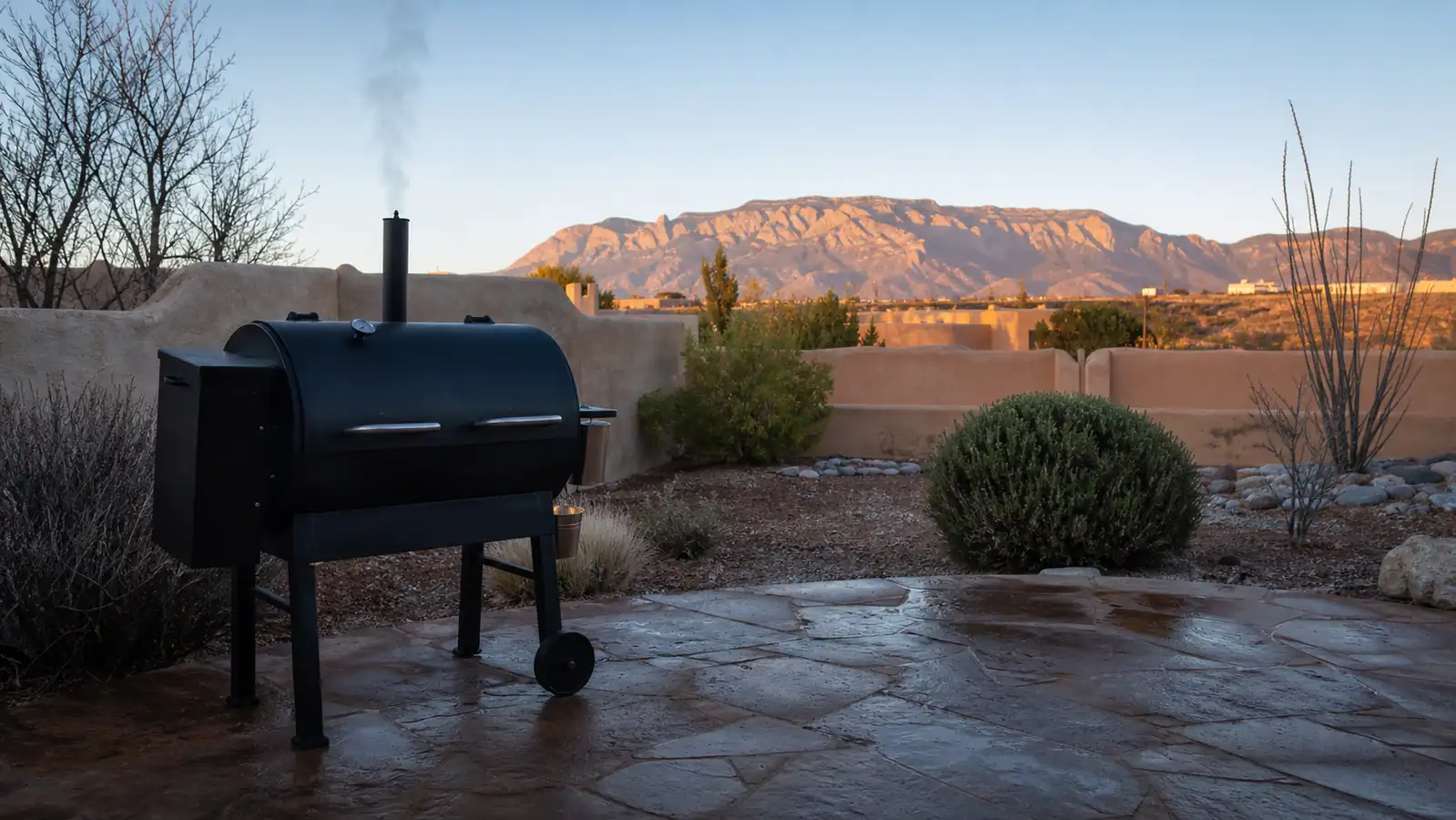
I run two smokers on my patio here in Albuquerque, a kettle I have had for twelve years and a pellet grill I added back in 2021 for the overnight cooks I do not want to babysit. The kettle burns charcoal and wood chunks. The pellet grill eats through bags of compressed wood, and for the last eight months I have been feeding it almost nothing but Traeger Hickory. I am not loyal to the name on the hopper, my pellet grill is not even a Traeger, but after working through a dozen different bags from three or four companies over the years, Traeger Hickory is the one I keep going back to at the feed store on Menaul.
This is not a bag I opened last week and wrote up while the smoke was still rolling. I have gone through nine 20-pound bags of Traeger Hickory since early December, across brisket, pork shoulder, spatchcocked chicken, and more racks of ribs than I have bothered to count. I kept a running tally of bag numbers, ash, and burn times taped inside the hopper lid, mostly because I got tired of guessing whether I had enough pellets left for an overnight cook. That tally is most of what this review is built on.
Altitude changes a pellet grill too, just not in the same way it changes a kettle. At 5,000 feet the auger does not care about thin air, but combustion does. My igniter rod needs a few extra seconds to get a coal glowing on cold mornings, and the fan on the controller runs a little more aggressively to keep the firepot lit and hold temperature. A pellet with more moisture in it, or a bag that was not sealed tight before it left a hot warehouse, struggles more up here than it would at sea level. That is the lens I am reviewing Traeger Hickory through, not just how it burns on paper, but how it holds up to New Mexico's dry heat and the swing between a 95 degree afternoon and a 55 degree night.
The Quick Verdict
After nine bags and a full season of cooks, Traeger Hickory burns clean, produces a real smoke ring, and generates less ash than most competitors I have tried. It runs a little pricier per pound than store-brand pellets, and one of my nine bags had noticeably more sawdust fines at the bottom than the rest.
Amazon Check Today's Price →Tired of Guessing How Many Bags a Cook Actually Needs?
Traeger Hickory is the pellet I keep reordering after burning through nine bags this season. Clean smoke, low ash, and it holds up in dry New Mexico heat better than the cheaper bags I tried first.
Amazon Check Today's Price on Amazon →How I've Used It, Bag After Bag
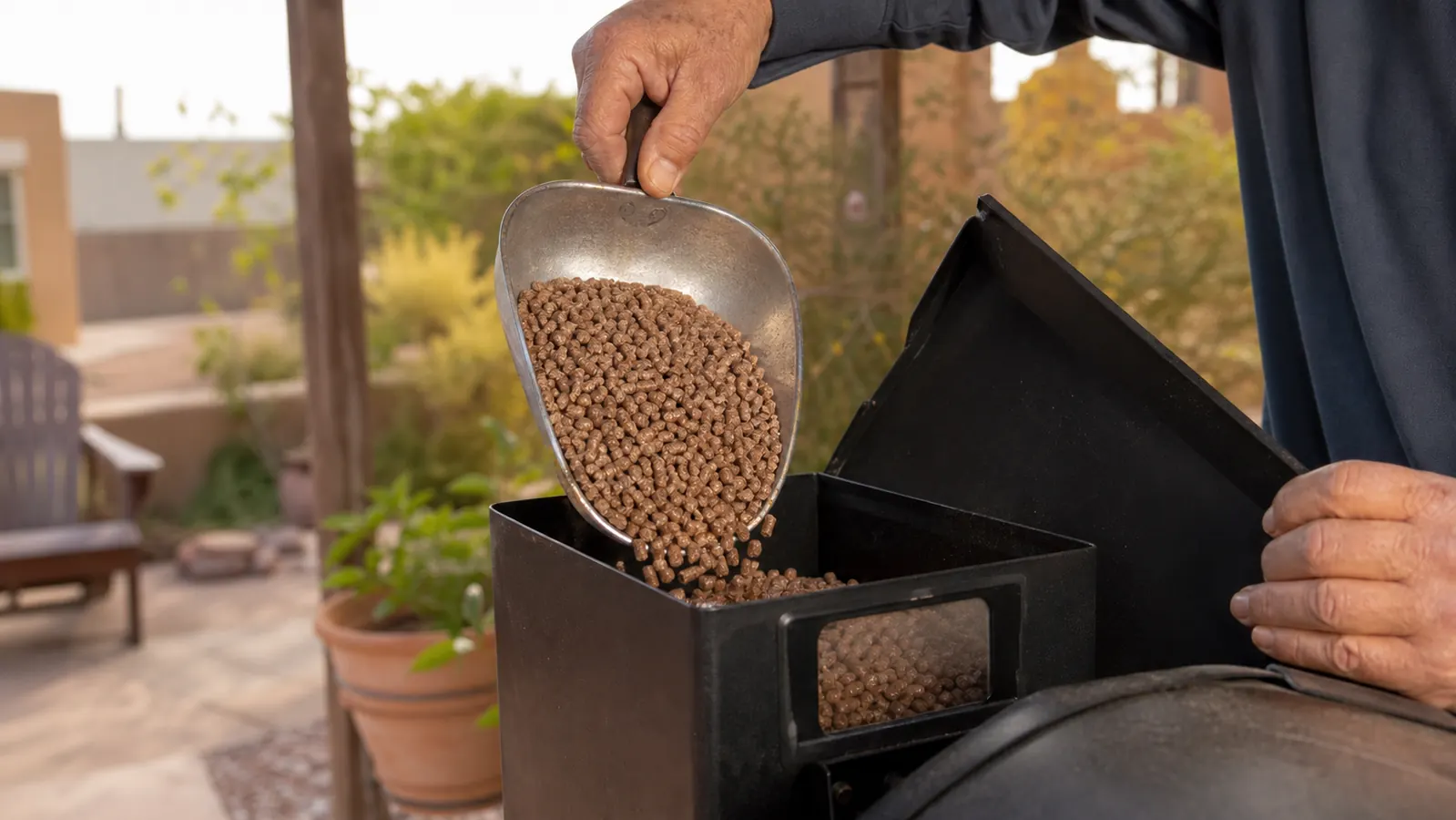
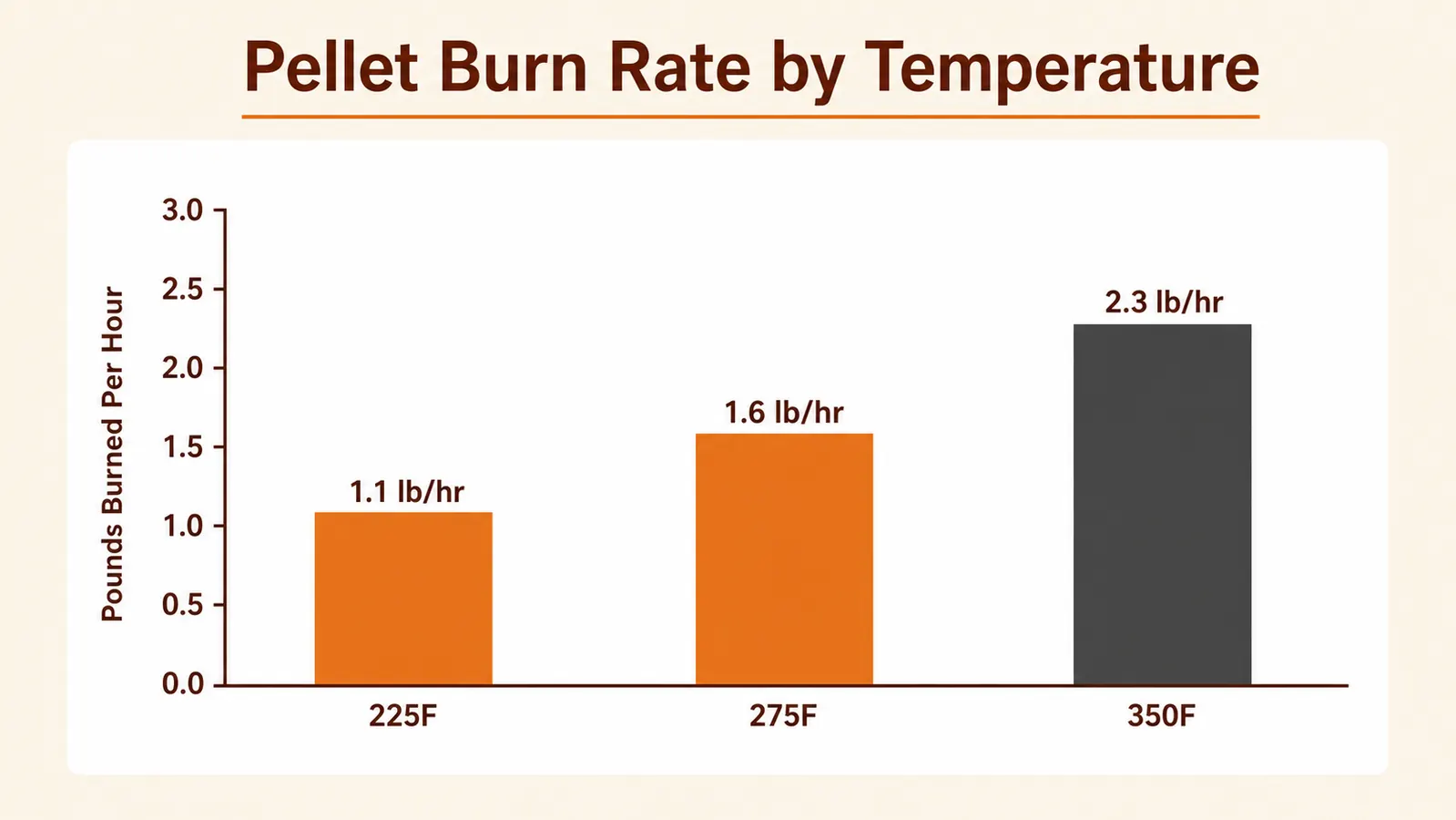
My hopper holds about 18 pounds of pellets, so a fresh 20-pound bag of Traeger Hickory fills it with a little left over for topping off mid-cook. On a weeknight cook, chicken thighs or a couple of pork chops running around 350 degrees for 40 minutes, I go through roughly a pound and a half of pellets total. Weekend cooks are a different math entirely. A 9-pound pork shoulder held at 225 degrees for 14 hours burned through almost exactly one full bag by itself, and that number has repeated close enough across three separate shoulder cooks that I trust it now.
The brisket I ran over Memorial Day weekend is the cook that made me start actually tracking bags instead of eyeballing the hopper. A 7-pound flat at 250 degrees ran just under 9 hours, and I refilled the hopper once partway through from a second bag, using close to a bag and a quarter total. At altitude that cook stalled around hour four the same way it always does on the kettle, and the pellet grill's fan worked harder to hold steady through that stretch than it does on an easy weeknight cook, which tracks with the fact that a struggling fire pulls more pellets to maintain the same temperature.
By my running tally, nine bags of Traeger Hickory covered roughly 30 separate cooks between December and late July, averaging out to a little over 2 pounds of pellets per cook including the short weeknight ones that barely dent a bag. That is the kind of number I never had before I started keeping a tally, and it is the number I now use to plan how many bags to keep in the garage before a holiday weekend.
What's Actually in the Bag
Traeger lists these as 100 percent hickory hardwood with no fillers, no oak or other species mixed in to stretch the batch, and no binding agents added beyond the natural lignin in the wood itself, which is what most reputable pellet makers rely on. I cannot verify a lab breakdown from my patio, but I can tell you what I have seen bag after bag: the pellets themselves run a consistent light tan color, they are dense enough that a full handful sinks rather than floats when I test a scoop in a bucket of water, and I have not found the kind of dark, splintery off-color pellets mixed in that I have seen in a couple of cheaper bags from other brands.
One trick I use to sanity check a bag before it ever goes near the hopper is the water test. Good pellets sink and hold together for a minute or two before starting to swell and break apart. A bag padded with sawdust or a weak binder falls apart almost immediately, sometimes before it even fully submerges. Every one of the nine Traeger Hickory bags I ran passed that test the same way, holding shape for close to two minutes before breaking down, which told me the compression and binding were consistent from bag to bag rather than varying by batch.
The one bag that gave me pause, bag number six by my count, had a noticeably higher amount of fine sawdust settled at the bottom when I opened it, enough that I set nearly a full cup of dust aside before loading the hopper. That much fine dust can clog an auger or smolder instead of burning clean, so I do not load it straight in anymore. I sift the bottom inch of every bag through a kitchen strainer now before it goes near the hopper, which takes about ninety seconds and has kept my auger from jamming since I started doing it.
Smoke Output and Flavor Over a Full Season
Hickory sits in the middle of the smoke intensity range for me, stronger and more bacon-forward than pecan, which I usually reach for on chicken, but not as sharp or resinous as straight mesquite, which I save for quick sears rather than long cooks. Over eight months of using Traeger Hickory almost exclusively in the pellet grill, the flavor has stayed consistent bag to bag. A pork shoulder pulled in March tasted the same smoke character as one pulled in July, which matters more than it sounds like it should, because I have had other brands drift noticeably sweeter or more bitter from one bag to the next.
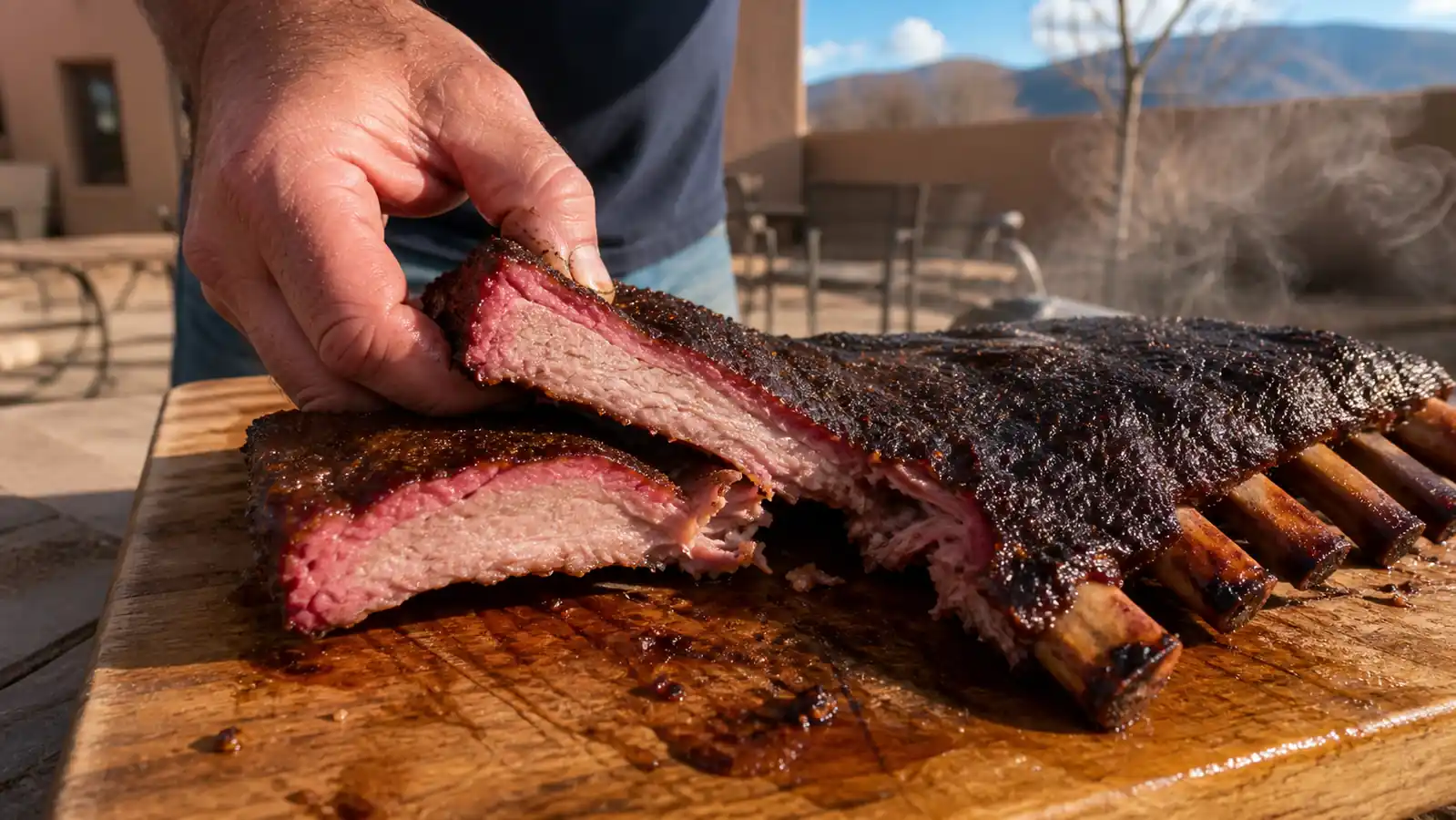
Smoke ring development has been reliable too. On the ribs I smoked for a Fourth of July cookout this year, I got a smoke ring running a solid quarter inch deep into the meat, measured with a knife after slicing, which is right in line with what I expect from a clean-burning hardwood pellet at 250 degrees for around 5 hours. I have had cheaper pellets produce a thinner, patchier ring on the same cut and same cook time, which I chalk up to inconsistent combustion rather than anything about the wood species itself.
Where Traeger Hickory has been genuinely impressive is thin blue smoke. On a clean-burning pellet grill you want to see a thin, almost invisible blue smoke rather than thick white smoke, which usually signals incomplete combustion and can leave meat tasting acrid. Across all nine bags, once the firepot got past the initial startup smolder, usually 4 to 6 minutes, the smoke settled into that thin blue state and stayed there. I have run bags from at least two other companies that took closer to 10 minutes to clear and occasionally puffed thick white smoke again mid-cook when the auger fed a clump of pellets at once.
The Tradeoffs I Wasn't Expecting
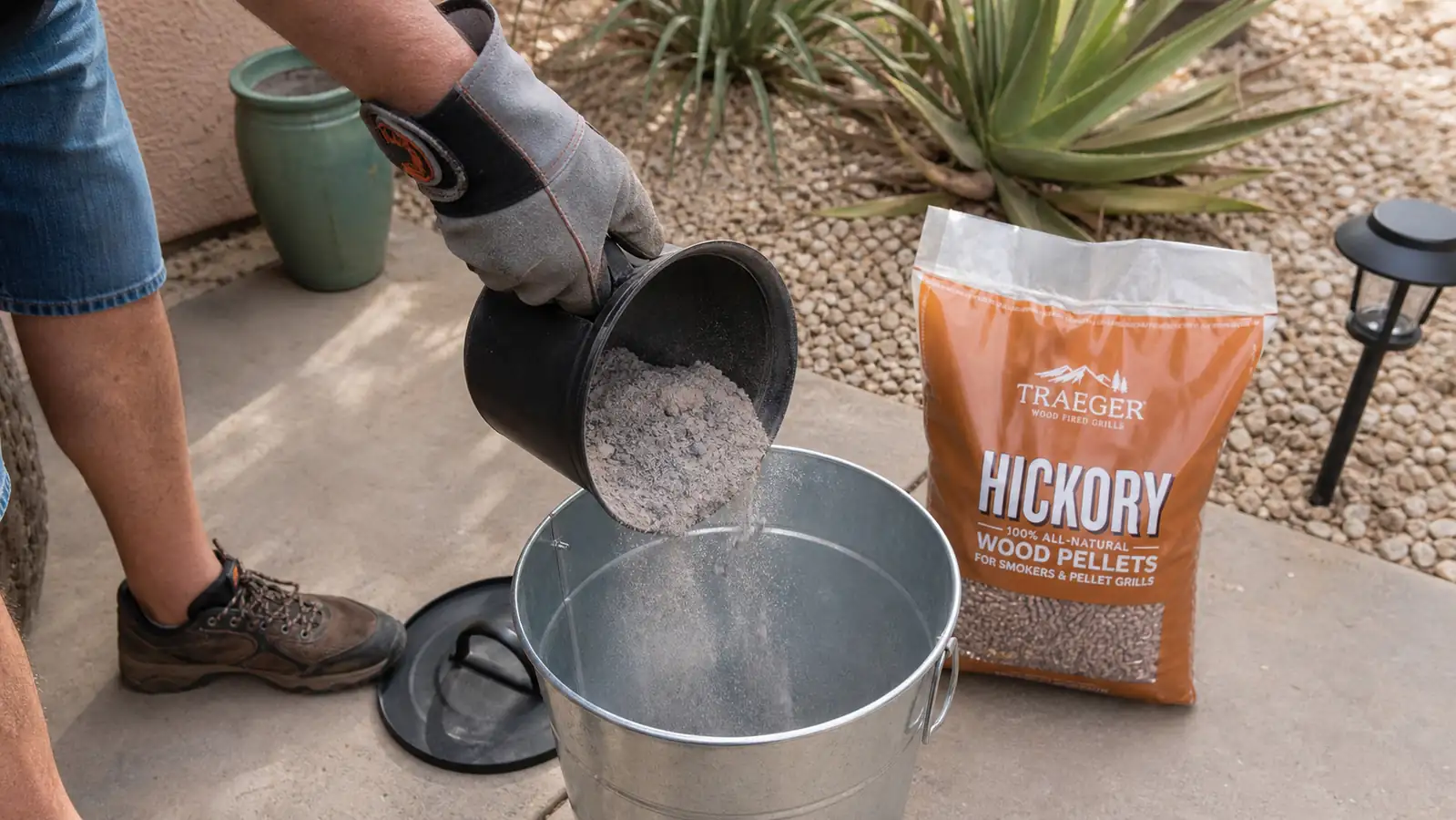
Ash has been genuinely low. After a typical 8 to 10 hour cook, I am cleaning out somewhere between a quarter cup and a half cup of fine gray ash from the firepot, and I only need to do a full deep clean of the burn pot every four or five cooks rather than every single time. That has meant fewer interrupted cooks and less scraping with a shop vac than I dealt with on a cheaper bulk pellet I tried the winter before I switched over.
The price is the real tradeoff. Today's price runs close to 20 dollars for a 20-pound bag, which lands higher per pound than the bulk pallet pellets some of the barbecue supply stores around town sell in 40-pound sacks. Running the math on my nine bags this season, sticking with Traeger Hickory cost noticeably more over eight months than switching to a bulk hardwood blend would have. I have made peace with that tradeoff because the consistency has meant fewer ruined cooks, but if you are smoking multiple times a week for a family of six, that price difference adds up fast enough to be worth comparing against the bulk option in your area.
Storage matters more than I expected too. I keep unopened bags in a plastic tote in the garage rather than stacked loose on a shelf, because Albuquerque's dry air is forgiving on moisture but our occasional monsoon humidity in July and August is not. One bag I left in an open cardboard box through a particularly humid week in August absorbed enough moisture that it burned noticeably smokier and slower to reach temperature than a sealed bag from the same batch. Once I switched to airtight totes, that problem went away entirely.
Other Pellets I've Tried Instead
Before settling on Traeger Hickory I ran a competing hickory blend from a different major pellet brand for about four months, and the honest difference was consistency rather than flavor. That other bag burned fine most of the time, but two separate bags out of six had a sour, almost chemical smell when I opened them that never fully went away in the smoke, and I never got a straight answer on what caused it. I also tried a straight pecan pellet from a smaller company for lighter cooks like chicken and fish, and I still keep a bag of that around for those specific cooks, because pecan's sweeter, milder smoke suits poultry better than hickory does in my experience.
For anyone deciding between a single-species pellet and a blend, my take after this season is that a pure hickory pellet like this one gives you more control. You can layer in your own fruit wood or mesquite chunks in the firepot if you want a different character for a specific cook, rather than being locked into whatever ratio a blend bag decided on. That flexibility is a small thing, but it is one more reason I have stuck with a single-species bag instead of switching to a pre-blended mix.
What I Liked
- Consistent thin blue smoke within 4 to 6 minutes of startup across all nine bags tested
- Low ash output, a quarter to a half cup per cook, meaning fewer interrupted deep cleans
- Reliable quarter-inch smoke ring on ribs and pork shoulder cook after cook
- 100 percent hickory with no fillers I could detect through the water sink test
- Flavor stayed consistent from a bag opened in December to one opened in July
Where It Falls Short
- Runs pricier per pound than bulk hardwood pellets sold in 40-pound sacks locally
- One bag out of nine had a noticeably heavy amount of sawdust fines at the bottom
- Absorbs humidity if stored loose rather than in an airtight tote, especially during monsoon season
- 20-pound bag only lasts about one long overnight cook, so budget for extra bags before a big weekend
- No resealable bag included, you have to supply your own tote or clip
Nine bags in, the number that actually convinced me was the ash bucket. Less scraping means more cooks that don't get interrupted halfway through.
Who This Is For
This is for the pellet grill owner who runs long, low-and-slow cooks often enough that consistency matters more than shaving a few dollars off a bag. If you are doing overnight briskets or shoulders on a regular rotation, a pellet that burns predictably and produces a real smoke ring every time is worth the extra cost, because a ruined 14-hour cook costs you a lot more than the price difference between bags. It is also a solid pick for anyone in dry, low-humidity climates like mine who wants a wood that holds up in storage without turning smoky and sluggish after a few weeks in the garage.
Who Should Skip It
If you smoke multiple times a week and go through pellets fast, the price gap against bulk 40-pound sacks is real, and I would at least price out the bulk option at a local barbecue supply store before committing to bag after bag of this one. It is also not the pellet for someone chasing a very light, sweet smoke on delicate cuts like fish or chicken breast, hickory runs stronger than that, and you would be better served by a pecan or apple wood pellet for those specific cooks. And if you do not have dry, covered storage for unopened bags, be ready to invest in an airtight tote, because a bag left exposed to humidity will not perform the way these numbers describe.
Nine Bags In, Still the One I Reorder
That is the real track record on Traeger Hickory after a full season on my pellet grill. If you are tired of inconsistent smoke and heavy ash from a cheaper bag, this is the one I would point you toward.
Amazon Check Today's Price on Amazon →