
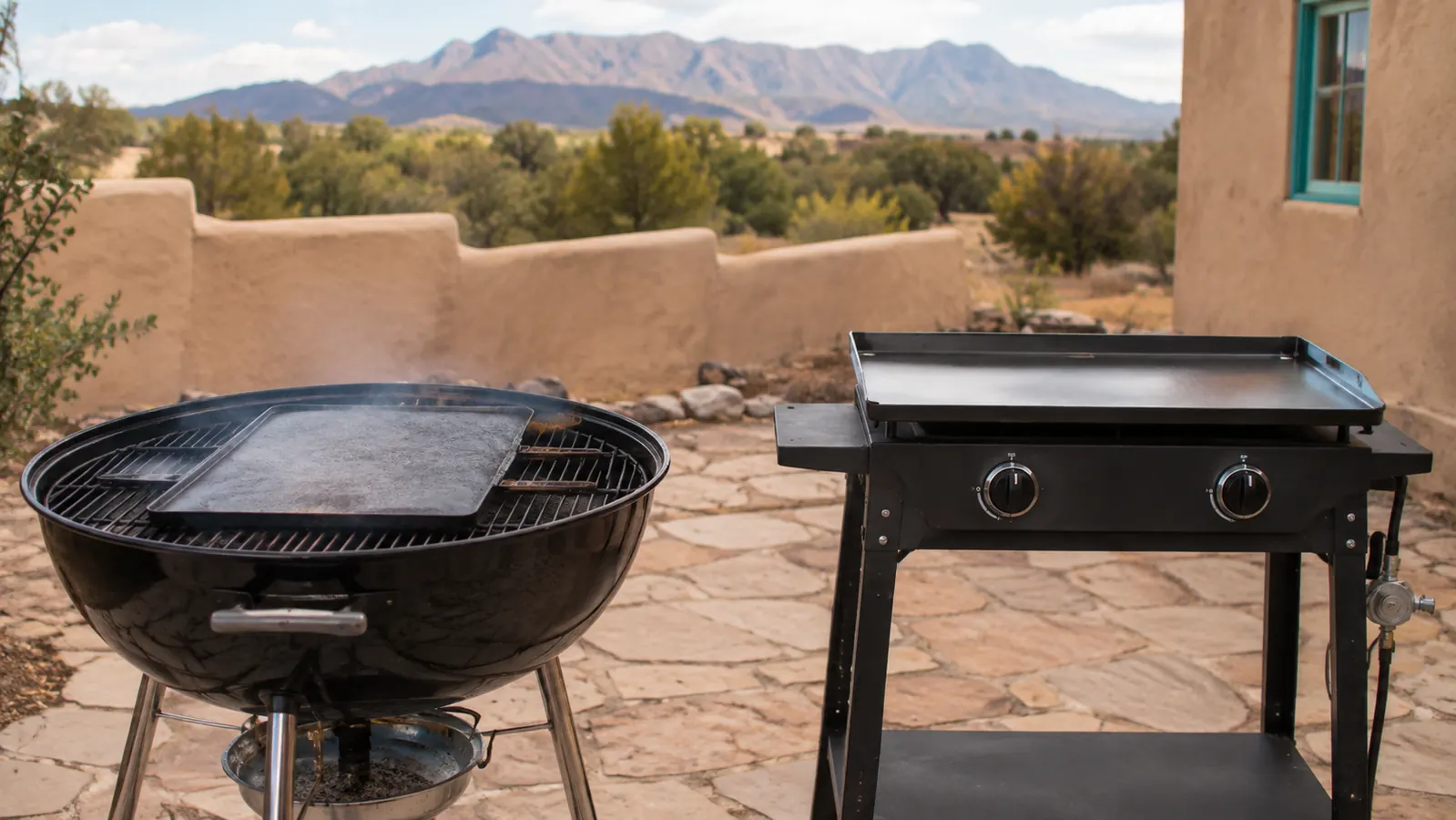
I've had the Lodge Reversible Cast Iron Grill/Griddle Pan riding across the grates of my Weber kettle for well over a year now, and enough readers have written in asking whether they should skip cast iron entirely and go straight to a dedicated steel flat top, specifically the Blackstone 17-Inch Tabletop Griddle, that I finally bought one and ran the two side by side on my own patio for three real weekends. Short answer: if you already own a kettle or a basic charcoal grill and you're cooking for two to four people on a normal week, the Lodge griddle is the better buy. It's cheaper, it stores in a drawer, and it turns a grill you already own into a breakfast station without adding a single new appliance to your patio. If you're regularly feeding six or more people, want two independent burner zones instead of one coal bed, or you don't own a charcoal grill and have no plans to, the Blackstone earns its higher price. That's the same question I get most often in comments, and it deserves a real answer instead of a guess.
Here at 5,000 feet in Albuquerque, both of these behave a little differently than the boxes promise. My charcoal catches faster and burns hotter in this thin, dry air, so the Lodge griddle comes up to a shimmer over a full chimney in about seven minutes instead of the ten most cast iron guides assume for sea level. Propane doesn't care much about elevation, output dips maybe three to five percent up here, so the Blackstone's twin burners light and climb to heat almost exactly as fast as they would in Houston or Atlanta. I ran both through three separate cooks before I trusted myself to write any of this down: a Tuesday morning of eggs and bacon, a Saturday smash burger session for six, and a Sunday pancake breakfast for a crowd of eight, plus a few smaller weekday runs on each just to see whether the first results were a fluke. None of the three cooks surprised me, which is usually a sign the numbers are worth trusting.
| Spec | Lodge Reversible Cast Iron Grill/Griddle Pan | Blackstone 17-Inch Tabletop Griddle |
|---|---|---|
| Heat retention | Holds within 10-15F through a full 90-minute cook, even in wind | Surface temperature can swing 30-40F in gusty wind if burners aren't adjusted |
| Preheat time | About 7 minutes to a shimmer over a full chimney of coals | About 4 minutes with push-button propane ignition to workable heat |
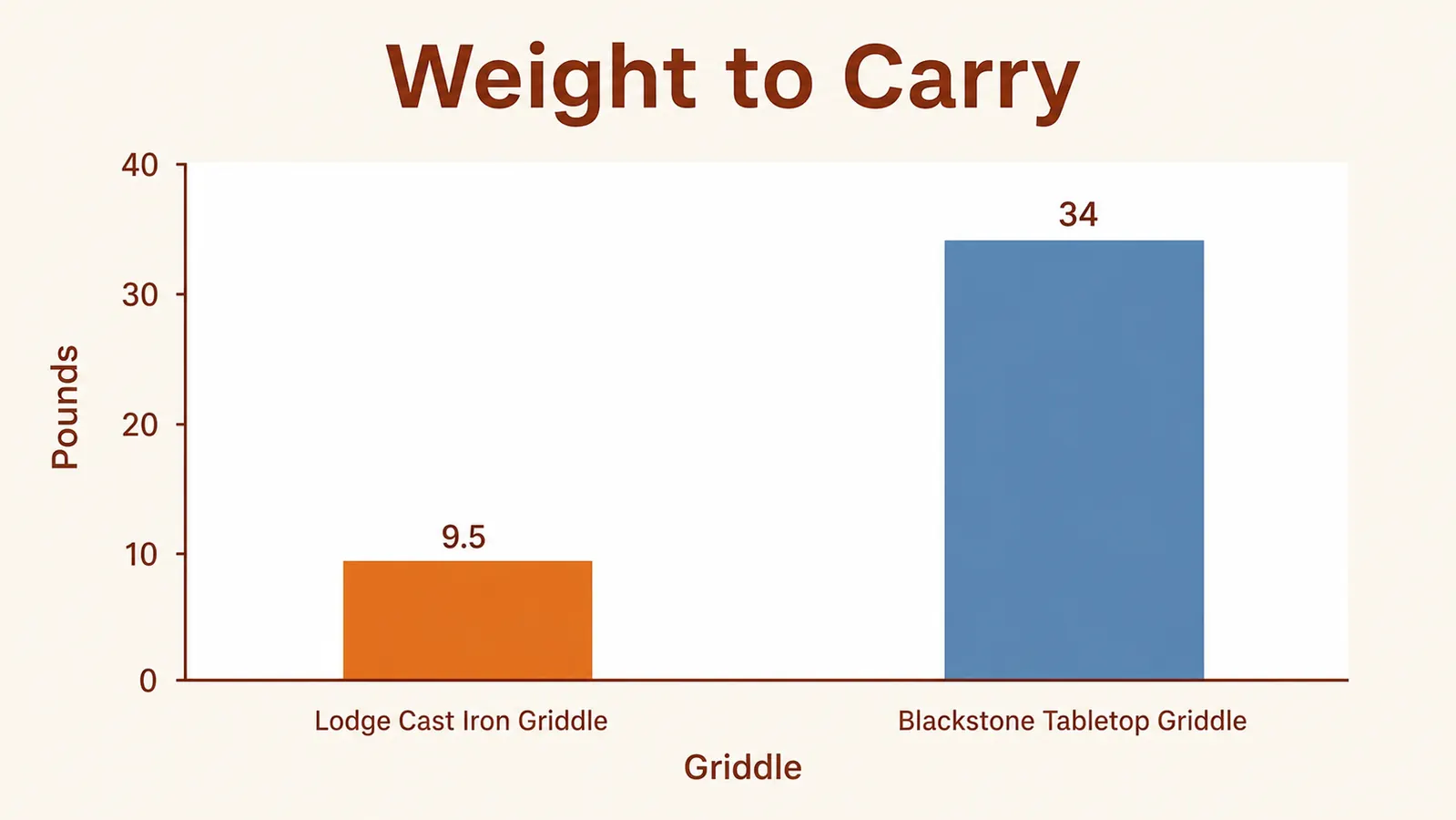
| Weight | 9.5 lbs, fits in a drawer, one-handed lift off a hot grill | 34 lbs assembled with legs and regulator, needs its own storage spot |
| Seasoning and maintenance | Pre-seasoned from Lodge, needs oil rubbed in after every wash, rust risk if left wet | Bare steel needs initial seasoning, wipes down with a scraper in under 5 minutes |
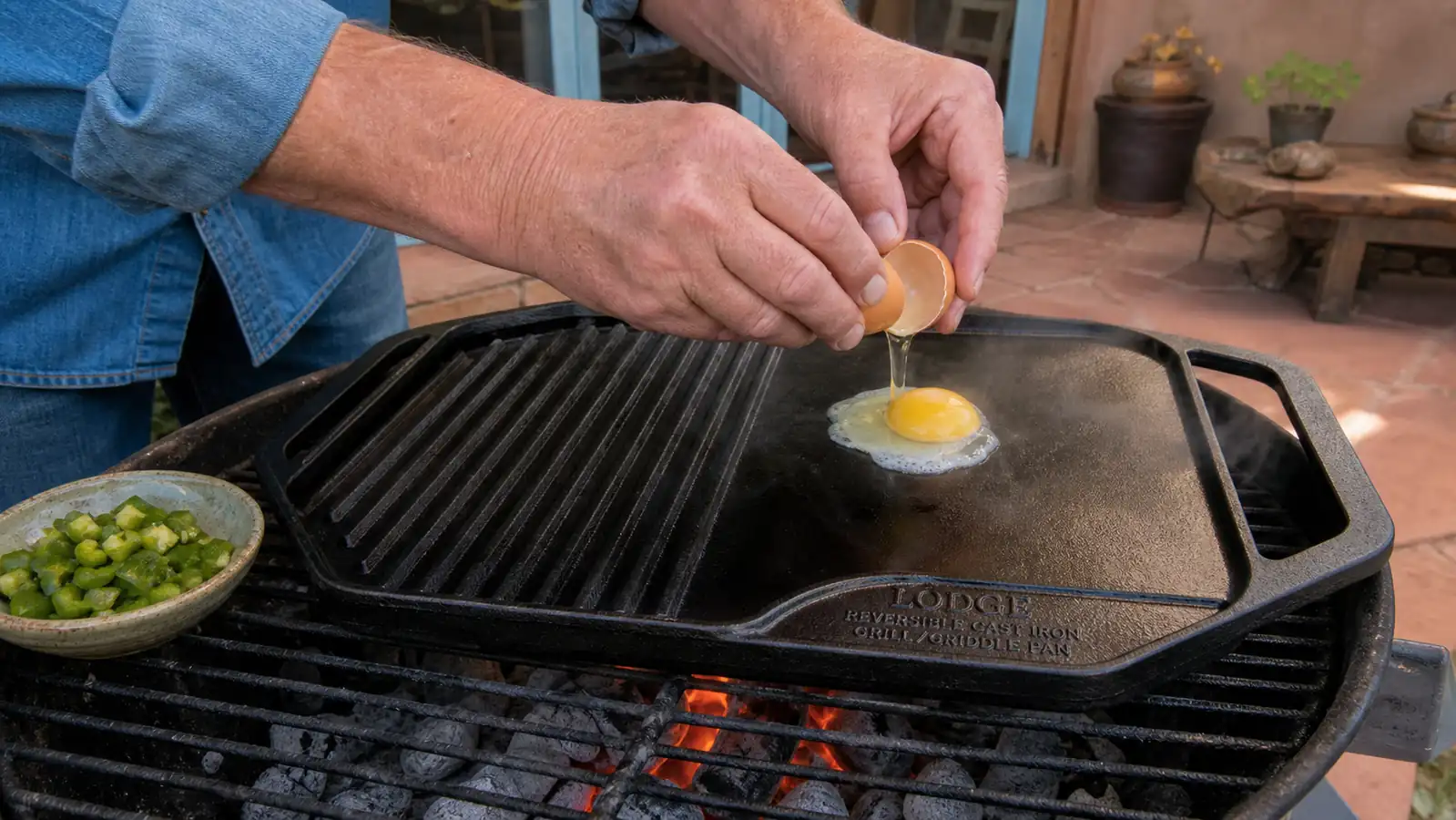
| Reversible grill side | Yes, flips to a ridged grill-mark side for steaks and roasted chile | No, single flat plate only, no grill-mark option |
| Warp resistance | Solid cast iron, no warping after years of heat cycling | Rolled steel plate, can develop a slight bow after repeated years of high-heat runs |
| Cost | Today's price sits under $40 for the griddle alone | Today's price runs roughly $150-$200 for the full tabletop unit |
| Best use case | Breakfast and smash burgers for 2-4 people on a kettle you already own | Weekend crowds of 6 or more who want independent burner zones and no coal bed |
Where the Lodge Wins
The Lodge wins on thermal mass, and that matters more than people expect once wind gets involved. A gust off the mesa can knock a thin steel plate's surface temperature down 30 to 40 degrees in under a minute, and I've watched it happen to the Blackstone twice, once during a windy April cookout where half a batch of pancakes came out pale because the near burner couldn't keep pace with the heat being pulled off the plate. The heavy cast iron in the Lodge griddle just doesn't move that fast. Once it's up to temperature it holds within about 10 to 15 degrees through a full 90-minute run of smash burgers, wind or no wind, because the iron itself is doing the work of storing heat rather than a burner constantly fighting to replace what blows away. That steadiness shows up in the food too. A patty that hits a hot, stable surface gets a crust in the first thirty seconds, and on the Lodge that crust holds up through wind gusts that made me nurse the Blackstone's burner knobs the whole afternoon.
Cast iron also handles a wet marinade or a saucy cook better than fresh steel does. I run a lot of carne asada with a green chile marinade, and on the Lodge that liquid reduces into a sticky glaze that seasons the pan instead of stripping it. Try that same cook on bare steel too early and you'll scrub seasoning right back to gray metal, which happened to a friend's brand new Blackstone plate his first weekend out. A few dozen cooks in, acidic sauces barely touch the Lodge's surface, and a reduction that would scorch on a thinner plate just simmers down evenly instead.
Price is the other place the Lodge isn't close. Today's price on the griddle alone sits under $40, while a Blackstone tabletop unit with its two burners, folding legs, and regulator hose runs somewhere in the $150 to $200 range depending on the week you shop. The Lodge also weighs 9.5 pounds and fits in a kitchen drawer or a milk crate in the garage, while the Blackstone's 34 pounds of steel and hardware needs its own storage spot and two hands to carry once the legs are folded flat. And the Lodge reverses, flat side for eggs and burgers, ridged side for steaks and roasted green chile, a second surface the Blackstone's single flat plate simply cannot offer no matter how you set the burners. Fourteen months of seasoning on the Lodge has also given it a nonstick surface that a brand-new steel plate can't match on day one, no matter how carefully you season it before that first cook.
Where the Blackstone Wins
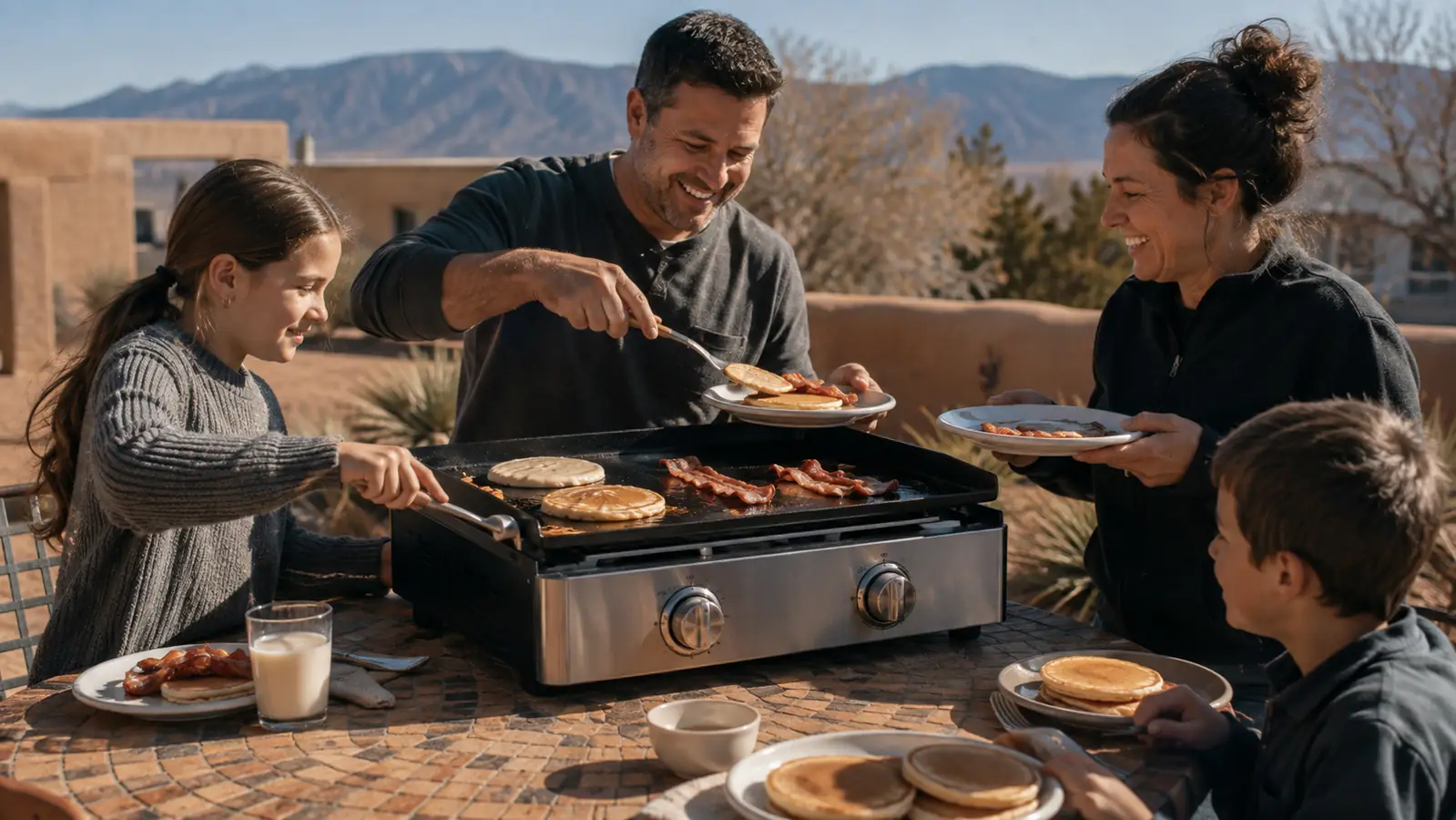
The Blackstone wins on speed and independence from a coal bed, and I won't pretend otherwise. Twin burners light with a push button and climb to a workable heat in about four minutes, versus the seven to ten minutes I spend filling a chimney, lighting it, and waiting for the Lodge to come up to a shimmer. If you're cooking breakfast for a crowd before an early hike, that gap is real time back. The griddle surface is bigger too, 17 by 17 inches against the Lodge's 16.75 by 9.5, and it runs two independent burner zones, so I can hold pancakes at 325F on one side while eggs cook at 275F on the other without moving anything, a trick the single-temperature Lodge sitting over one coal bed just can't pull off. For the Sunday breakfast I cooked for eight people, that extra square footage and dual-zone control meant everyone ate at roughly the same time instead of in shifts off one small griddle. I've also noticed the Lodge doesn't develop the faint metallic taste a brand-new steel plate can leave on the first few eggs before the seasoning fully builds up.
Cleanup and maintenance lean toward the Blackstone too, once the initial seasoning is behind you. There's no charcoal ash to empty and no chimney to store, and the steel plate wipes down with a scraper and a splash of water in under five minutes flat. The Lodge asks more of you every single time, dry it while it's still warm, rub in a thin coat of oil, and never let it sit wet in the sink, a mistake I made myself once around month six that cost me a rust patch near one handle and twenty minutes with steel wool to fix. If the extra babysitting real cast iron wants sounds like more hassle than you're up for on a weeknight, the Blackstone's bare steel plate is a lot more forgiving of a rushed cleanup, and it doesn't hold a grudge the way cast iron does if you skip a night of oiling here and there.
Carrying either griddle hot tells you a lot about which one fits your setup. The Lodge's handles stay cool enough to grip through a folded towel, and at 9.5 pounds I move it one-handed from the kettle to a side table without thinking twice. The Blackstone is a different animal once its burners have run for twenty minutes, the steel radiates heat you can feel from a foot away, and at 34 pounds I don't relocate mine mid-cook, I just cook where it's already set up. For two people the Lodge never feels cramped. Cooking for six or eight, the Blackstone's extra surface is what keeps everyone eating together instead of in shifts.
Already Own a Kettle? Don't Buy a Second Grill Yet
The Lodge reversible grill and griddle pan turns a kettle you already own into a breakfast and smash burger station, no propane tank, no extra footprint on the patio. It's the piece I still reach for most weeks.
Amazon Check Today's Price on Amazon →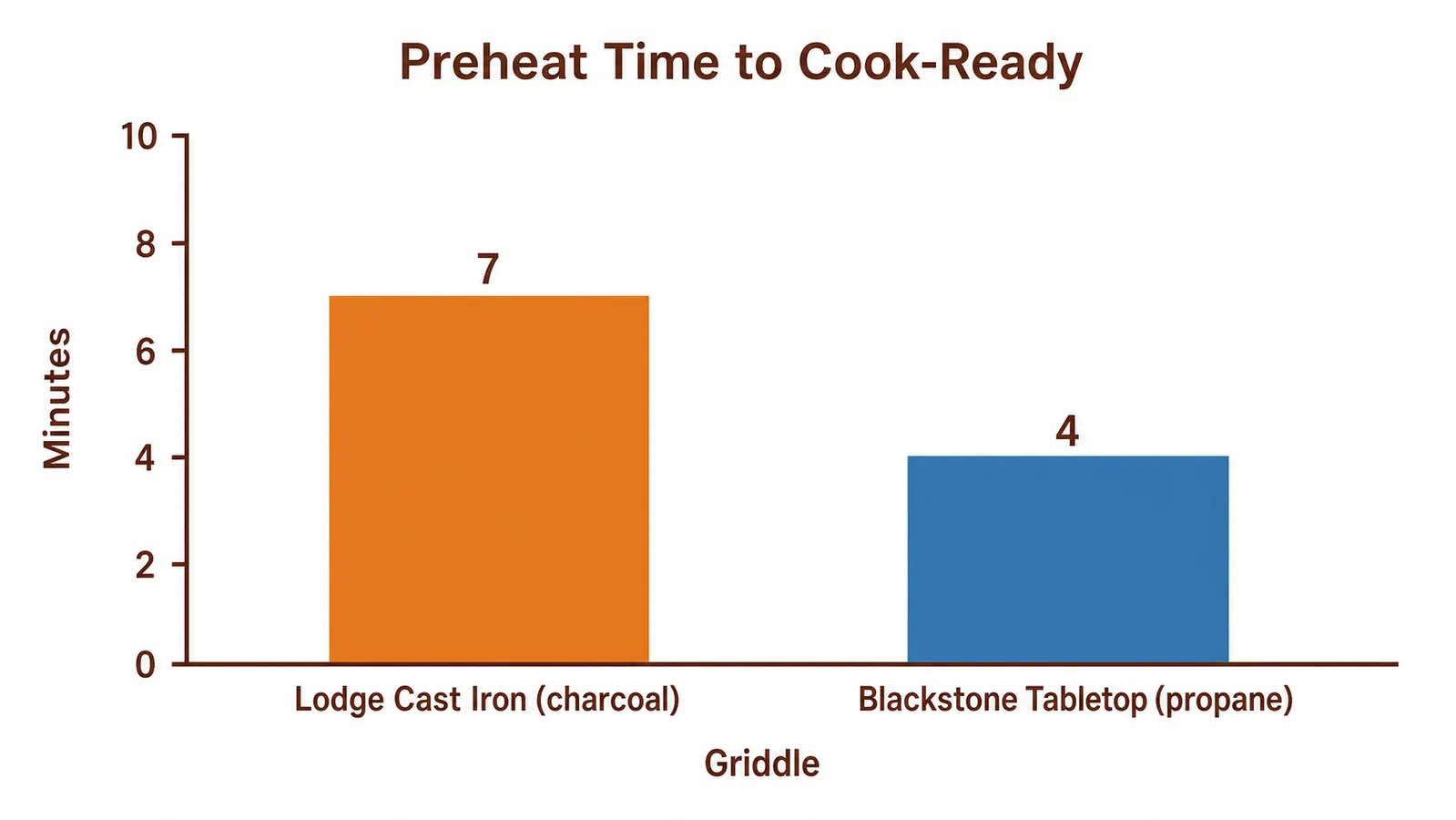
The Elevation Factor
Altitude shifts this comparison more than most reviews account for. Charcoal burns roughly 15 to 20 percent faster up here than it does at sea level, which is part of why my Lodge griddle needs less lit charcoal per cook than the bag suggests, and why I've learned to watch the first ten minutes closely instead of trusting a timer built for someone grilling in Ohio. The Blackstone's propane burners barely notice the elevation, maybe a three to five percent dip in output at most, which is honestly one of its quieter advantages if you're new to high-desert cooking and don't want one more variable to manage while you're also learning a new piece of gear. Water boiling around 202F instead of 212F up here doesn't change griddle cooking much directly, but it's one more reminder that specs written at sea level don't always transfer cleanly to a patio like mine. If you're shopping from a review written somewhere near sea level, expect the Lodge to run a little hotter and faster than promised, and expect the Blackstone's numbers to hold up close to what the box claims.
The Lodge griddle holds heat when the wind picks up. The Blackstone gets you cooking faster when you don't want to wait. I own both now, and I still reach for the Lodge more often than I expected to.
Warping, Rust, and What a New Mexico Winter Does to Each
I left the Blackstone's plate under a patio cover through one New Mexico winter, uncovered on the coldest nights, mostly out of laziness. Nothing dramatic happened, steel doesn't rust as fast as people assume once it's seasoned, but by February I noticed a slight bow near the left burner, maybe an eighth of an inch, enough that a bead of egg white pools there instead of spreading flat. It hasn't gotten worse since, and it hasn't ruined a cook, but it also never flattened back out on its own. Once rolled steel takes a bow from heat cycling, that's the shape it keeps.
The Lodge spent that same winter in a tote in the garage, and that's really the whole trick with cast iron in a dry climate like ours. Rust isn't an elevation problem, it's a did-you-dry-and-oil-it-before-storage problem, and our low humidity actually works in cast iron's favor between cooks. The one rust patch I've dealt with on mine came from a wet kitchen sink, not a cold night on the patio. Store the Lodge dry with a thin coat of oil and it will outlast a steel plate by a decade or more. Warping just isn't something solid cast iron does.
Who Should Buy Which
If you already own a kettle or a basic charcoal grill, cook for two to four people most weeks, and care more about flavor and steady heat than raw speed, buy the Lodge. It's the cheaper purchase, it stores easier, and it turns gear you already own into a real breakfast and smash burger station without adding a single new appliance to the patio. I've run mine well over a hundred times now, through two New Mexico summers and a winter I probably should have skipped a few nights of, and it's still the griddle I reach for on an ordinary Tuesday. It also travels well if you tailgate or camp, since it rides in the same bag as your other cast iron without needing a propane tank along for the ride. That extra capacity is the whole reason a family with more than four regular mouths to feed should think twice before assuming cast iron alone is enough.
If you're regularly feeding six or more people, want two independent temperature zones running at once, or you don't own a charcoal grill at all and don't plan to start, the Blackstone tabletop earns its higher price. I bought mine specifically for this comparison and I've kept it, mostly for big Saturday breakfasts when lighting a full coal bed feels like overkill just to cook pancakes. But for the everyday cook on a patio that already has a kettle sitting on it, the Lodge is still where I'd point you first, and at today's price it's hard to talk yourself out of. My honest advice after three weekends running both: buy the Lodge first, and only add a steel flat top later if your cookouts genuinely outgrow it.
Still Deciding? Start With What You Already Own
If a kettle or charcoal grill is already sitting on your patio, the Lodge reversible griddle is the cheaper, simpler way to add flat-top cooking. That's the one I'd point a neighbor toward first.
Amazon Check Today's Price on Amazon →