
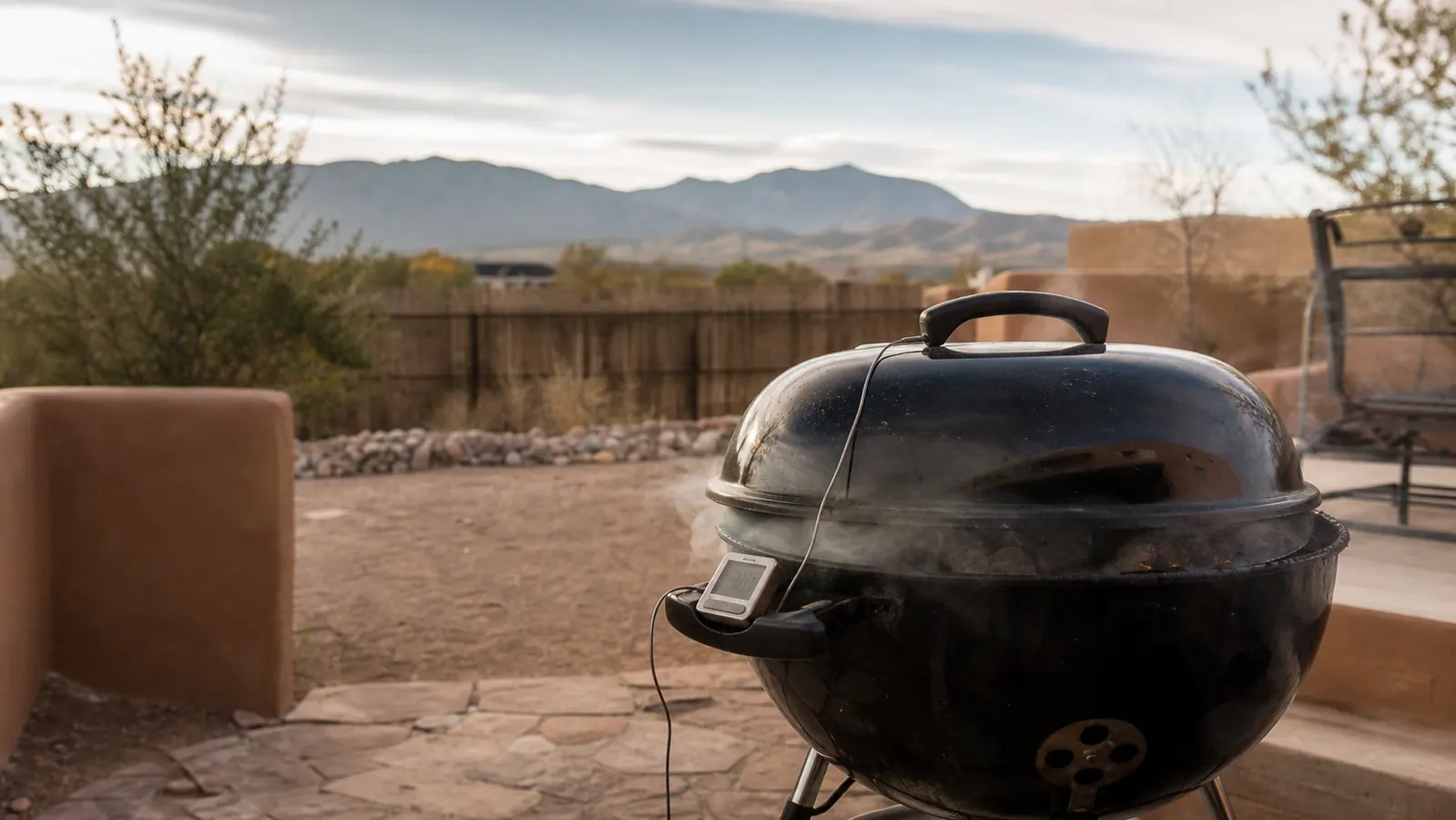
For most of the twelve summers I have run a kettle on this patio, I checked doneness the way my dad did: press the meat, look at the color, lift the lid more times than I should have and let the heat walk right out into thin desert air. That habit cost me more than one dried-out chicken thigh and at least a few briskets I would rather not think about. What finally changed things was strapping an Inkbird IBT-4XS onto the grill two years ago, a four-probe Bluetooth thermometer that runs around $49.99 as of this writing. I was skeptical a $50 gadget would change much. It changed a lot, and here are ten specific reasons a wireless probe like the Inkbird earns a permanent spot next to the grill instead of living in a kitchen drawer.
None of these are theoretical. Every reason below came out of an actual cook on this patio, at 5,000 feet, where water boils around 202 degrees instead of 212 and a stall drags on longer than any recipe card written at sea level ever accounts for.
Tired of Lifting the Lid Just to Guess?
The Inkbird IBT-4XS is the four-probe wireless thermometer that ended the lid-lifting habit on my patio for good. Here is why it earned that spot, one cook at a time.
Amazon Check Today's Price on Amazon →Four Probes Cover an Entire Weekend Spread
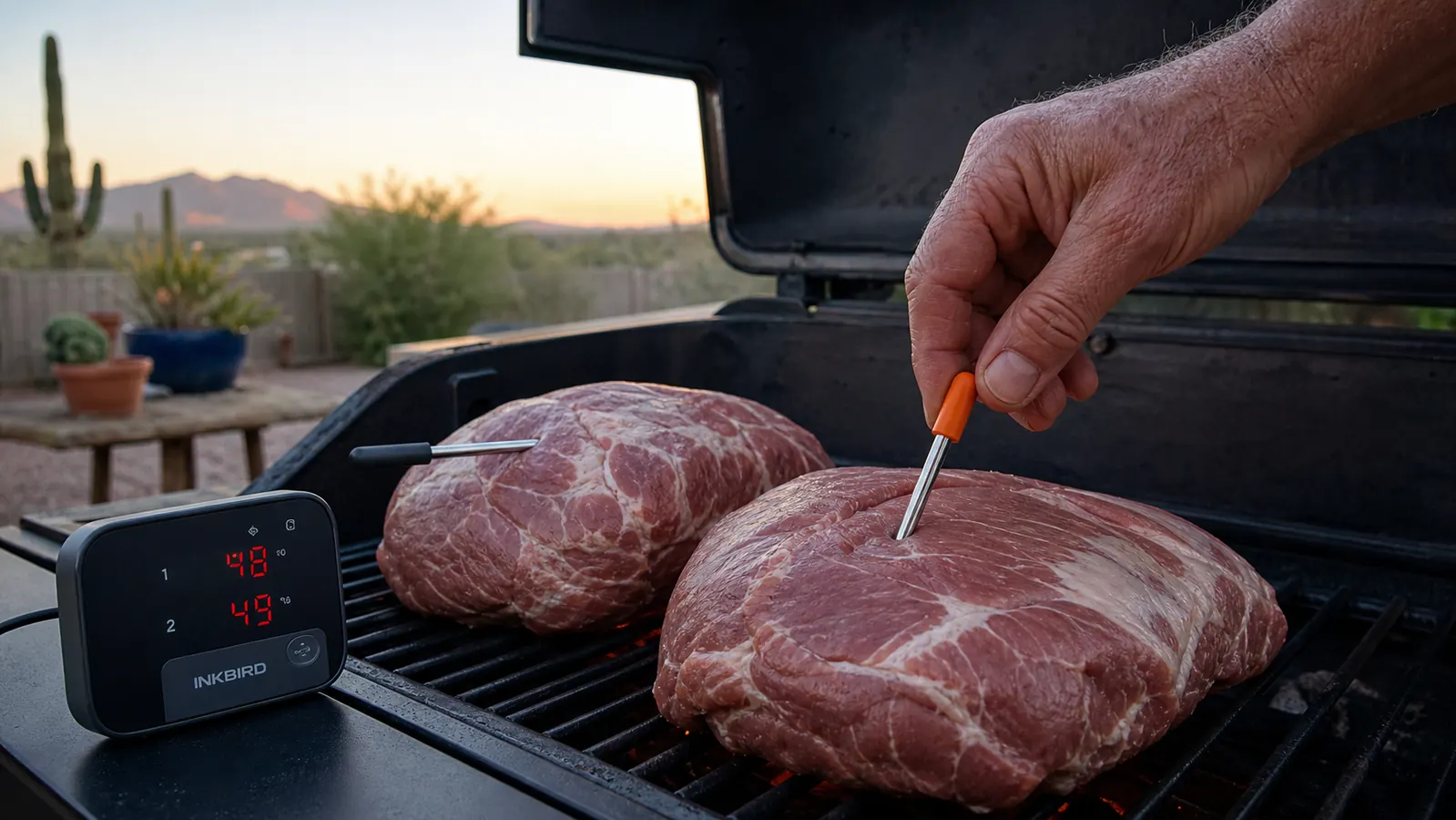
On a normal weekend I am not cooking one thing, I am running two pork shoulders and a rack of ribs at the same time, and a single-probe thermometer just cannot keep up with that. The Inkbird runs four channels off one base station, so every piece of meat gets its own reading instead of me rotating a lone probe between three different cuts and losing track of which one I checked last.
An Ambient Probe Takes the Guesswork Out of Vent Management
Thin air up here means a fire runs hotter and burns through fuel faster than it would at sea level, and vent management matters more because of it. I clip one Inkbird probe to the grate itself, not in any meat, just reading the air around the food. Watching that ambient number climb or drop tells me to crack a vent or close one down before the fire drifts, instead of guessing by how much smoke is rolling.
Alarms Replace Constant Lid-Lifting
Every time I used to lift the kettle lid to check on a brisket, I was letting heat escape that this thin, dry air makes harder to rebuild than it would be somewhere with more humidity holding warmth in. The Inkbird's high and low alarms mean I only open the lid when a probe actually tells me something changed, not on a nervous fifteen-minute schedule. My fuel lasts longer and my cook times have gotten more consistent since I stopped peeking.
Bluetooth Lets You Step Away Without Losing the Thread
I am not going to pretend the range promise is perfect, my kitchen sits behind two adobe walls and the connection gets unreliable past about 45 feet once I am inside. But out on the open patio, the Inkbird holds a steady connection well past 100 feet, which is plenty to hose off a dog, roast a batch of green chile on the side burner, or answer the door without walking back out to check the grill.
Built-In Presets Take the Guesswork Out for New Cuts
The first time I smoked a whole turkey for Thanksgiving, I had no real feel for the target internal temperature the way I do with a brisket flat. The Inkbird app has doneness presets built in for most common cuts, and setting the alarm to that preset meant I was not thumbing through a printed chart with greasy hands mid-cook. It is a small thing that matters most exactly when you are cooking something unfamiliar.
The Graph View Shows You the Stall Instead of You Panicking About It
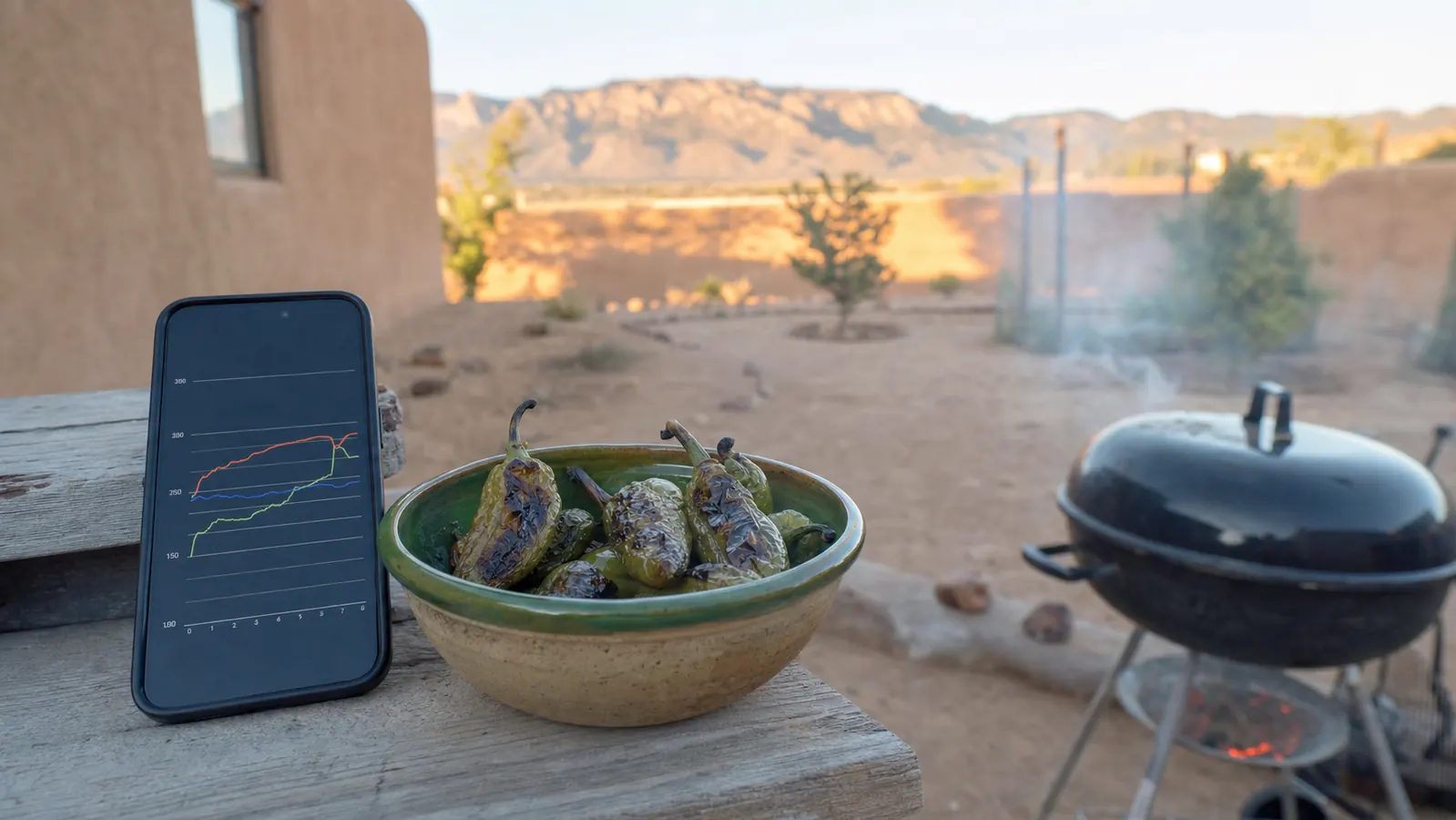
Every brisket I have ever run stalls somewhere in the 150s, and for years I treated that flat line like something had gone wrong with my fire. The Inkbird app draws a running graph of internal temperature, and watching that line go flat on the screen told me it was just the stall doing exactly what a stall does, not a sign to open the lid and start troubleshooting a fire that was fine the whole time.
Color-Coded Probes Stop Mix-Ups on a Busy Cook
Once you are running three or four probes across two shoulders, a brisket, and a chicken, it gets easy to lose track of which reading belongs to which piece of meat. Each Inkbird probe ties to a colored silicone boot that matches a colored channel on the app, so a quick glance tells me the orange probe is the flat and the blue one is the point, without pulling anything back out to double-check.
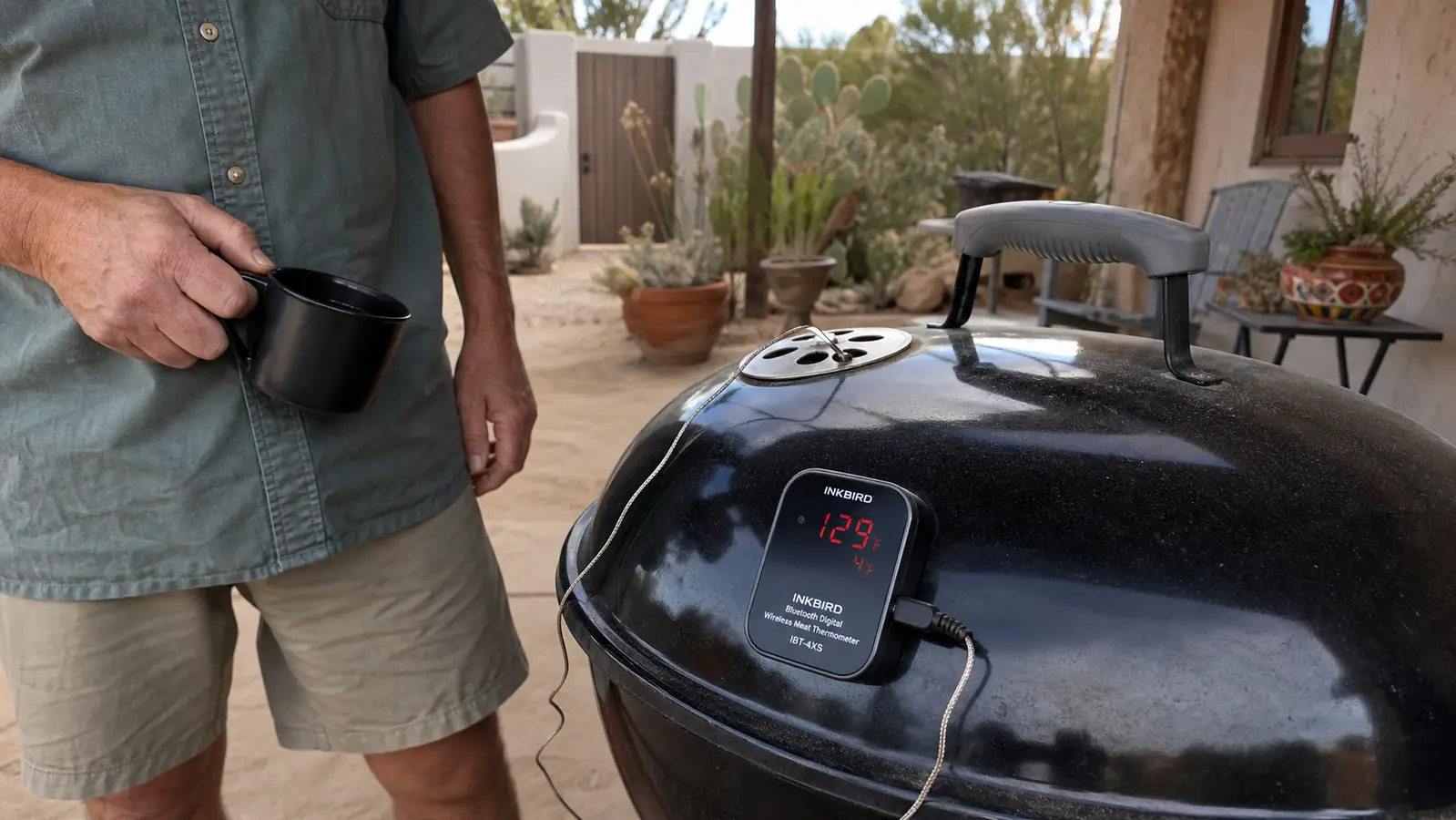
The Magnet Mount Keeps It Put Through a Windy Cook
Spring afternoons here regularly kick up wind off the mesa strong enough to rattle a patio umbrella, and the base station has to hold steady through that or it is useless. The Inkbird's magnet mount grips the curved hood of my kettle firmly enough that it has never blown off or slid loose on me, even on cooks where I have had to weigh down napkins and chip bags just to keep them on the table.
It Costs Less Than One Ruined Brisket
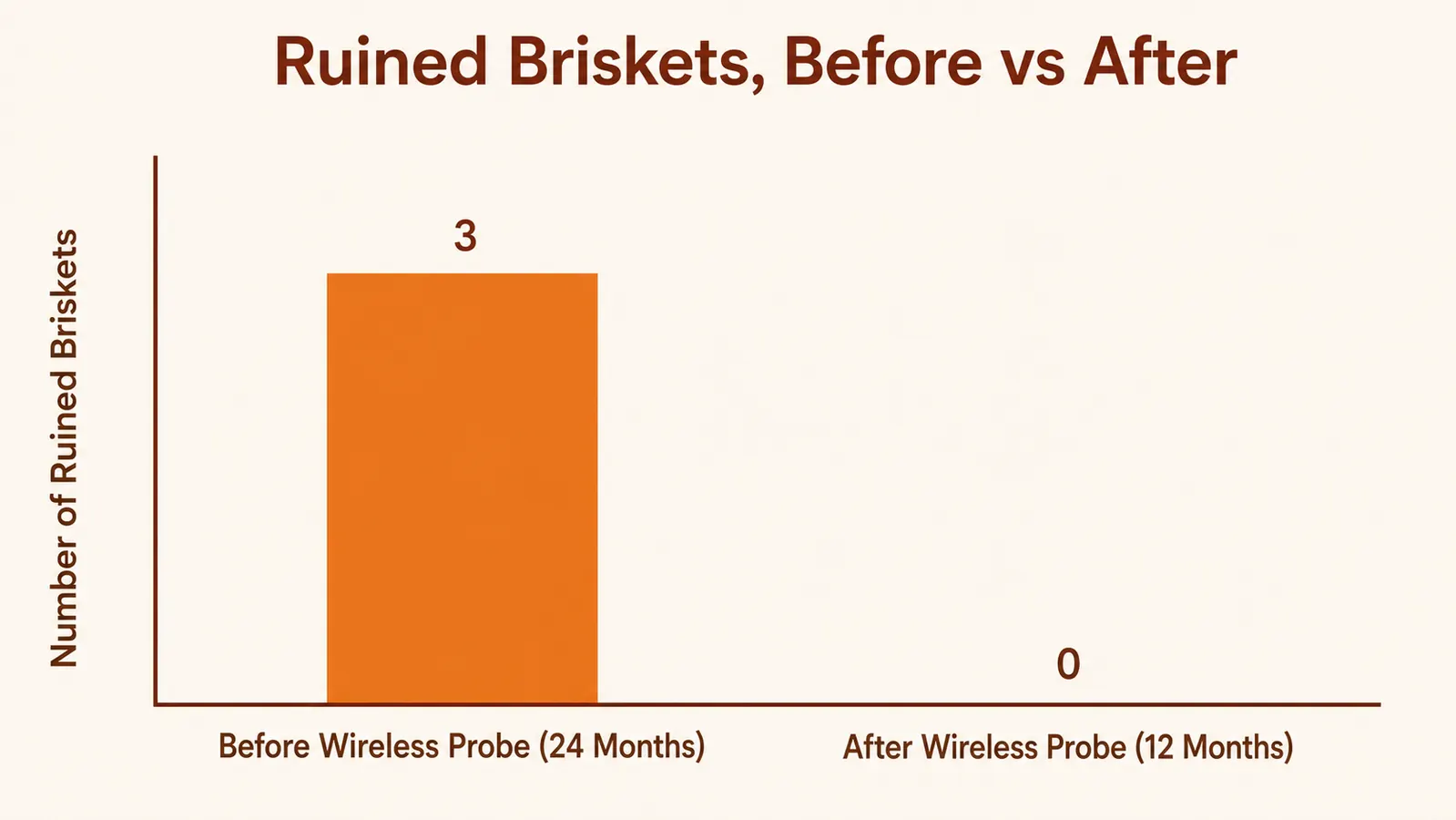
In the two years before I started leaving a probe in for the whole cook, I ruined three briskets guessing at doneness by feel and color, each one a $60 to $70 cut of meat I had to toss or serve apologetically. In the twelve months since running the Inkbird IBT-4XS on nearly every long cook, I have not lost a single one. The unit runs about $49.99 today, less than the cost of just one of those ruined briskets.
Amazon See the thermometer that paid for itself in one cook →
It Moves Between the Kettle, the Gas Grill, and the Borrowed Pellet Smoker
This is not built into one rig, which matters because my setup is not just one grill. The Inkbird base station and probes go wherever the cook is happening, clipped to my kettle most weekends, moved to my gas grill for a quick weeknight chicken, or borrowed along with a neighbor's pellet smoker when I am helping him with a bigger cook. One thermometer, whatever fire I happen to be standing in front of that day.
Amazon See the thermometer that works on any grill you own →
What I'd Skip
I would not buy this expecting to monitor a cook from anywhere in the house. If your kitchen sits behind thick walls the way mine does, plan on checking from the yard, not the recliner. I would also skip running all four probes on a quick weeknight cook, one channel does the job fine for a single flat-iron steak or a batch of chicken thighs, and setting up all four just adds steps you do not need. And I would not trust the readings blindly past a year of hard use without a five-minute ice-water check now and then, since probes drift a little with age no matter how well they were built.
A dead thermometer at hour six of an eight-hour cook will ruin your evening. A $50 wireless probe has only ever cost me the ice-water check, never the evening.
Ten Reasons, One Thermometer, No More Ruined Briskets
That is the honest list of what a wireless probe fixed on this patio. If you are ready to stop guessing at doneness, the Inkbird IBT-4XS is the one I would point you toward.
Amazon Check Today's Price on Amazon →